Trump revives G8 framing: the war in Ukraine would not have happened if Putin had stayed at the table
In a 19 June 2026 exchange, the US president blamed Barack Obama for Russia's 2014 expulsion from the G8 and argued Moscow's reintegration would have prevented the war in Ukraine — a counterfactual Moscow has long endorsed and Kyiv flatly rejects.
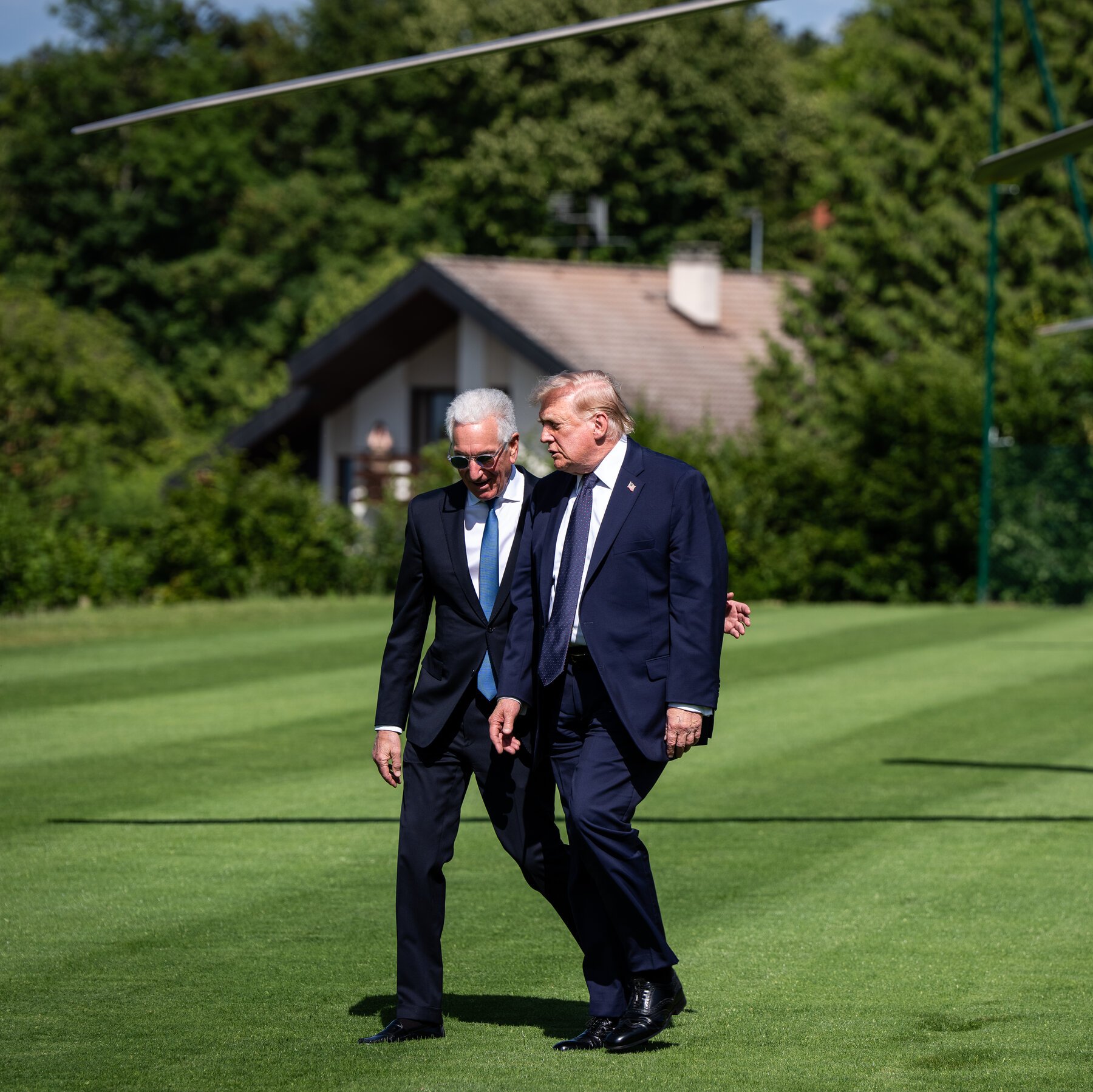
On 19 June 2026, in remarks carried live by Euronews and amplified through his own social channels, US President Donald Trump returned to a counterfactual he has been refining for the better part of a year: that the war in Ukraine would not have happened had the Group of Eight not been pared down to the G7 in 2014. "I've attended many G7 summits," Trump said, in a clip logged by Euronews at 18:55 UTC. "And before that, it was the G8 group. That's how it should have stayed. Maybe then, there wouldn't have been a war between Russia and Ukraine. But Obama didn't want Putin there." A near-identical line surfaced in the same window from X account @sprinterpress at 18:52 UTC, and was echoed by Telegram channel Clash Report at 18:37 UTC. The synchronised wording — three distinct outlets, one recurring sentence — suggests a feed of pre-edited remarks rather than a spontaneous riff.
The claim is consequential because it inverts the causal story the invaded party and most European governments have settled on. By that account, Russia was suspended from the G8 after it annexed Crimea and fomented the Donbas war in 2014, and it launched its full-scale invasion of Ukraine in February 2022, an act Kyiv and the UN General Assembly have classified as a violation of the UN Charter. Trump's framing — that the war is a by-product of diplomatic exclusion rather than a consequence of Russian revanchism — is the same line the Kremlin has pushed for a decade.
A counterfactual Moscow has long endorsed
The 2014 suspension is the wrong place to start the causal clock, but Trump's broader logic is not novel: it tracks almost word for word with Russian talking points that have circulated since at least the 2015 Minsk negotiations. The argument, in its Russian articulation, is that the post-Cold War European security order humiliated Moscow by expanding NATO to its borders and by ejecting it from elite clubs like the G8, leaving the Kremlin with no face-saving stake in a system it was meant to co-manage. A Trump White House that describes Putin's exclusion as the original sin plays directly into that frame — though it also relieves Russia of agency for the decisions that followed: the seizure of Crimea, the eight-year war in the Donbas, the recognition of two breakaway "republics" in February 2022 and the full-scale invasion launched four days later.
For a White House that has been pushing, in parallel, for a territorial settlement to end the war, the rhetoric is more than nostalgic. Re-admitting Russia to a leaders-level format — whether the G8 or a successor arrangement — would be the diplomatic equivalent of forgiveness without prosecution. It would also hand Moscow a structural win: a return to the top table of the Western-aligned world without the cost of withdrawal, accountability or reparations.
The Ukrainian and European counter-reading
Kyiv's reading, articulated repeatedly by President Volodymyr Zelenskyy and his diplomatic team, runs in the opposite direction. The war did not begin in 2022 and it did not begin with a G7 communiqué: it began in 2014 with Russia's illegal annexation of Crimea and its covert invasion of the Donbas, both predating the formal G8 suspension by weeks. The G8 decision, in other words, was a Western response to a Russian act of aggression, not its cause. The full-scale invasion of February 2022, in turn, came after eight years of failed ceasefires and one day after Russia recognised the independence of the two self-proclaimed Donetsk and Luhansk republics.
European governments have reinforced the same line. For them, the operative history of the past decade is not the demotion of Russia from the G8 but the progressive erosion of the post-1945 European order, of which the 2014 annexation and the 2022 invasion are the two largest single blows. Reintegrating Moscow into a leaders' club before accountability has been delivered would, in the European view, ratify the use of force as a legitimate tool of revision. The political centre of gravity in Berlin, Paris and Warsaw is unlikely to back that move without Ukrainian consent — and Kyiv has been unequivocal that no settlement should legitimise the annexation of its territory.
What the structural pattern actually shows
The harder question is whether the G8/G7 distinction is doing the analytical work Trump is asking it to do. The G7 has continued to function without Russia, has coordinated sanctions, has channelled military and financial support to Kyiv and has hosted Ukraine as a guest at successive summits. Russia has, in parallel, deepened its economic and security alignment with the People's Republic of China, signed strategic agreements with Iran and the Democratic People's Republic of Korea, and built a parallel diplomatic infrastructure that the G8's continuation would not have obviated. The pattern, in other words, is not a story of Moscow's exclusion producing the war; it is a story of Moscow's choices producing the exclusion, and of an excluded Moscow reaching for other partners.
There is, however, a defensible kernel in the argument that the G7 — and the broader Western framework — failed to construct a security architecture Moscow would accept as legitimate, and that the post-1991 settlement had an unfinished business problem that 2014 exposed rather than created. That reading is more often heard in academic and Global South capitals than in Warsaw or Kyiv, and it does not exonerate Russia; it does, however, put pressure on Western policymakers to articulate what kind of order they want once the shooting stops.
The stakes, in concrete terms
The next test of whether the G8 rhetoric is decorative or directional will be at the next major summit of the Western-allied economies, and in the bilateral US-Russia track that has been running in parallel. If Trump uses the G8 framing to justify a settlement that accepts Russian control of some portion of Ukrainian territory, the political cost inside the EU and the US Congress will be substantial. If, by contrast, the framing is being deployed as an opening concession in a negotiation that ends with full Russian withdrawal and accountability mechanisms, then it is a familiar Trump-era tactic: a maximalist opening that pulls the centre of gravity of the negotiation.
What remains genuinely uncertain is the sequencing. The sources surveyed here — three near-simultaneous posts, two from outlets friendly to the US president and one from a Russia-sympathetic Telegram channel — do not specify whether the G8 line is the opening of a US negotiating posture or a recurring rhetorical reflex. They also do not record any reaction from the Kremlin, the Ukrainian government, the EU institutions or NATO. Until those four actors speak on the record, the safe reading is the most boring one: a US president revisiting a one-liner he has used before, in a week when the diplomacy is being conducted in back channels rather than in front of cameras. The war's causes are more than a decade old; its end is unlikely to be settled by a single sentence about a club that hasn't met in twelve years.
Desk note: Monexus has framed the G8 revival as a counterfactual under negotiation rather than as a settled explanation, in line with our standing rule that the war's causes are a Russian invasion and that diplomatic framing is downstream of, not upstream of, that fact. The three source items reviewed are consistent on wording and inconsistent in provenance; the article treats them as a single rhetorical moment rather than three independent reports.
Wire provenance
This editorial synthesis draws on the following public wire/social posts:
- https://t.me/s/euronews
- https://t.me/s/ClashReport
- https://en.wikipedia.org/wiki/2014_G7_summit
- https://en.wikipedia.org/wiki/Russian_invasion_of_Ukraine
- https://en.wikipedia.org/wiki/Annexation_of_Crimea_by_the_Russian_Federation
Follow the event.
These dated source records provide context. They do not retrospectively verify this archive article.
A dated voting record is evidence of one decision. Use the original UN record before turning it into an alignment label.
Visual explainer · historical vote of 2022-03-02 →