Trump's Whiplash Week: Filibuster, Anthropic, Testosterone, and the Iran Cliff
Five days, four distinct power moves, and a single administration redefining itself in real time. The pattern is the story.
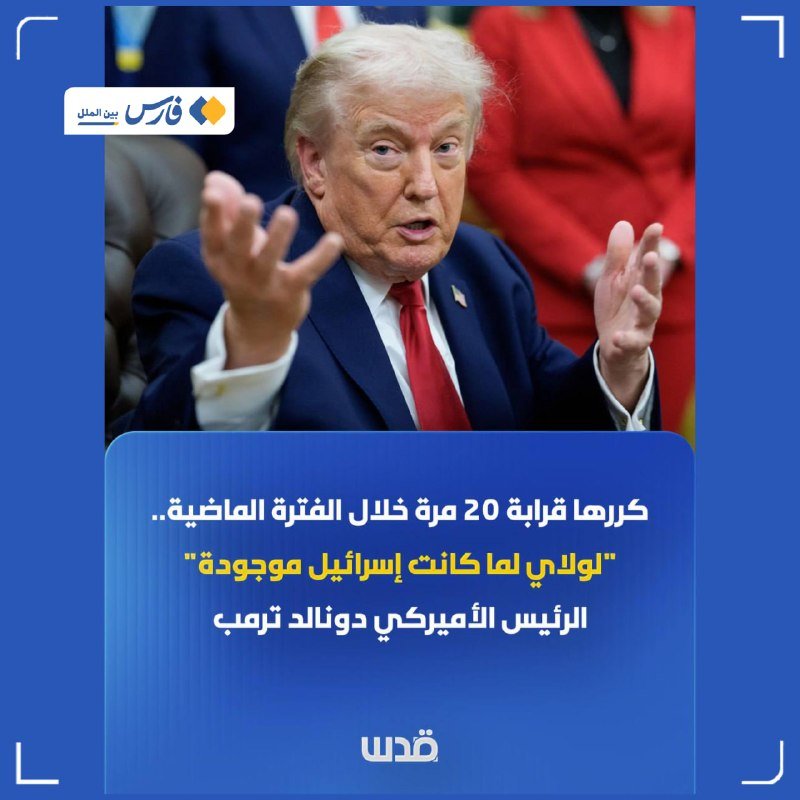
The pattern is harder to ignore than any single headline. In the span of roughly twenty-two hours on 18–19 June 2026, the sitting US president declared anyone opposed to terminating the Senate filibuster "a fool," walked back his own characterisation of Anthropic as a national-security threat, signalled he would spend the weekend at Camp David as the path to a final Iran agreement grew more uncertain, and moved to ease restrictions on testosterone therapy. None of these items, taken alone, is particularly unusual for a second-term White House with a documented appetite for disruption. Read together, they sketch something more interesting: a presidency running in four directions at once, governing by posture rather than policy, and betting that voters will reward the performance over the programme.
The substantive content of any one of these moves is thinner than the political theatre around it. That is itself the point — and the risk.
The filibuster threat as leverage, not legislation
On 19 June 2026, in remarks carried across social channels, the president declared that "anyone who doesn't want to terminate the filibuster is a fool." The line was a flourish, not a procedural roadmap. The Senate's standing rules require a two-thirds threshold to amend cloture provisions at the start of a session, and no whip count in either caucus currently puts that number within reach. What the rhetoric does is reposition the filibuster from a procedural inconvenience into a kind of personal affront — a framing that flatters the activist base while leaving the actual vote for another day.
The political economy here is familiar. Threatened rule changes mobilise donors and primary voters without committing the White House to a bill that would alienate the centrist senators whose confirmations and budget votes the administration still needs. The cost of the threat is zero; the upside, in engagement metrics, is real.
Anthropic and the moving definition of "threat"
A week earlier, the same administration had reportedly viewed Anthropic as a possible national-security concern. By 19 June, the president told reporters that the AI lab had since responded "very responsibly" and that he no longer viewed the company as a threat. The full context for what changed has not been disclosed publicly.
The episode is a useful illustration of how regulatory leverage functions in this White House. Companies in strategically sensitive industries — advanced AI, semiconductor design, biotech, energy infrastructure — operate with a recurring background risk that the federal apparatus may at any moment reclassify them as a threat to national security, with the export controls, contracting decisions, and DOJ posture that follow. A subsequent walk-back, delivered as personal presidential grace, converts what could be a rule-based regulatory process into a relationship. Whether that is good governance or a corruption of process depends on whether the underlying evaluation was ever anything other than political.
The Iran file and the Camp David weekend
On 19 June, the White House indicated the president would spend the weekend at Camp David, with the framing that the path to a final Iran agreement had grown more uncertain. The Camp David setting matters. It is the country's designated theatre for presidential diplomacy — Camp David Accords, the 2012 Afghan review, the 2020 Abraham Accords groundwork — and the choice to retreat there rather than host counterparts at the White House signals an administration that wants to be seen deliberating rather than closing. "More uncertain" is not "failed." It preserves optionality.
The structural question is whether Washington is negotiating a deal it wants or negotiating to demonstrate that it tried. Both readings are plausible; both have been true in different Middle East negotiations across decades. Without a draft framework circulating, there is no public basis to assess.
Testosterone, weight-loss drugs, and the politics of access
The same day's announcement on testosterone therapy restrictions sits in a different policy stream but rewards the same instinct: deliver visible wins on personal-liberty framing. The administration has framed these moves as a rollback of regulatory overreach. Critics frame them as a deregulatory posture that prioritises patient access over safety review. Both are partly right. Testosterone replacement is a legitimate and growing therapeutic category; it is also a category that has attracted significant direct-to-consumer marketing and off-label prescribing. The relevant policy question — what evidence base justifies which prescribing latitude — is not settled by the announcement itself.
The pattern and the stakes
Four policy streams, four rhetorical postures, one calendar week. The president's base rewards motion and personality; the opposition reads each move as a stress test of guardrails; the markets and foreign counterparts try to price a policy environment whose rules seem to be set in the room. That is the structural bet: that a politics of posture can substitute for a politics of programme, at least until the costs of deferral compound.
What remains genuinely uncertain is whether the Iran track produces a framework before the Camp David weekend ends, whether the filibuster threat is converted into an actual vote, and whether the Anthropic episode produces any written guidance that future administrations can be held to. None of those questions is resolved by the volume of announcements; all of them are the kind that determines whether a presidency is remembered as theatre or as governance.
This publication tracks the same presidential calendar as the wire services; the editorial interest is not in any single announcement but in the pattern of governing by posture — and what it costs when the posture outruns the policy.
Wire provenance
This editorial synthesis draws on the following public wire/social posts:
- https://t.me/polymarket/29541
- https://t.me/polymarket/29538
- https://t.me/unusual_whales/18207
- https://t.me/polymarket/29537
- https://t.me/polymarket/29526