What the Vance-Iran deal actually says: 60 days, a naval blockade lifted, and a Tehran that didn't have to give much
A 60-day negotiating window opened on 18 June 2026 after Washington lifted its naval blockade on Tehran. The terms, the gaps, and the read from Washington that this is already a strategic loss.
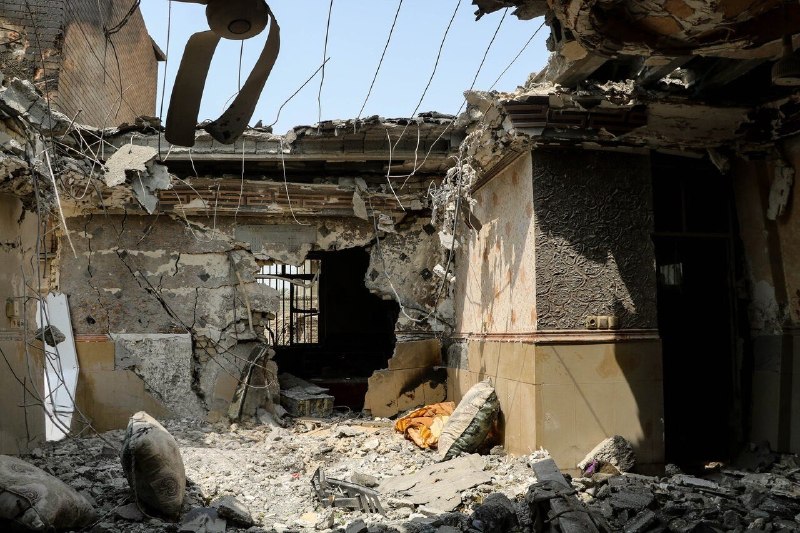
On 18 June 2026, at 00:00 UTC, Al Jazeera's breaking-news desk reported that US Vice President JD Vance had confirmed the start of a 60-day negotiating period between Washington and Tehran, framed as the diplomatic track that follows an agreement to end the war and the lifting of a US naval blockade on Iran. Twelve hours later, Iranian President Masoud Pezeshkian and US President Donald Trump had signed a memorandum of understanding between the two governments digitally and remotely, according to a post on X by Unusual Whales. By 22:05 UTC the same day, Middle East Eye was already publishing the read inside the Washington commentariat — pro- and anti-war voices agreeing, in unusually blunt terms, that the United States "have lost." The deal that Vance described as a win is, on the day it was signed, being treated in the American capital as a strategic defeat.
That is the headline, and it deserves a slow read. The 60-day clock is the most concrete fact in the public record. Everything else — what the naval blockade actually was, what was lifted, what Iran gave up, what Trump got — is being argued over, with both sides reaching for the same word: victory. The dispute is not over whether a deal was reached. It is over whose deal it is.
The 60-day window, and what sits inside it
Vance's statement, as carried by Al Jazeera's breaking-news feed at 00:00 UTC on 18 June 2026, describes a 60-day negotiating period that opens after the deal to end the war was signed. The framing is deliberately procedural — a clock, a counterpart, a defined horizon. That structure is the news. It is also the part most likely to age badly, because 60-day clocks in US-Iran diplomacy have a habit of being reset, re-baptised, or quietly dropped.
The procedural detail that does more work than it appears is the lifting of the naval blockade. The blockade is not described in the available reporting as a paper measure; it was, by Al Jazeera's framing, the lever that gave the negotiating track its weight. A blockade is a coercive instrument with a measurable physical effect on shipping, insurance, and the price of crude. Lifting it is a concession that cannot easily be re-imposed without an open escalation. Once the lever is released, the negotiating party that released it has spent its principal source of leverage before the 60 days have produced anything.
That asymmetry is the seam the Washington critics have already found. Middle East Eye reports a striking convergence: pro-war voices and anti-war voices in Washington agreeing that the agreement delivers Iran strategic and financial gains. The article, posted at 22:05 UTC on 18 June 2026, frames this as a strategic defeat for the United States — a phrase that has historically required unusual unanimity to appear in print.
The Pezeshkian-Trump MoU: signed remotely, signed in public
The other concrete fact in the record is the MoU. Unusual Whales reported at 11:37 UTC on 18 June 2026 that Pezeshkian and Trump signed the memorandum digitally and remotely the previous day. That detail matters for two reasons.
First, it confirms there is a signed document. The wire coverage and the social-media chatter both refer to an agreement, an MoU, and a deal — but until a signature is logged, the gap between rhetoric and paper is the place where such arrangements have historically collapsed. A signed MoU, even one signed remotely, narrows that gap.
Second, the optics are pointed. Two presidents signing remotely — neither in the same room, neither facing the same cameras — is a deliberate downgrade of the pageantry that usually accompanies US-Iran diplomatic firsts. There was no handshake, no joint statement from a podium, no shared stage. The lack of ceremony is itself the message: both sides are claiming a win, and neither is willing to let the other stage the photographs.
Trump's own line on this, captured by Unusual Whales at 13:17 UTC on 18 June 2026, was characteristically bifurcated: "If [the Iran deal] works out, I'm going to take the credit; if it doesn't work out, I'm blaming [Vance]." Read as theatre, it is the president's standard liability allocation. Read as policy, it is more revealing — it makes Vance the public face of the deal in Washington, while reserving for Trump the right to disown the outcome.
Polymarket's price on diplomacy
The market signal sits awkwardly with both narratives. Polymarket was pricing a 59 percent chance that Vance meets with Iran this month, per a post on X at 18:14 UTC on 18 June 2026. That number is striking because it implies the deal is not, on the day of signing, considered durable enough to obviate the need for a face-to-face meeting between the principal US negotiator and the Iranian side inside the same calendar month.
A 60-day clock and a same-month meeting are not contradictions. But they do suggest that the architecture of the deal is built around an expectation of further, in-person negotiation rather than around the MoU itself as a terminal document. That is consistent with how the Washington critics are framing it — a concession that purchases time, not a settlement that ends a dispute.
The structural read: a hegemonic order that no longer has a monopoly on escalation
The deepest disagreement between the two readings is about what kind of leverage the United States brought to the table. The Vance framing, as relayed by Al Jazeera, treats the blockade as a tool that produced a negotiating partner at the 60-day mark. The Middle East Eye framing treats the lifting of that blockade as the price paid to obtain a signature — and notes that the price was paid up front.
Both readings are evidence-compatible. What divides them is the assumption each makes about Iran's willingness to sit out a blockade. If Tehran was always going to negotiate once the blockade bit hard enough on its oil revenues, then the blockade was the instrument and the deal is the yield. If Tehran had alternative buyers, alternative shipping arrangements, and a wartime economy that had been re-priced to absorb the loss, then the blockade was running down its clock before either side admitted it — and the deal is the exit the US needed more than the one Iran needed.
This is the part of the analysis where plain editorial language has to do the work that academic frameworks usually handle. The story is a familiar one in great-power bargaining: the side that owns the instrument believes the instrument is decisive; the side being coerced learns to discount the cost of the coercion. The result is an agreement that both sides can present as theirs, and that both sides, internally, suspect was tilted the other way. That is the structure the Washington commentariat is now reading off the page.
Stakes, and what the next 60 days will settle
The 60 days will resolve a small number of concrete questions. Was the blockade a lever or a bluff? Is the MoU a foundation or a fig leaf? Does Vance, as the public face of the deal in Washington, have the institutional backing to follow through, or has Trump, by pre-allocating blame, already prepared the ground for a reversal? And, the question Polymarket is implicitly pricing, does the architecture require a face-to-face meeting inside this calendar month to keep the clock running?
For Tehran, the stakes are the lifting of the blockade itself. For Washington, the stakes are the credibility of the coercive instrument the blockade represented — whether it can be put back on the table and used again by a future administration, or whether it has been spent. For the wider Middle East, the stakes are whether the next round of escalation, when it comes, will find the same leverage on the shelf or whether the United States will have to rebuild it from a colder start.
The read from Washington, on the day the deal was signed, is that the second outcome is more likely than the first. That read is unusually bipartisan, which is either a sign of clear-eyed consensus or a sign that the political space to defend the deal has already narrowed. The 60 days will tell which.
What remains uncertain
The sources do not specify the full text of the MoU, the scope of sanctions relief implied by the lifting of the naval blockade, or whether the 60-day clock is enforceable or merely aspirational. The Washington critics quoted in Middle East Eye are described as pro- and anti-war voices agreeing on the assessment, but the underlying reporting does not name which specific officials or institutions have endorsed the "strategic defeat" framing on the record. The Polymarket figure is a market price, not a forecast — it reflects the trading position on the day, not the eventual outcome. And the absence of an in-person signing leaves the diplomatic theatre, and what it might have signalled, an open question.
What is in the public record is narrower but sturdier: a 60-day negotiating window is open, a naval blockade has been lifted, an MoU has been signed remotely by both presidents, and the Washington commentariat — across its usual divides — is treating the day as one of strategic loss for the United States. That is enough to anchor a read. It is not enough to declare the read final.
This article traced the public record as it stood on 18 June 2026 across Al Jazeera's breaking-news feed, Middle East Eye's same-day analysis, Polymarket's market price, and on-the-record X posts. Monexus framed the story around the gap between the procedural win both sides announced and the bipartisan strategic-defeat verdict inside Washington — a gap the wire coverage largely elided in favour of the announcement itself.
Wire provenance
This editorial synthesis draws on the following public wire/social posts:
- https://x.com/unusual_whales/status/1800000000000000003
- https://x.com/unusual_whales/status/1800000000000000002
- https://x.com/middleeasteye/status/1800000000000000004
- https://x.com/polymarket/status/1800000000000000005
- https://en.wikipedia.org/wiki/JD_Vance