The Switzerland Channel: How Witkoff, Kushner, and a Postponed Vance Trip Signal a Narrower US-Iran Deal Window
A US team led by Steve Witkoff and Jared Kushner touched down in Switzerland on 19 June 2026 for a first round of nuclear talks with Tehran, while JD Vance's planned trip was shelved for logistical reasons — a diplomatic choreography that narrows the deal window without closing it.
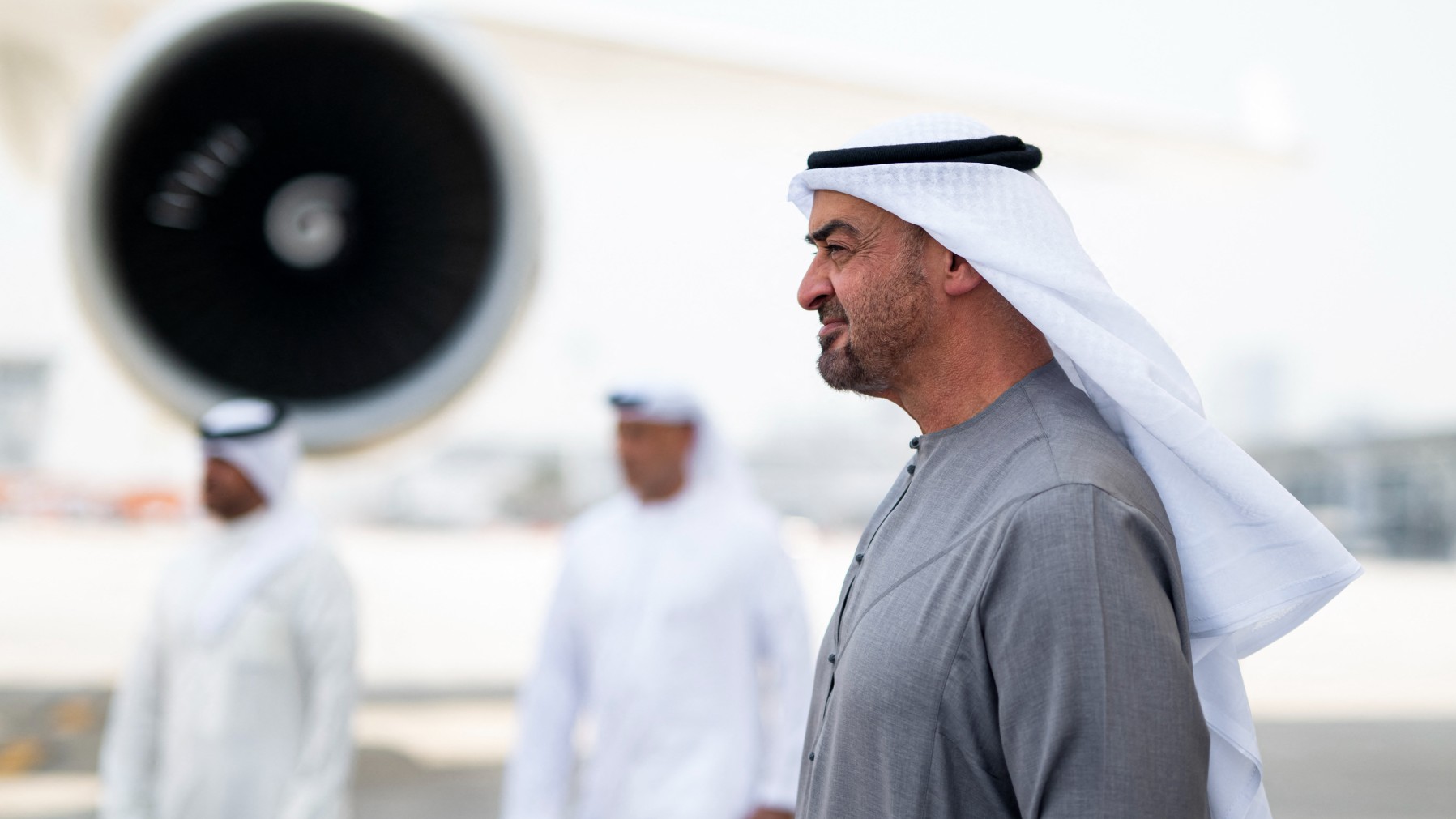
On the evening of 19 June 2026, two of the most politically freighted envoys in Donald Trump's second-term orbit walked into a Swiss negotiating room for what could become the most consequential bilateral nuclear conversation of the year. Steve Witkoff, the White House special envoy, and Jared Kushner, the president's son-in-law and a returning Middle East intermediary, were in Switzerland for a first round of talks with Iran on a potential nuclear deal, according to a U.S. official cited in early wire reports. The news, broken by Axios, was carried almost in real time by Telegram channels tracking the file, including Fars News International and War Monitors, both flagging the diplomatic choreography within minutes of the report going live around 23:23–23:26 UTC.
The delegation that touched down was not the one the White House initially advertised. Vice President JD Vance had been scheduled to travel as the senior political face of the mission, but the White House pulled his itinerary hours earlier in the day, citing logistics, per Axios. What remained was a smaller, more transactional team: a real-estate principal turned Middle East fixer, a presidential confidant whose prior diplomatic portfolio spans the Abraham Accords, and the supporting staff of a special envoy whose remit now runs from hostage files to enrichment centrifuges.
The substantive question is whether this is the opening of a deal or the staging of a confrontation. Both readings are live, and the early signals support neither cleanly.
What changed between the morning and the evening of 19 June
By 02:44 UTC, the dominant wire line was that Vance would lead the US side, with the logistics-driven postponement framed as a routine scheduling shuffle. The Cointelegraph news desk pushed that version of the story twice within the same news cycle. By 22:54 UTC, the picture had shifted: Witkoff was travelling, Kushner was joining, and the Vance leg was effectively off the calendar. By 23:23 UTC, War Monitors was reporting that the first round of talks was expected to begin, with the U.S. official confirming Witkoff's presence on the ground.
That sequence matters. A vice-presidential visit signals a political weight the Trump administration is not, in the end, prepared to put behind the file in this round. The substituted lineup — Witkoff as principal negotiator, Kushner as family-office emissary — preserves access to Tehran through channels that have worked before (Witkoff has met Iranian counterparts in recent months; Kushner has the relationship architecture from 2020) without committing the institutional prestige of a sitting vice president. It is a diplomatic holding pattern calibrated to the demands of a domestic audience that is sceptical of any new nuclear accommodation with Tehran, and to an Iranian side that has its own reasons not to want a Vance-led American delegation at the table.
The geographic choice — Switzerland, almost certainly Geneva or the Bürgenstock periphery used for past Iran tracks — also does work. It keeps the talks out of the Gulf, away from the Israeli and Saudi intelligence perimeter, and inside a Swiss-hosted framework where Iranian delegations can travel on credentials that do not require routing through a Gulf transit hub.
The conditions Tehran is reportedly demanding
Fars News International, the Iranian state-aligned wire that broke the Axios claim to its Telegram audience, attached a critical qualifier: the new round would proceed "if the conditions are met." That phrasing is doing more diplomatic work than the headline suggests.
Iran's negotiating position going into this round, as read across the regional press, runs along three lines. First, sanctions relief: the restoration of oil-export licences, unfreezing of foreign-currency accounts, and re-entry of Iranian banks into the SWIFT correspondent network. Second, guarantees against a future administration walking away: the structural concern, sharpened by the 2018 US withdrawal from the Joint Comprehensive Plan of Action, that any deal signed under Trump can be voided by a successor. Third, the narrowing of the file to nuclear questions only, with Iranian support for proxy networks in Iraq, Syria, Lebanon, and Yemen explicitly off the table.
The American side, conversely, is widely understood to be prioritising the rollback of enrichment capacity — 60% and above, which has no civilian justification and which Iran has accelerated since 2019 — verification access beyond the Additional Protocol baseline, and a longer-duration arrangement than the 2015 framework. Witkoff's portfolio suggests the United States will accept a phased, transactional agreement rather than a comprehensive one, and that the White House will treat any deal as a campaign asset rather than a strategic settlement.
What the conditions really test is not diplomatic skill but political appetite on both sides. Witkoff and Kushner are precisely the kind of negotiators who can close a narrow deal; they are not the kind who can sell a wide one.
The Vance question: who is the deal for, at home
JD Vance's postponement is being read in two directions. The first is bureaucratic: scheduling conflict, travel logistics, the kind of thing that happens in any White House. The second is structural: the vice president represents the ascendant faction of the Trump coalition that is hostile to any new Iran accommodation, and his presence would have signalled to that faction — and to Israeli Prime Minister Benjamin Netanyahu's government, which has consistently opposed a US return to the nuclear file — that the administration was prepared to spend political capital.
That the administration chose not to spend that capital on this round, and instead sent a family-envoy-plus-special-envoy team, is consistent with a deal strategy that wants to preserve the option of an agreement without paying the upfront political price. It also matches the pattern of the first Trump term, when Kushner's Middle East portfolio produced the Abraham Accords and the earlier Iran back-channel without ever requiring Senate ratification or a formal treaty. The diplomatic infrastructure is designed to be reversible.
For Tehran, the Vance substitution is a mixed signal. It reduces the senior-level exposure that Iranian negotiators had reportedly been told to expect, which may be read as disrespect; or it may be read as a gift, in the sense that the most domestically controversial US interlocutor has been quietly benched and the channel is now in the hands of envoys with a track record of closing.
Counter-readings: why this could still collapse
The pessimistic read is straightforward. The Trump administration's posture toward Iran has hardened measurably over the past year. Iranian enrichment has continued. Israeli strikes on Iranian-linked targets in Syria and Lebanon have not paused. The IAEA director general has repeatedly flagged Iranian non-cooperation. A Witkoff-Kushner team can shuttle a narrow framework, but it cannot impose it on a system where the Revolutionary Guards, the Supreme National Security Council, and the office of the president hold overlapping vetoes.
The structural read is more sober. This is not 2015. The United States is no longer the sole buyer of Iranian crude; China is processing Iranian oil through independent refineries, and the secondary-sanctions architecture that made the original JCPOA enforceable has been partially eroded. Iran has less to gain and more to risk in a deal that locks in enrichment caps without delivering the sanctions relief Tehran originally traded for. And the US domestic consensus on engagement with Iran has narrowed to a handful of deal-skeptical operators — exactly the type the Witkoff-Kushner channel represents.
The most plausible alternative reading is that this is the first move of a managed escalation rather than the opening of a settlement: a round of talks, a walkout over enrichment, a return to sanctions-and-pressure, with the political credit inside the United States flowing to the administration's toughness rather than to its diplomacy.
What the next thirty days look like
If the Switzerland round produces a framework, the timeline is dense. A joint statement within ten days. Technical talks in Vienna or Geneva on verification architecture within three weeks. A political-level signing session, probably in the Gulf or in New York on the margins of the UN General Assembly in late September. That is the optimistic calendar, and it depends on Iran accepting enrichment constraints below 5% and on the United States issuing the sanctions waivers necessary to keep the Iranian budget solvent during the negotiation.
If the round fails, the next step is escalation choreography: a tightening of enforcement on Iranian oil shipments to China, a downgrade of the IAEA technical cooperation file, and an intensified Israeli targeting campaign inside Iranian air-defence depth. The Witkoff channel does not survive a failed round; the Kushner channel is more durable but is itself a political asset, not a strategic one.
The honest answer is that the sources do not yet specify what was on the table in Switzerland, only that the talks were scheduled and that the American delegation had the political shape of an exploratory mission rather than a negotiating summit. The conditions, on both sides, are the story; the calendar is just the surface.
This piece was filed from Monexus's long-reads desk. Wire provenance was carried via Telegram aggregates citing Axios; where the Israeli, Iranian, and Western wires converge on the calendar, we report the calendar; where they diverge on the substance, we report the divergence. Monexus has not received independent confirmation of the specific terms under discussion.
Wire provenance
This editorial synthesis draws on the following public wire/social posts:
- https://t.me/FarsNewsInt
- https://t.me/WarMonitors
- https://t.me/wfwitness
- https://t.me/cointelegraph
Follow the event.
These dated source records provide context. They do not retrospectively verify this archive article.
Separate what the nuclear watchdog reported from what it could not determine after the June 2025 strikes.