The killing of Ahmed Wishah, and the cost of working the frame
An Al Jazeera Live cameraman was killed in an Israeli strike on Bureij refugee camp on 20 June 2026 — the latest death in a mounting toll on journalists working the only story the world's cameras are still allowed to enter.
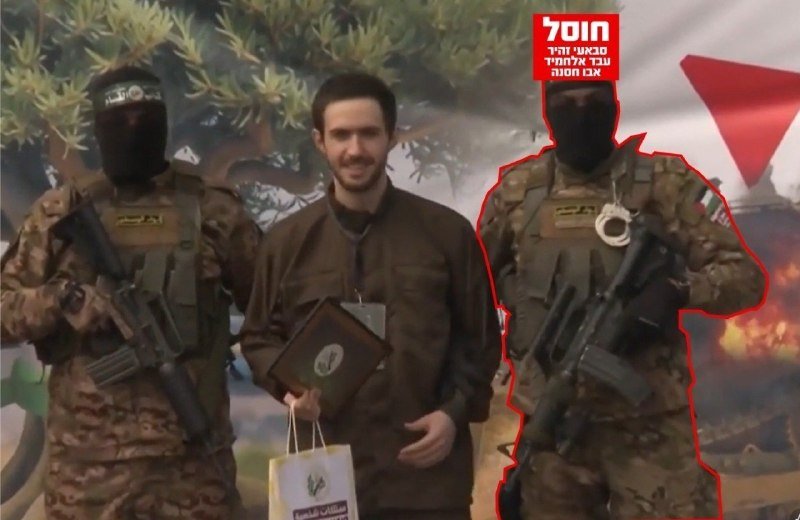
An Al Jazeera Live cameraman, Ahmed Wishah, was killed on the evening of 20 June 2026 in an Israeli air strike on a residential house in Bureij refugee camp in the central Gaza Strip, according to Al Jazeera's own breaking-news bulletin and reporting carried by Middle East Eye's live blog. Al-Aqsa Martyrs Hospital, the receiving facility cited by Al-Alam Arabic's Telegram feed, had earlier put the toll from the same raid at three; the channel's headline figure rose through the evening. Al Jazeera said it "strongly condemns the heinous crime of targeting and killing" its correspondent, framing the strike as deliberate. The Israel Defense Forces, on the public record available at the time of writing, had not published a preliminary finding on the specific house or the journalist's presence inside it. The dispute over what counts as a target — and over who is qualified to make that call — is the story.
Wishah's death is not an isolated fact to be filed and forgotten. He is the latest name on a list that has been lengthening, in public, for nearly two years: journalists killed while working in Gaza, the only war on earth where a foreign press corps still operates at any scale, and only because the Israeli military has, on its own terms, permitted it. Every death tightens the funnel the rest of the profession must work through. The temptation, in covering this story, is to argue past that constraint. The discipline is to stay inside it.
What the sources agree on
Three things are not in dispute. The strike hit a house in Bureij, in the centre of the strip, on the evening of 20 June 2026. A journalist employed by Al Jazeera Live was inside. He is dead. Al Jazeera's own corporate account and the Arabic-language outlet Al-Alam, both reporting in real time, name him as Ahmed Wishah; Middle East Eye's live blog and the Telegram channel ClashReport converged on the same name and the same location within minutes of one another. The reporting spine is unusually consistent for a breaking event in Gaza, and that consistency is itself a small piece of evidence: there is no public dispute among credible outlets that a working journalist was killed in this house, on this day.
What is also not in dispute — and what the wire coverage tends to bury — is the baseline. Israeli attacks across Gaza killed at least ten people on the same day, according to the same Telegram wire that first reported Wishah's death. A single journalist's killing shares a news cycle with a single-digit multiple of civilians whose names are not going to lead a bulletin. The structural fact about reporting from Gaza is that the press is not a special category of victim; it is the visible tip of a far larger one, and the journalism industry's instinct to lead with the journalist is partly an instinct to lead with a colleague it can mourn in the first person.
What is being argued about
Two arguments run through the coverage, and they are not symmetrical. The first, advanced by Al Jazeera in its statement, is that the strike was targeted — that hitting a known Al Jazeera Live correspondent in a residential house implies either intent or a standard of care incompatible with intent, and that either reading puts the incident outside the laws of armed conflict. The second, which an Israeli readout would advance if and when one is published, is that the strike targeted a structure used by militants, that the journalist's presence was incidental, and that the incident will be reviewed through the military's internal mechanisms. Neither side has, as of the time of writing, produced the underlying evidence — operational recordings, target lists, the actual review file — that would let an outside reader adjudicate. The press is asked to take the killing on faith, in one direction, and to wait for the review in the other.
There is a third argument, less often articulated, that deserves space. It is that the press's presence in Gaza is itself a constraint on what the military can do without documentary cost, and that the cumulative effect of permitting — and periodically removing — that presence is a quiet form of information warfare. The killing of a named, bylined journalist in a strike on a house is the kind of event that survives archival; an anonymous fatality does not. The choice of which strikes become recordable is not random, and it is not fully controlled by the side doing the striking.
The structural frame
This is the longest sustained press-access regime of any major modern war, and it is also the most uneven. Western news organisations enter in pooled, escorted, time-limited visits; Al Jazeera's Arabic channel, with its Gaza bureaux, has been a continuous on-the-ground presence. The disparity is not incidental. It shapes which deaths get verified, which voices get quoted in the first paragraph, and which framings — "martyred," "killed," "died in a strike" — survive the desk edit. A press corps that arrives for forty-eight hours under military escort will produce a different story than one that lives in the strip and files in Arabic. The structural bias is in the access pattern, not in any individual correspondent's choices.
A second pattern is harder to talk about and just as real. The journalist-death toll in Gaza is now large enough that the international press freedom community has effectively given up counting each one as a discrete event and started counting them as a category. That reclassification is, in its quiet way, a defeat: it concedes that the loss of any individual name is not going to change the trajectory, and reframes the project from prevention to documentation. Al Jazeera's statement on Wishah is written in the language of an institution that has been here before, often. So is the absence of surprise in the wire copy.
Stakes
The stakes are not, in the first instance, about Ahmed Wishah. They are about who gets to be a journalist in Gaza twelve months from now. Each killing of a named correspondent produces a small, predictable wave — a CPJ tally, a statement from Al Jazeera, a paragraph in the morning brief — and the wave recedes. The cumulative effect, over the kind of timeline this war is now operating on, is a slow, transactional withdrawal: local fixers and stringers who calculate, rationally, that the wages of being identifiable are no longer worth the wages of the job. The day the foreign press corps in Gaza is down to one or two outlets operating under a permission regime that can be revoked overnight is the day the story becomes whatever the military's review process says it is. That day has not arrived. It is closer than it was this morning.
What remains uncertain
The sources available at the time of writing do not include an Israeli military finding on the Bureij house, do not specify how many civilians were killed alongside Wishah, and do not establish — beyond Al Jazeera's own corporate account — that the strike was deliberately directed at a journalist rather than at a structure in which one happened to be working. The framing of intent is a journalistic choice, made on partial information, in a media environment where both sides are experienced at producing the framing that best serves them. The honest position is that the killing is a fact and the meaning of the killing is, for the moment, contested.
This piece is published under the Monexus opinion desk. The desk's framing prioritises named, on-the-ground sources and treats Israeli security concerns as legitimate, while applying equal evidentiary weight to Palestinian civilian harm. The structural argument above is the publication's; the underlying facts are drawn solely from the wire items in the cluster.
Wire provenance
This editorial synthesis draws on the following public wire/social posts:
- https://t.me/alalamarabic
- https://t.me/alalamarabic
- https://t.me/ClashReport