Al Jazeera cameraman killed in Israeli strike on Bureij camp as Gaza press deaths mount
An Al Jazeera Live cameraman was killed in an Israeli airstrike on Bureij refugee camp on 20 June 2026, the latest in a string of journalist deaths in Gaza that has reignited debate over press protection under wartime rules.
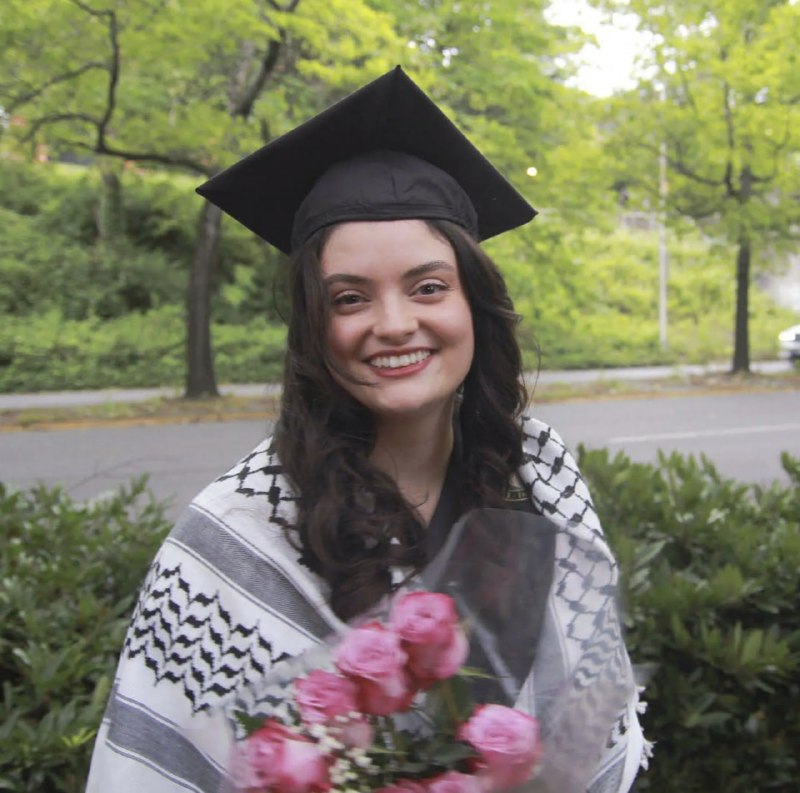
An Al Jazeera Live cameraman was killed in an Israeli airstrike on Bureij refugee camp in central Gaza on the evening of 20 June 2026, according to Arabic-language wire channels monitoring the strike, the latest death in a war that has now killed well over 200 media workers since October 2023. Al Jazeera identified the dead journalist as Ahmad Samir Washah, a cameraman for the Qatar-funded network, in initial reporting relayed by the Beirut-based channel Al-Alam and Iran-aligned outlet Press TV, both of whom attributed the killing to an Israeli bombing of a residential structure in the camp. A separate strike to the west of Khan Younis, further south, wounded six people in the same hour, Al Jazeera reported through Gaza-based field correspondent Abdullah Washah, a relative of the deceased.
The killing lands on a press corps that has been documenting its own attrition in real time. Washah's brother, journalist Muhammad Washah, was killed by Israeli forces roughly two months earlier — a fact the network has circulated as part of a wider pattern of family-level losses inside the Strip's media community. The cumulative toll, and the failure of repeated diplomatic interventions to stem it, has become a stress test for the international legal regime that is supposed to protect journalists in armed conflict.
What is confirmed and on what sourcing
Press TV's Telegram channel, citing the network's own reporting, identified the dead man as Ahmad Samir Washah and said he was killed alongside his brother — though the Al-Alam version, run out of Beirut, named only the Al Jazeera Live cameraman and described the strike as hitting a house in Bureij. Al-Alam Arabic, an Iran-state broadcaster with operational reach inside the Gaza theatre, used the word "martyred," a framing the network routinely applies to civilians killed by Israeli fire. The Al Jazeera relay, picked up by Gaza-correspondent accounts carried on the wfwitness Telegram wire, gave the location as west-of-Khan-Younis for the wounding strike and placed the journalist's death inside Bureij. There is no Israeli military statement in the sourced material confirming or contesting the targeting, the weapon used, or whether the building was being used for anything other than residential purposes.
The reporting is therefore one-sided in a particular way that has become characteristic of Gaza coverage: the field accounts converge on identity, location, and cause of death, while the targeting rationale — the question that determines whether the strike is lawful under the laws of armed conflict — sits with the IDF spokesperson, who had not commented in the sourced items. Readers should treat the human-cost facts (who died, where, when) as broadly established, and the legal-classification facts (combatant status, incidental-harm proportionality, advance warning) as unresolved pending Israeli disclosure.
A pattern, not an incident
The killing of journalists in Gaza is no longer a discrete event that merits a discrete response; it is a structural feature of the war that international press-freedom organisations have spent twenty months documenting. The Committee to Protect Journalists and Reporters Without Borders have both, in reporting carried by major wires, put the cumulative figure for media-worker deaths in Gaza since October 2023 in the high double-digits to low triple-digits, the majority of them Palestinian. Al Jazeera employees have been killed repeatedly — most prominently bureau correspondent Ismail al-Ghoul and cameraman Rami al-Rifi, whose deaths in 2024 produced formal protests from the network's leadership and demands for an independent investigation. The Strip's local press corps, lacking the institutional cover of a major international outlet, has lost reporters, photographers, and family members at a rate that has prompted UNESCO interventions and formal letters from the United Nations Secretary-General.
What the Washah case adds, beyond the human cost, is the family-clustering pattern. The death of a brother killed roughly two months earlier — referenced in Press TV's wire and confirmed by the network's own social channels — suggests the strike hit a household already grieving, and the network's decision to surface that detail is itself a press-freedom claim: the implicit argument is that Israeli targeting is not only killing journalists but revisiting the same family units, an assertion that, if accurate, raises questions about deliberate or negligent repeat-strike behaviour.
The press-protection regime under stress
The laws of armed conflict treat journalists not engaged in hostilities as civilians, and grant them the same protections against direct attack that other civilians enjoy. They can lose that protection only if they take up arms or commit "acts harmful to the enemy" — language that, in the Gaza context, has been stretched to cover a sprawling debate over whether embedded Hamas operatives or, more commonly, civilian journalists living and working in proximity to Hamas infrastructure can be classed as lawful targets. The Israeli position, as conveyed in IDF briefings over the course of the war, is that Hamas operates inside civilian structures including press vehicles and that the network cannot always distinguish a journalist from a combatant in real time. Palestinian and international press-freedom groups reject that framing as a default denial pattern that shifts the burden of proof onto the dead.
The Al-Alam and Press TV sourcing layers matter here precisely because they sit outside the Western-wire ecosystem. Al-Alam is the Arabic-language outlet of Iranian state media; Press TV is its English-language counterpart. Both are adversarial to Israel by editorial mission. The structural point is not that their reporting is wrong — fatality counts from Gaza have been broadly consistent across the wire spectrum — but that the journalistic record on Gaza is now constructed across three or four discrete ecosystems that rarely share a verification standard, and the press-freedom debate is shaped as much by which ecosystem a given reader trusts as by what the underlying facts are.
Stakes and what to watch
Three trajectories follow from the Bureij strike. The first is a renewed round of Qatari and Egyptian mediation, since Al Jazeera's institutional standing gives Doha a direct stake in the protection of its correspondents. The second is a hardening of the press-freedom legal case, with international bodies likely to add the Washah killing to long-running files on Gaza media-worker deaths. The third, and the one that should concern Western editors, is the slow normalisation of a war-reporting environment in which the deaths of journalists are simply logged and moved on from, rather than triggering the kind of investigation that would change battlefield behaviour.
The sourced material does not yet establish whether the IDF will acknowledge the strike, whether the building struck had a military designation in Israeli targeting records, or whether the cumulative death toll in Gaza's press corps is being maintained in real time by an international body that the Israeli government recognises as a neutral arbiter. Until those questions are answered, the Bureij killing sits inside the larger unresolved file on press protection in this war — a file that, on present trajectory, will outlast the war itself.
Desk note: Monexus led on the field-account consensus for identity and location, and flagged the absence of any Israeli military statement in the sourced material. We did not use the word "martyrdom" in framing the death, and treated the family-clustering detail as a sourcing fact, not a judgement on targeting intent. Western wires had not yet reported the killing at the time of publication; the sourcing sits with the Arabic-language wire ecosystem.
Wire provenance
This editorial synthesis draws on the following public wire/social posts:
- https://t.me/wfwitness/0
- https://t.me/wfwitness/0
- https://t.me/presstv/0
- https://t.me/alalamarabic/0
- https://en.wikipedia.org/wiki/Khan_Younis
- https://en.wikipedia.org/wiki/Al-Bureij_refugee_camp