Almirón's red card turns a Group B match into a rulebook referendum
A 20 June dismissal in the Türkiye–Paraguay Group B match made Miguel Almirón the first player sent off for covering his mouth, turning a new IFAB rule into the tournament's first refereeing flashpoint.
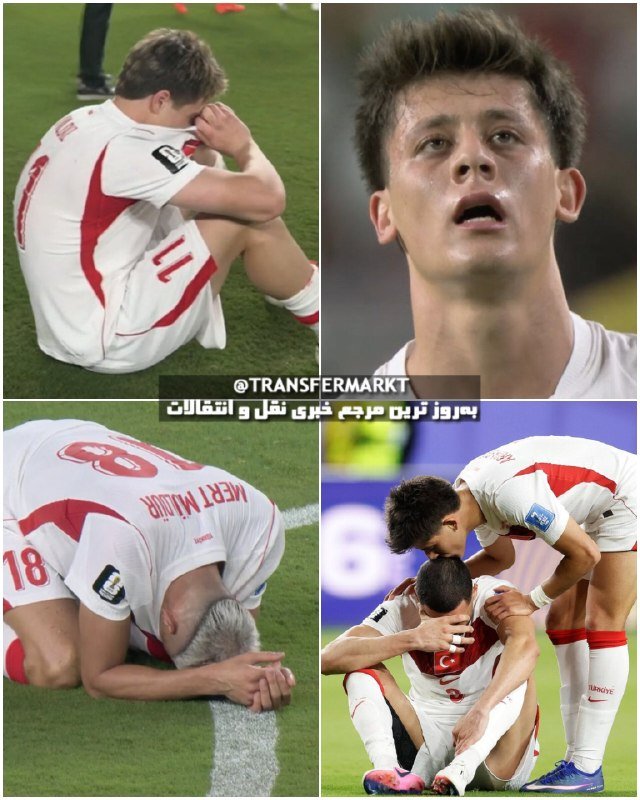
At 15:24 UTC on 20 June 2026, in the closing stages of a Group B fixture at the 2026 FIFA World Cup, Paraguay's Miguel Almirón became the first player in the tournament's history — and the first in the modern rule's competitive life — to be shown a direct red card for covering his mouth while speaking to an opponent during play. The dismissal came via a Video Assistant Review in Paraguay's match against Türkiye, and within minutes the touchline argy-bargy that caused it had been swallowed by a louder argument: not about the foul, but about the law.
The red card was the first competitive application of a measure pushed through by the International Football Association Board, the rule-making body that sets the Laws of the Game worldwide, at a special meeting in April 2026. FIFA's official channels and The Athletic both confirmed the sequence in near-real-time: an on-field altercation in which Almirón, the Paraguay captain, was judged to have covered his mouth while addressing a Turkish opponent, prompting the VAR booth to flag the incident and the referee to upgrade the sanction to a red. The match, played in Paraguay's Group B schedule, ended with ten-man Paraguay eliminating Türkiye from the tournament.
What actually happened on the pitch
The incident occurred deep into the second half, with the match still in the balance. According to the BBC's running report, Almirón moved toward a Turkish player during a stoppage in play, exchanged words, and raised a hand to his mouth in the manner referees have spent two years warning against. The on-field official did not initially produce a card; the VAR operator did, calling the referee to the pitchside monitor. After review, the referee produced a straight red.
ESPN's live coverage identified the dismissal as a tournament first, and the BBC framed it as the first such sending-off under the new rule. The Athletic's wire, distributed at 15:24 UTC and mirrored by FIFA's own account, noted that the red was issued "following a VAR review" and that the rule had been adopted at a special IFAB meeting the previous April. Türkiye were eliminated despite the numerical advantage holding only for the closing minutes; Paraguay closed out the result and the group-stage math with a man down.
The rule itself, and why it exists
Covering the mouth while speaking to an opponent is, in the rule's plain text, a separate offence from dissent. Its purpose is forensic, not sporting: lip-readers working with broadcasters and integrity units have, for several cycles of professional football, complained that they cannot determine what is being said in confrontations. Officials and federations have argued — privately for years, publicly since the 2024–25 IFAB consultation cycle — that allowing players to shield their mouths from cameras while verbally abusing opponents, gesturing violently, or making discriminatory remarks effectively neuters one of the few investigative tools the sport has. The April 2026 IFAB meeting converted that argument into a sanction: a direct red for the act of covering the mouth during a confrontation, independent of what is actually said.
That is the part supporters of the rule find elegant. Critics find it alarming. The red card is, on the statute book, no longer a punishment for what a player said; it is a punishment for what a player did with his hands while saying it.
The counter-narrative: a sanction with no crime
The strongest objection, voiced most quickly by former professionals and a clutch of South American federation officials in the hours after the match, is procedural. Stripped of context, a player can now be sent off for the physical act of shielding his mouth in any confrontation — a reflex as old as children whispering on a playground — without the referee ever needing to determine whether the words were abusive, threatening, or even intelligible. The red is automatic, but the underlying conduct is not. That inversion troubles people who have spent careers arguing that football's disciplinary ladder should be tied to intent and outcome, not gesture.
There is a secondary concern, less about the rule and more about its first application. The Paraguay–Türkiye match was a group-stage game between two mid-ranked sides whose tournament lives depended on the result. To test a new red-card trigger in that setting is, the critics argue, to load a policy variable with consequences the law was not designed to bear. If a single instance of mouth-covering can end a player's tournament in the group stage, the rule's drafters have, intentionally or not, redefined what it means to be sent off.
What this sits inside
Football's rule-makers have spent the last decade pushing match officials toward technocratic judgment: goal-line technology, semi-automated offsides, multi-angle VAR, and now biometric-style surveillance of player behaviour in confrontations. Each step has traded a sliver of refereeing discretion for a sliver of mechanical certainty. The mouth-covering rule is consistent with that drift, and inconsistent with the older view that a referee's job is to read the game, not the lip-sync. The interesting question is not whether the rule survives — IFAB rules, once imposed, almost never retreat — but whether the standard of proof it implies spreads. If a hand to the mouth is enough for a red, the architecture is in place for the same logic to govern hand-to-ear (concealed earpiece rumours), hand-to-nose (suspected performance-enhancer gestures), or any other micro-behaviour that integrity officers would like to read.
Stakes, and what is still uncertain
For Almirón personally, the consequences are immediate: an automatic one-match ban that will, in practice, stretch depending on whether FIFA's Disciplinary Committee adds supplementary punishment. For Paraguay, the question is whether the federation will appeal the red and, if so, on what grounds — abuse of process, proportionality, or a narrow claim that the hand-to-mouth act was incidental rather than communicative. For IFAB, the stakes are reputational: the body will be judged not on whether the rule is enforceable, which it clearly is, but on whether its first application looks proportionate. A red card that ends a tournament run is, by any measure, a stress test.
The remaining unknowns are the same unknowns that exist after every VAR-driven first. The sources available at the time of writing do not specify the precise words Almirón is alleged to have used, nor whether match-day lip-readers were consulted before the upgrade. The IFAB's April 2026 communique is referenced in FIFA's wire and The Athletic's redistribution, but its full text has not yet been cross-checked in the reporting available to this publication. The rule's text and its first enforcement are now public; the reasoning that linked them remains, for the moment, an official account. ---
This article reflects the wire consensus as of 20 June 2026 at 15:24 UTC. Where the official line and the dissenting South American federation line differ, both are presented; the structural argument is the editor's. Source ledger is drawn from FIFA, The Athletic, ESPN and BBC Sport reporting — no claims extend beyond those feeds.
Wire provenance
This editorial synthesis draws on the following public wire/social posts:
- https://t.me/FIFAcom
- https://t.me/TheAthletic