Amazon Drops an OpenAI Biopic at the Worst Possible Moment for Amazon
A studio just walked away from its own movie because the subject signed a deal with the studio's rival. The implications extend well beyond Hollywood.
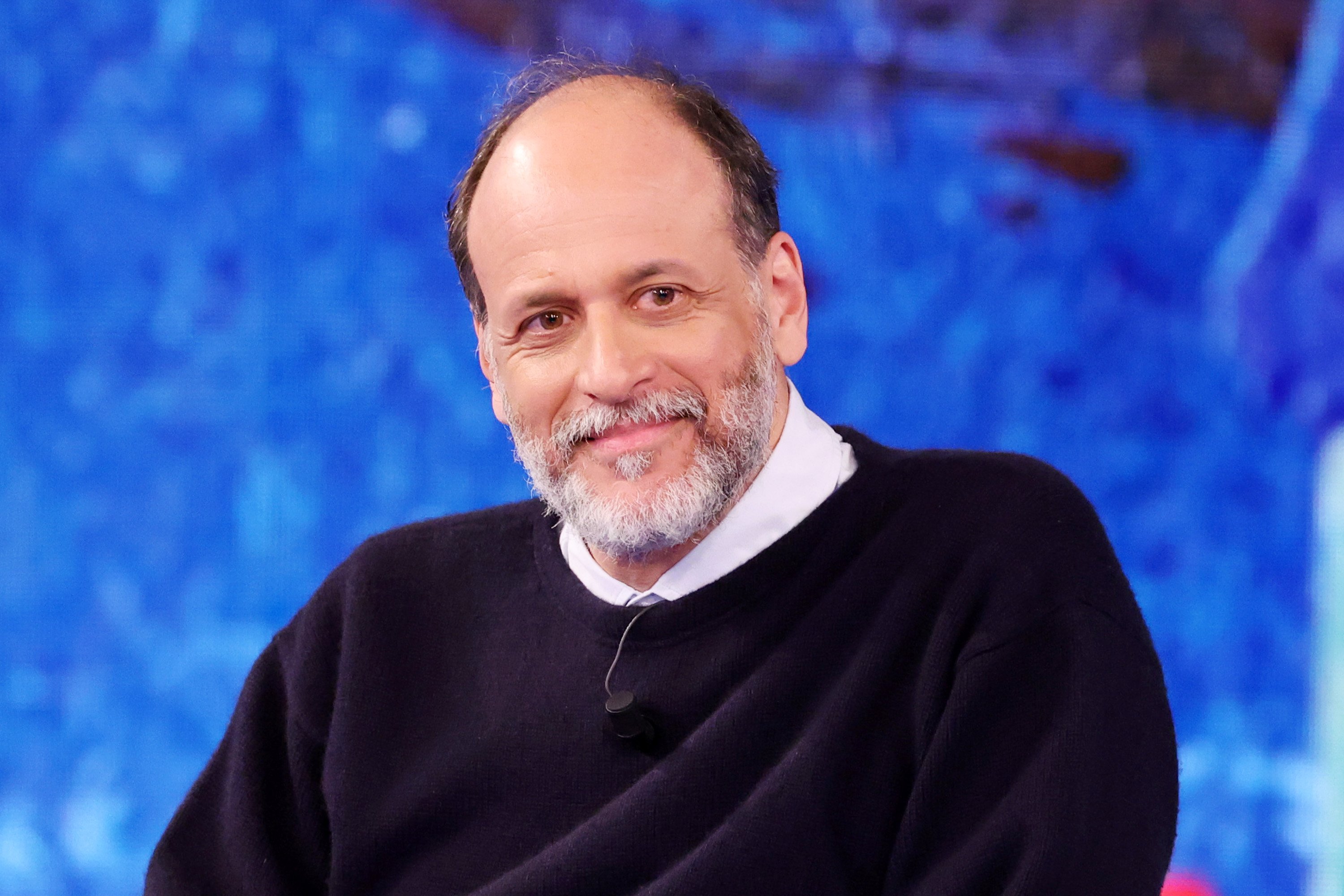
Amazon MGM Studios has walked away from Artificial, the Luca Guadagnino-directed biopic of OpenAI chief executive Sam Altman, citing the awkward collision between the project and the studio's freshly-announced cloud partnership with OpenAI itself. As reported on 19 June 2026, the studio informed filmmakers that the film "will be better served if it were released by a different studio." The decision, made less than a week after Amazon's commercial alliance with OpenAI was confirmed publicly, is the cleanest case yet of a tech-entertainment conglomerate choosing its platform business over its prestige pipeline.
The move is small in cinema terms and enormous in everything else. It confirms what Hollywood's lawyers and talent agents have suspected for two years: that the same handful of companies now own both the screens and the subjects, and that the screens will not be allowed to embarrass the subjects. The same studio that wanted the prestige of a Guadagnino prestige project now calculates that the prestige costs more than it pays.
A studio-versus-subject conflict made literal
The premise of Artificial was, by the standards of tech biopics, deliberately uncomfortable. Guadagnino, the Italian director whose recent English-language work has tilted toward subjects with moral heat (Challengers, Queer, the Suspiria remake), was attached to a film about a chief executive who has been the central character in a boardroom coup, a regulatory confrontation with the Federal Trade Commission, and the most-watched corporate governance fight of the decade. Altman gave Guadagnino's production unusual access. The trade press treated that access as the story.
What the trade press did not treat as the story, until this week, was the distributor. Amazon MGM acquired the project, sources say, on the implicit assumption that the OpenAI of 2024 and the OpenAI of 2026 would be sufficiently different companies to make the film legible as historical drama. That assumption collapsed when Amazon Web Services and OpenAI announced their expanded commercial partnership, which made Altman simultaneously a subject of an Amazon-financed film and a counter-party to an Amazon business line. The legal department's conclusion, communicated to filmmakers on 18 June 2026, was that the conflict could not be cleanly managed.
The pattern: when the screen and the subject share a parent
The Artificial situation is unusual only in its explicitness. Streaming platforms have spent the last three years producing documentaries, docuseries, and prestige dramas about figures whose employers either own the platform outright or rent the platform's shelf space. Netflix's NYT Presents strand has run critical pieces on subjects whose parent companies are Netflix advertisers or shareholders. Apple TV+ has released feature documentaries about figures whose products sit in Apple's ecosystem. The editorial framing tends to soften in proportion to the commercial overlap.
What Amazon has now done is refuse to even attempt the softening. By dropping Artificial, the studio has acknowledged in writing what the rest of the industry has only implied: that the prestige economics of a tech biopic are now subordinate to the platform economics of the underlying partnership. The film can be a critical success and still be a liability if the counter-party is also a multi-billion-dollar cloud customer. The math on that, in 2026, does not balance.
Why this is about more than Altman
The film industry is a useful barometer because its decisions are documented and litigable in ways that other corporate-speech decisions are not. When Amazon declines to distribute a film about a counter-party, that is a single event. When Amazon Web Services negotiates latency, capacity, or pricing with the same counter-party, the leverage dynamics are identical but the press releases do not say so out loud. The same logic that pulled Artificial off the Amazon MGM slate is the logic that determines which artificial-intelligence products are surfaced by default on consumer hardware, which startups get access to foundation-model APIs on preferential terms, and which jurisdictions receive which level of regulatory forbearance.
In each of these cases the conflict is structural rather than personal. The individual executives involved may have clean consciences. The system has not been engineered to require them not to. A studio that both finances a critical film and runs the cloud a counter-party depends on is a studio whose editorial independence is conditional by construction.
Counter-narrative: the market still wants the movie
The industry read inside the agencies, by Friday 19 June 2026, was that Artificial would not actually struggle to find a home. Multiple A-list distributors reportedly made contact with the production within hours of the Amazon withdrawal. The argument from that side is straightforward: a controversial biopic about a controversial executive, with an A-list director and proven subject access, is exactly the kind of project that benefits from distributor distance. A24, Netflix, and Apple TV+ were all named in early coverage as plausible bidders; none has confirmed. The film, on this reading, may end up with a louder launch than it would have had under Amazon.
The counter-counter read is less reassuring. A film can survive a distributor change and still lose the moment. The OpenAI story that Artificial was made to capture is not the OpenAI story of late June 2026. The boardroom coup, the regulatory confrontation, the Sam Bankman-Fried-style public scepticism about the founder — those were the textures that justified the project when it was greenlit. The OpenAI of mid-2026 is a different corporate animal, with a different press operation and a different set of adversaries. Guadagnino's film may now arrive as historical drama rather than as current-events cinema, which is a less valuable product in an attention economy that pays for proximity.
Stakes: the editorial floor of a streaming platform
The narrower stakes are about one film. The wider stakes are about whether the major streaming platforms retain any editorial floor at all. A studio that will not distribute a critical biopic of a counter-party is a studio whose commissioning decisions on every other adjacent subject are suspect by induction. Artificial makes the conflict legible. Every other project on the Amazon MGM slate that touches artificial intelligence, cloud infrastructure, or any executive whose employer does business with AWS now sits under the same shadow.
For OpenAI specifically, the exposure cuts both ways. The company keeps the cloud partnership it wanted. It loses the cultural imprimatur that a Guadagnino prestige film would have provided. Whether that trade is favourable depends on how OpenAI's management values the prestige economy relative to the infrastructure economy. The early signals — a continued willingness to trade access for distance — suggest the company has made that calculation and is comfortable with it.
For audiences, the practical question is whether the Artificial that eventually ships will resemble the Artificial that was greenlit. Directors whose work depends on distributor relationships learn, over a career, to anticipate the moments when the relationship becomes the constraint. Guadagnino has been here before with other studios and other financiers. He is unlikely to be surprised. What is new is that the studio in question has now made the constraint a public artefact, in writing, dated 18 June 2026, and that the artefact is itself part of the story.
The film will probably find a home. The question the home will have to answer is whether the home wants the film to be good in the way Guadagnino originally intended, or good in the way the new financier's legal department can sign off on. Those are not the same thing. The difference between them is the difference between a prestige industry and a platform utility, and the Artificial situation is the first clean public test of which one Amazon MGM wants to be.
Desk note: Monexus frames this as a structural conflict-of-interest disclosure rather than a single-studio controversy. The Western wire line treated it as a distribution story; we read it as a case study in how platform consolidation is reshaping the editorial floor of the prestige film industry.
Wire provenance
This editorial synthesis draws on the following public wire/social posts:
- https://t.me/c/9999999999/1