Ben Gvir's Lebanon taunt and the rhetoric that travels before the bombs
An Israeli minister's taunt about Lebanese mothers, and a prime minister's promise of a 'heavy price,' land on the same Friday the world is supposed to be de-escalating.
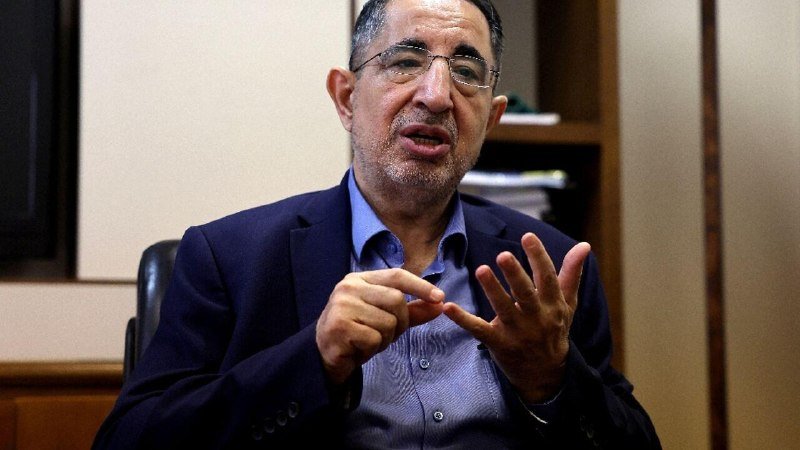
On the evening of 19 June 2026, two messages fell within hours of each other. The first came from Israeli Prime Minister Benjamin Netanyahu, posting on social media that Israel would make Hezbollah pay a "heavy price" for its attacks and that Israeli forces "will remain in the security zone in southern Lebanon," according to a wire summary logged at 23:29 UTC by Middle East Eye. The second, captured by the Telegram channel RNIntel at 00:46 UTC on 20 June, carried a line attributed to National Security Minister Itamar Ben Gvir: "For each tear an Israeli mother sheds, a thousand Lebanese mothers must cry. All of Lebanon must burn." Middle East Eye confirmed the substance of the post in a separate item timestamped 03:29 UTC on 20 June.
The framing is the story. One message is the language of a head of government promising retaliation; the other is the language of a coalition partner daring the retaliation to become extermination. Read together, they tell a reader what sort of war is being argued for inside the Israeli cabinet on the day a wider regional de-escalation is supposedly on the table.
A Friday of two registers
Netanyahu's statement is the register that diplomats are built to parse. It is conditional, escalatory, and deliberately vague about scale — the standard grammar of a prime minister reserving the right to widen a campaign. Middle East Eye's write-up places it inside a familiar pattern: a Hezbollah attack, a public pledge of cost, a reference to a "security zone" in southern Lebanon that implies an extended ground posture rather than a strike-and-leave operation.
Ben Gvir's message is a different instrument. The "thousand Lebanese mothers" line is not aimed at diplomats, at Hezbollah's leadership, or even at Israel's north. It is aimed at a domestic political audience that has been receptive, since 7 October 2023, to maximalist language about the country's adversaries. Read literally, it is a call for collective punishment of a neighbouring civilian population — a category of statement that, when it comes from an official of a state engaged in active hostilities, sits uneasily with the obligations Israel has accepted under the laws of armed conflict. Read politically, it is a coalition signal: the far-right flank of the government intends to set the ceiling for what counts as a proportionate response, and intends to set it high.
The counter-narrative worth taking seriously
The dominant international read is that rhetoric of this kind is, at best, a destabilising distraction from serious diplomacy, and at worst a green light for actions that will pull the region into a wider war. That is the read most European foreign ministries, much of the UN system, and most of the Arab League will arrive at by Monday morning.
A more generous read exists, and on the evidence it does not hold. The argument would run that Ben Gvir is a marginal voice inside the cabinet, that his inflammatory posts are a known feature of his political brand, and that operational decisions on the northern front sit with the prime minister and the defence establishment, not with the national security minister. Each of those claims is partly true. The countervailing fact is that Ben Gvir is not a backbencher; he sits in the cabinet that has collectively set the direction of the war in Gaza, in Lebanon, and now in whatever the southern Lebanon security zone is to become. Speech from a minister is not a private outburst; it is part of the political weather the military operates in. Officials in Jerusalem know this. They have chosen not to discipline it.
What the structural frame actually is
Strip away the personalities and a familiar pattern comes into view. In any sustained military campaign, the rhetoric of a governing coalition tends to drift toward the rhetoric of its loudest members, because loudness is rewarded by the political base and restraint is not. Israel's north-of-the-border campaign against Hezbollah has run for the better part of two years; it has a real operational logic and a real constituency that supports it, including Israelis who have spent months displaced from border communities by rocket and drone fire. That constituency deserves acknowledgement. But the cost of letting the most maximalist voice in the cabinet set the rhetorical ceiling is that every subsequent Israeli action is read, abroad and among Israel's own Arab neighbours, as carrying that voice's permission. The "security zone" in southern Lebanon that Netanyahu referenced on 19 June is, in this reading, a military instrument whose meaning is being written in real time by a minister who would like to see "all of Lebanon" burn.
Stakes, and what to watch next
If the trajectory continues, three things happen. First, the diplomatic space for a negotiated arrangement along the Israel-Lebanon border — the kind of arrangement that ended the 2006 war and that mediators in Washington, Paris, and Doha have been trying to assemble — narrows. Hezbollah's political leadership gains a domestic argument that any deal with the current Israeli government is worthless, because the loudest voice in that government has publicly disavowed the idea of Lebanese civilian life as something to be protected. Second, the civilian toll inside Lebanon rises in ways that will be documented in real time by journalists, by UN agencies, and by the diaspora press, with predictable downstream effects on European and global public opinion. Third, the small but real constituency inside Israel — soldiers' families, reservists, the diplomatic and security old guard — that prefers a bounded campaign to an open-ended one loses another round to the maximalists.
What remains genuinely uncertain is the operational substance behind the words. The sources available on 20 June do not specify the size, location, or duration of any expanded Israeli ground deployment in southern Lebanon, nor the specific Hezbollah attacks that Netanyahu's statement was responding to. The framing on both sides — Hezbollah's claim of battlefield success, the Israeli government's claim of an enduring security zone — is contested in real time and will be contested harder as the campaign continues. What is not contested is that an Israeli minister has used the word "burn" in reference to a neighbouring country's civilian population, and that, on the same Friday, a prime minister has promised a "heavy price" without disowning him. The rest of the world is now reading those two messages in the same envelope.
This publication treats the laws-of-armed-conflict frame as load-bearing. An Israeli security concern is real and an Israeli civilian hostage situation is real; collective punishment of a neighbouring civilian population is not a policy any serious government endorses, and calling it out is not a hostile act. That is the line the wire should hold to, and usually doesn't.
Wire provenance
This editorial synthesis draws on the following public wire/social posts:
- https://t.me/rnintel