Brazil cruise past Haiti, but the World Cup is still waiting for the real Seleção
Matheus Cunha scored twice and Brazil eased past a Haiti side already out of the tournament — but a 3-0 win over the group's weakest team does not settle the question every neutral asked coming in: are Argentina and France playing a different sport?
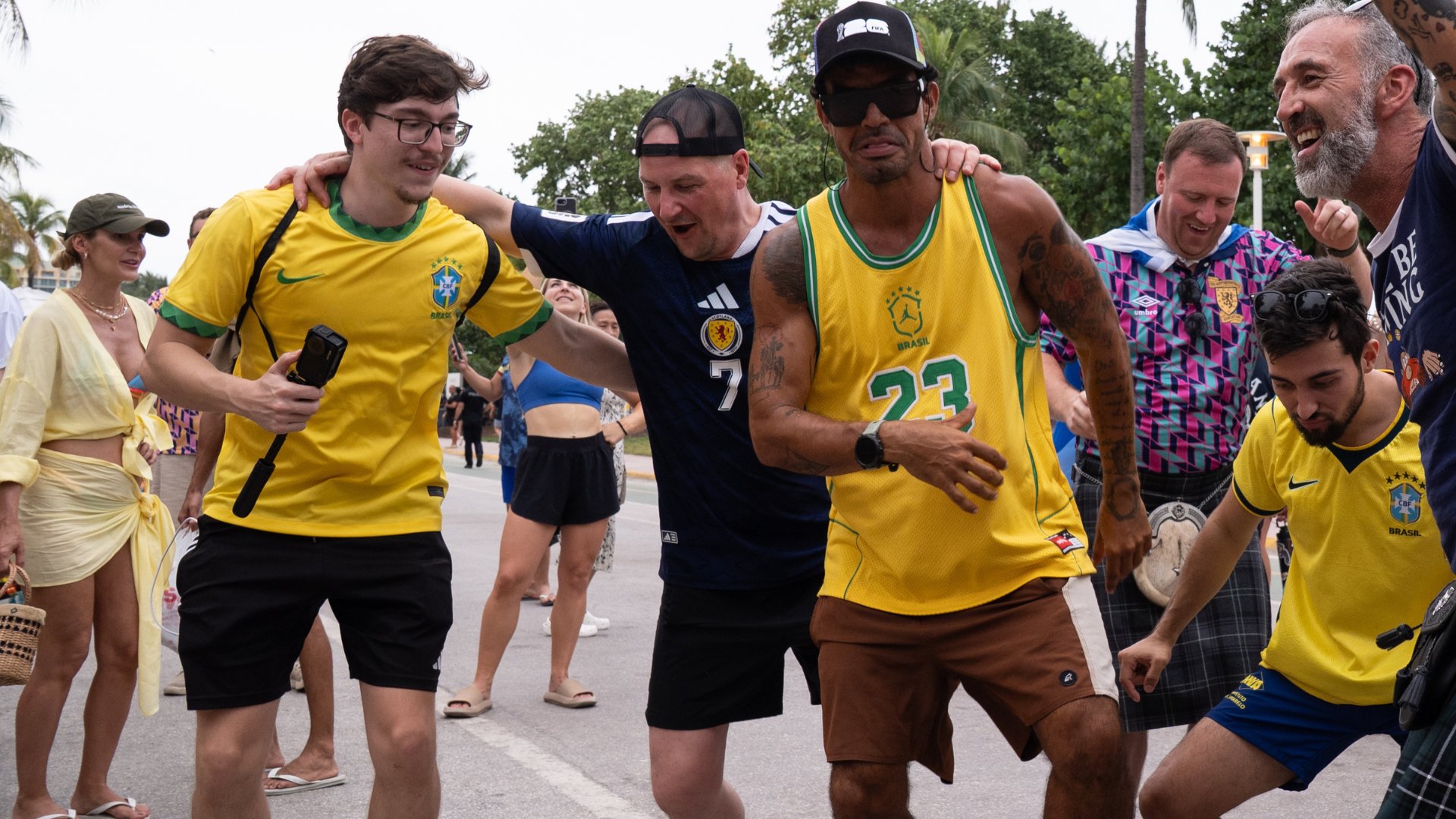
Three-nil against Haiti, on the board, job done. On paper, Brazil's opening night at the 2026 World Cup in the United States on 20 June 2026 looked routine: Matheus Cunha, the Manchester United forward, scored twice, the third went in elsewhere, and Haiti became the first team eliminated from the tournament. That, at least, is the clean version of the scoreline, and the clean version is what the table will remember. Everything else — the gap between Brazil at full pelt and the Brazil that turned up at kick-off — is the story this group stage has actually started to tell.
A Seleção are not in crisis. They are, however, in a position no Brazilian squad wants to occupy one match into a World Cup: visibly behind. Argentina have looked like the team to beat. France have looked like the team that intends to defend. Brazil, for sixty tired minutes against a Haiti side that competed gamely and was ultimately outmatched, looked like a side still deciding what it wants to be when it grows up. The comfortable win papers over a question that will not go away until the knockout rounds: where, exactly, is this Brazil team?
The scoreboard says one thing
Haiti are not a side anyone plans around at a World Cup. Their resources are thin, their squad is largely drawn from the country's modest domestic league and a handful of French second-tier contracts, and their tournament effectively began with a fixture that demanded they contain one of the pre-tournament favourites in front of a hostile crowd. They failed that test, as the expected goals map will confirm, but they did not fold. According to the BBC match report, Haiti held Brazil at arm's length for long spells before Cunha's opener broke the resistance and the second goal, once it arrived, took the game away. The third made the scoreline look emphatic rather than earned.
Sky Sports' write-up framed it the same way: a comfortable 3-0, Cunha the difference, Brazil's campaign started without alarm. None of that is wrong. It is also not the whole truth.
What the rivals are doing
This is where the picture gets uncomfortable for Dorival Júnior's side. Argentina, the defending champions, have arrived in the United States playing with the same controlled menace they carried through Qatar. France, the 2022 finalists, have the deepest attacking pool in the tournament and the kind of defensive organisation that turns 2-0 leads into 4-0 wins. The two sides most often bracketed with Brazil as the tournament's elite have, in their opening fixtures, looked a tier above everyone else on the pitch.
Brazil have not. The Cunha goals masked a first half in which the Seleção struggled to break down a low block — the very problem that ended their last two World Cup campaigns at the quarter-final stage. There is time to fix it. Group C still offers room to grow into form. But the gap between Brazil's ceiling and their floor, so far, is the gap between the team that won the opening forty minutes against a deep defensive block and the team that couldn't.
The BBC's analysis put it bluntly: rivals Argentina and France have impressed; Brazil, despite the result, have struggled to hit top form. That is not a media contrivance. It is what the eye test and the underlying numbers both suggest.
The Cunha question
Cunha's brace is the one unambiguous positive from the Haiti game. The Manchester United forward, who arrived at Old Trafford in the summer window with a fee reported in the £62.5m region, took his two chances with the calm of a centre-forward who has nothing to prove to the English football public and everything to prove to his national-team selectors. Goals against Haiti are not, on their own, a statement of arrival. They are, however, the kind of audition tape a striker uses to demand starts against harder opposition.
That matters because Brazil's forward line has been the most-debated position group in the squad since the squad was named. The manager now has a forward in form, scoring in tournament football, with Premier League minutes in his legs. The temptation to start him against tougher opposition is no longer a selection gamble; it is the path of least resistance.
What the group still owes us
Haiti's elimination on matchday one sharpens the picture. With the weakest side in the group already gone, Brazil's next two fixtures — against sterner opposition — will tell us whether the Haiti win was a launchpad or a ceiling. The argument for patience is straightforward: tournament football rewards teams that peak in the second and third matches, and Brazil have a habit of arriving at World Cups cold.
The argument against patience is equally straightforward: Argentina and France are not going to wait. The gap between the favourites at this tournament is small, and it shrinks further if any one of them treats the group stage as a warm-up. Brazil, on the evidence of one match, are treating it that way. They have until the knockout rounds to stop.
The counter-read
It is worth saying out loud: this is one match, against the group minnows, and Brazil won it 3-0 without ever really looking like losing. The dominant framing — Brazil behind the curve — depends on the assumption that the first match is a reliable signal of tournament form. Recent World Cup history is mixed on that. Spain lost to Switzerland in 2010 and won the tournament. Germany laboured through the group stage in 2014 and won the tournament. Brazil themselves were unconvincing in 2002 until Ronaldo remembered how to be Ronaldo.
The case for calm is real. The case for concern is also real. Both can be true at once, and both probably are.
What remains uncertain
The sources covering the Haiti game do not yet provide the underlying performance data — expected goals, pressing intensity, field tilt — that would settle whether Brazil's stodgy first hour was a tactical choice or a warning sign. The early tournament form of Argentina and France, while praised in commentary, rests on a similarly small sample of matches. The group stage still owes the tournament several data points. Until then, Brazil's position is best described as: alive, ahead, and behind everyone they expected to be ahead of.
This piece was framed by the Monexus sports desk as a tournament-form read rather than a match report. The wire led with the scoreline; the underlying question — whether Brazil are a serious contender or a slow starter — sits one tier below the result and is where the next two group games will either confirm or erase the doubt.