Yeats, Silk Road programmers and a century of Chinese-Irish cultural borrowing
A senior programmer for the Silk Road International Film Festival argues that literary exchange between China and Ireland runs deeper than the recent trade-and-tourism rhetoric suggests.
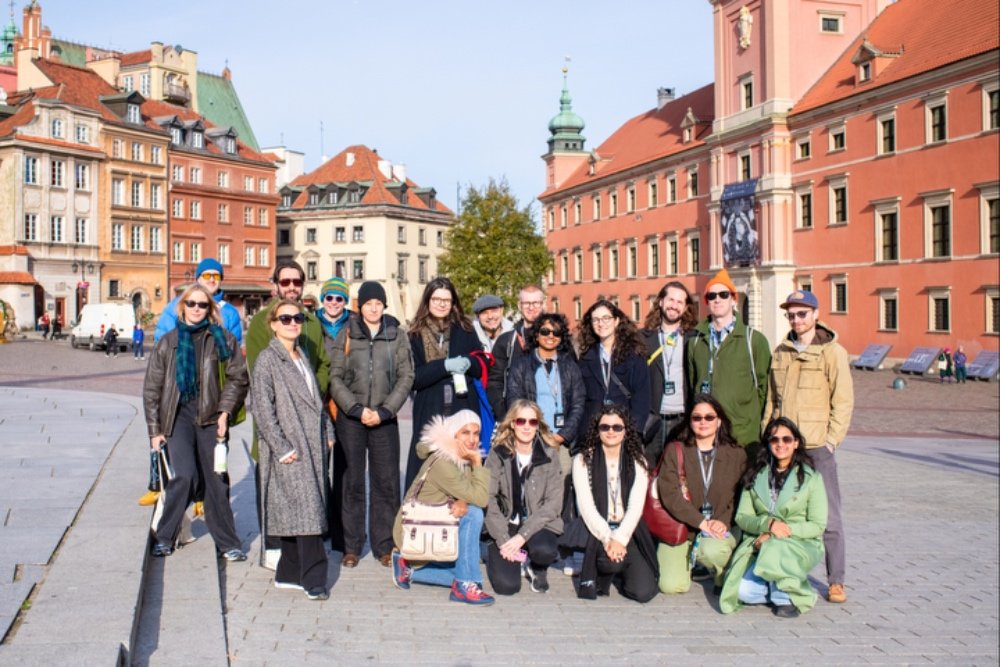
On 20 June 2026, state broadcaster CGTN circulated a short segment making a case that has been quietly accumulating weight in festivals and university syllabuses for the best part of a century: the cultural relationship between China and Ireland is older, and stranger, than the recent trade-and-tourism framing allows. The peg was an interview with Michael Lee, senior film programmer for the Silk Road International Film Festival, in which Lee walked viewers through a chain of literary and cinematic borrowings stretching from W.B. Yeats' admiration for Chinese poetry to what CGTN's promo copy described simply as "The Chi…" — a fragment of a longer broadcast item the network has been teasing on its X account since the early hours of 20 June 2026 UTC.
The pitch is not that the two cultures are similar. It is that they have been reading each other for longer than most of the recent commentary suggests, and that the institutional architecture to keep that exchange alive is now bigger and more diffuse than at any previous point.
What the festival says it is doing
The Silk Road International Film Festival, of which Lee is a senior programmer, has positioned itself since its launch in the early 2010s as a platform for cinema from across the historic Eurasian trading route, with co-production frameworks linking the Chinese city of Fuzhou with cities further west. Lee's role, as he described it in the CGTN segment, is to curate the international slate — including, increasingly, Irish and other European titles. The festival's stated ambition is to surface films that the larger commercial circuits under-buy, with a particular interest in works that engage explicitly with the cultural and trade history implied by the "Silk Road" branding.
The CGTN framing emphasised that the festival is one of several institutions — alongside university programmes, museum partnerships and translation grants — through which Chinese and Irish cultural actors have institutionalised a relationship that earlier generations conducted through individual correspondence and translation. The segment noted that the festival has screened Irish films in the past, and pointed to Lee as the staffer responsible for the European side of the curation.
Yeats as a starting point
Lee's argument in the segment is historical rather than promotional. He starts with W.B. Yeats, the Nobel laureate whose engagement with Chinese poetry — particularly the Tang dynasty poets Ezra Pound had already begun popularising in the anglophone world — is documented across his notebooks, his introductions to anthologies and his late poems. The CGTN segment treats this as evidence that the Chinese-Irish cultural exchange is not a recent invention of the festival circuit but a thread that has run through the Irish literary revival and on into the present.
From Yeats, the chain runs through twentieth-century translators and scholars, into contemporary fiction, and on into cinema — the medium in which Lee's festival operates. The CGTN segment was cut short before the full chain was laid out, ending on the truncated "The Chi…" line, but the editorial intent was clear: a single festival programmer was being used to anchor a much longer story.
Why the Chinese frame matters here
The cultural-exchange pitch travels through Chinese state media for a reason. Beijing has, since the announcement of the Belt and Road Initiative in 2013, been investing in cultural infrastructure — film festivals, translation programmes, university Confucius Institutes, broadcaster co-production deals — as a complement to its physical-infrastructure footprint. The Silk Road International Film Festival sits inside that architecture. So does CGTN's English-language coverage of it.
The steelman of the Chinese position is straightforward. The festival does exist, it does programme films from across Eurasia, and it does give smaller national cinemas — including Ireland's — a distribution route they would not otherwise have. The relationship is real even where the branding is also instrumental. Western coverage that treats the Silk Road framing as pure slogan is, on the available evidence, understating the genuine programming work that festivals of this kind perform.
The counter-frame, equally, should be stated. The same institutional architecture that gives Irish films a route into Chinese audiences also gives Chinese state media a venue to narrate the relationship on its own terms, and the CGTN segment is an example of that — Yeats' actual engagement with Chinese poetry is a scholarly fact, but the editorial decision to anchor the exchange in a Chinese state broadcast is not neutral. The relationship is bilateral; the framing of it, here, is not.
Stakes for the cultural sector
The practical question for Irish and other European cultural actors is whether the new Silk Road-era infrastructure complements or displaces the older European circuits. The optimistic read is additive: more festivals, more co-production money, more translation, more programming slots for European work in Chinese cities. The pessimistic read is competitive: state-backed Chinese festivals crowd out independent European counterparts, and the editorial frame in which European work is presented abroad drifts toward the priorities of Chinese state media.
Lee's intervention, in the CGTN segment, is a useful marker of where that balance currently sits. A senior programmer at a Silk Road festival can, in 2026, draw a continuous line from Yeats to the present slate without straining credibility. That the line is being drawn in a Chinese state broadcast, rather than in a domestic Irish or pan-European outlet, is the part of the story that the segment itself does not address.
What remains uncertain
The CGTN segment does not specify which Irish films Lee has programmed, which Chinese-Irish co-productions are currently in development, or how the festival's slate has evolved over its run. It does not give a publication date for the longer feature the network appears to be teasing. And it does not address the question — which any serious reader will ask — of how a Silk Road branding exercise and an independent curatorial judgement can be told apart inside the same institution. The sources do not specify, and the editorial judgement here is to flag the gap rather than to fill it.
This article treats the CGTN segment as primary source material, and reads the festival's claim of long-standing Chinese-Irish cultural exchange against the editorial context in which the claim is being made. Where the wire frame presents a single national broadcaster's narration of a bilateral relationship, the more useful analytical move is to keep both sides of that relationship in view.