Hezbollah's Southern Rejection and the Negotiation Theater on the Lebanon Border
With Hezbollah firing more than 50 projectiles at Israeli forces overnight and its leader rejecting surrender demands, the announced Lebanon-Israel track risks looking less like a process and more like a holding pattern.
On the night of 19–20 June 2026, Israeli forces operating in southern Lebanon came under fire from more than 50 projectiles launched by Hezbollah, according to an "urgent" alert from the Iran-linked outlet Al-Alam Arabic posted to Telegram at 08:29 UTC on 20 June. The salvo is the most concrete operational data point yet attached to a diplomatic track that, on paper, is supposed to be drawing the same strip of land into a different configuration: experimental zones handed to the Lebanese army under arrangements to be negotiated between Beirut and the Israeli side.
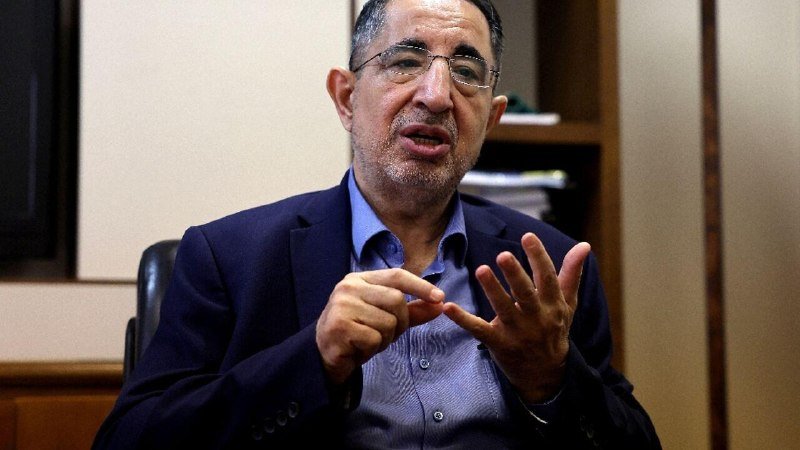
What is unfolding on the Lebanon–Israel frontier is not a war narrative and not a peace narrative. It is the uneasy interval in between, where firing and negotiation co-exist by design rather than by accident. Hezbollah's secretary-general Naim Qassem, in remarks carried by Palestine Chronicle on 20 June at 07:53 UTC, rejected surrender demands and accused the United States and Israel of running a coordinated campaign against Lebanon. The framing matters: he is publicly refusing the political premise of any handover, even as the technical premise of that handover is being negotiated in a separate channel.
The kinetic layer
The overnight barrage is the immediate story and it is verifiable in shape if not in every figure. Al-Alam Arabic's flash alert, framed in the outlet's characteristic "the enemy army" register, attributes the launch to Hezbollah and places the targets inside Israeli-occupied southern Lebanon. Telegram-channel counts of this kind are routinely inflated and the wire will refine the numbers over the next 24 hours. The directional fact — that fire resumed across the line on the eve of the announced negotiation track — is what matters for the political read. It tells the Israeli public, and the Israeli command, that the actor they are being asked to talk around is still willing to shoot.
The political layer
Qassem's statement does the same work on the other side. By framing the confrontation as a US-Israeli campaign rather than a bilateral border dispute, he locks Hezbollah into a narrative in which any territorial arrangement is a concession extracted under duress — not a step toward normalisation. That posture is consistent with the movement's self-conception since the 2024 war, but it carries an obvious cost: it leaves less room for a Lebanese-army handover to look like a Hezbollah victory, even if it is one. The earlier flash, broadcast by the Israeli "Broadcasting Authority" per Al-Alam Arabic's 07:26 UTC post, suggests that experimental zones in the south are being scoped specifically for handover to the Lebanese army — a formula that, on paper, gives Beirut a flag and Hezbollah a quiet corridor.
The structural frame
What we are watching in plain language is a multi-track conflict being run by different clocks. The kinetic track is measured in projectiles and casualties. The negotiation track is measured in announcements about zones and timelines. The political track — Qassem's speeches, the Iranian backing, the Lebanese government's room to act — is measured in whether any of the technical arrangements can survive a single night of cross-border fire. None of these tracks governs the others, which is why the same week can hold both an "urgent" alert of 50 projectiles and a quietly scheduled round of talks.
Stakes and what remains contested
If the trajectory holds, the Lebanese army inherits a southern strip whose security depends on the restraint of an armed movement that has just publicly refused to be restrained. Israel gets a quieter month and a thinner force footprint. The United States gets a deliverable to point to. Hezbollah gets to argue it did not surrender, only re-routed its posture through a state institution. Everyone can claim something. That is precisely why the arrangement is fragile, and why the next overnight exchange will be read as a verdict on it rather than a disruption of it.
The honest caveats are visible. The casualty and projectile counts are channel-attributed and will move. The exact scope of the "experimental areas" has not been published. The Lebanese government has not, on the record in the materials available to this publication on 20 June 2026, confirmed the negotiation track. What can be said with confidence is that the gap between what is being announced and what is being fired has narrowed to a single night — and that is the unit of time in which this story is now being written.
Desk note: Monexus frames the southern-Lebanon exchanges through the wire-adjacent alerts and the public statements of the parties themselves, rather than through either the Israeli or Iranian state-aligned framing. The diplomatic and the military are reported as one story because, on this border in June 2026, they are one story.
Wire provenance
This editorial synthesis draws on the following public wire/social posts:
- https://t.me/alalamarabic
- https://t.me/alalamarabic
Follow the event.
These dated source records provide context. They do not retrospectively verify this archive article.
Separate what the nuclear watchdog reported from what it could not determine after the June 2025 strikes.