Iran moves to shut the Strait of Hormuz, blaming Israeli strikes on Lebanon
Tehran's IRGC says the waterway is closed to all shipping. Western wire reporting on the underlying strikes is still thin, and the closure claim has not been independently confirmed.
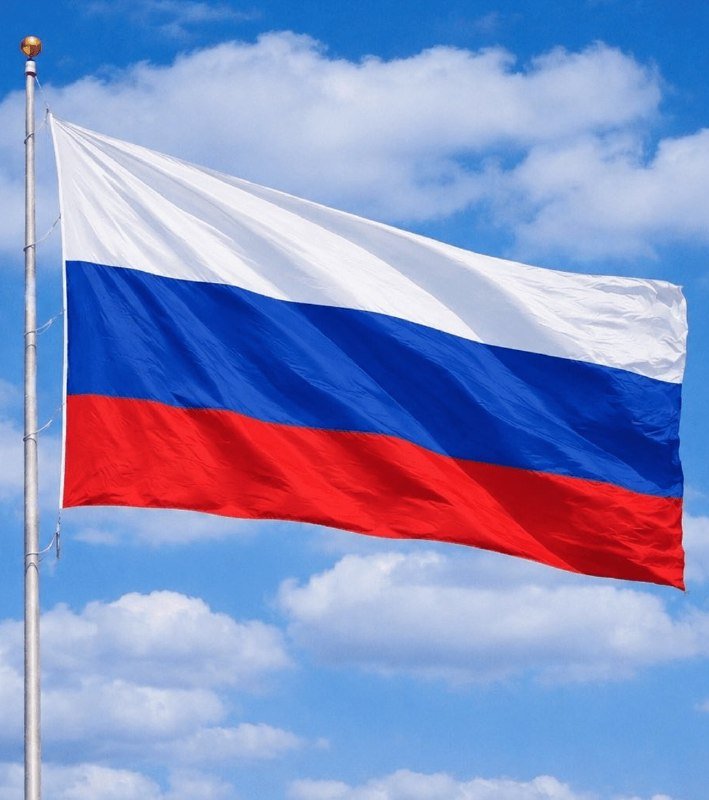
Iran's Islamic Revolution Guards Corps Navy announced on 20 June 2026 that the Strait of Hormuz is closed to all shipping, framing the move as a direct response to Israeli strikes on southern Lebanon. The statement, attributed to the IRGC's Khatam al-Anbiya Central Headquarters, was carried by Iranian state outlets within minutes and picked up by regional aggregators by the early afternoon UTC. As of 16:41 UTC, no Western naval authority had publicly confirmed a physical closure of the waterway, and the shipping tracker data that would normally corroborate such a move had not yet been cited by major wire services.
The announcement lands in a chokepoint that carries roughly a fifth of global seaborne oil and a significant share of liquefied natural gas, and it lands at a moment when Israeli operations in Lebanon have visibly intensified. The geometry of the exchange — a kinetic strike in one country, a maritime threat in a third — is the kind of cascading escalation that markets, diplomats, and ship operators watch for in real time, even when the underlying claims remain unverified.
What was actually said
The IRGC Navy's message, distributed by IRNA in English at roughly 16:36 UTC, warned vessels not to approach the strait and declared the waterway closed to all traffic. A separate statement from Khatam al-Anbiya, the central military command that coordinates Iran's cross-service operations, was carried by PressTV and cited a "clear breach of faith and violation of commitments" by the United States, alongside the Israeli strikes cited as the trigger. Middle East Eye, reporting on the same chain of statements at 16:10 UTC, said the closure was announced over Israeli attacks on southern Lebanon and that the language originated in a military command statement carried by Iranian state media.
The Telegram-circulated framing — that Iran is "conducting an extraordinary brand of diplomacy to pit Netanyahu and Trump against one another," in the words of one widely shared account — is not itself an Iranian statement. It is the analytical gloss now being applied to the move by regional commentators, and it captures the optics more than the legal reality of a strait that, on paper, cannot be closed by any single littoral state.
The counter-claim and the physical reality
The Strait of Hormuz is, in law, an international strait. Any single state's claim to close it is a political act, not a legal one, and the practical effect depends entirely on whether Iran's navy is willing and able to enforce a no-transit order against commercial tankers, many of them flying flags of states with their own naval presences in the Gulf. Iranian drone and fast-boat activity has harassed shipping in the strait before — most notably in 2019, when several tankers were struck in incidents the United States and its Gulf allies blamed on Tehran — but a full, declared closure would be a different order of escalation.
Independent maritime-tracking services had not, as of the time of writing, published aggregated data showing a collapse in transit through the strait, and Western wire services cited in this article have not yet carried confirmation from a non-Iranian naval authority. That matters: in past Iranian confrontations, the gap between the announcement in Tehran and the operational reality in the water has been the difference between a price spike that fades by the next session and a sustained rerouting of crude flows. The next twelve to twenty-four hours of AIS data, and any statement from the US Fifth Fleet, the Royal Navy, or the Gulf Cooperation States' joint maritime centres, will be the actual test.
The structural frame: a pressure valve, not a blockade
The more useful read is not that Iran has suddenly acquired the ability to seal the strait, but that it is signalling it is willing to weaponise the threat. The Strait of Hormuz is the single most concentrated energy chokepoint on earth, and the politics of the strait have long been the politics of mutual assured exposure. Gulf monarchies, China, India, Japan, and South Korea all sit downstream of its traffic; Iran's economy sits inside the same body of water, with its own export terminals on the south coast. The threat to close is, in effect, a threat against Iran's own customers.
The structural pattern is older than this announcement. Over the last decade, Iran has escalated through instruments that are visible but reversible: harassment of tankers, seizures of commercial vessels, drone and missile strikes on Saudi infrastructure, the 2019 attack on Abqaiq. Each time, the move was calibrated to extract diplomatic attention rather than to deliver a strategic fait accompli. The Strait of Hormuz announcement sits inside that same pattern, with the added variable of an active Israeli campaign in Lebanon that gives Tehran a stated cause, however thin the operational link.
Stakes and the next forty-eight hours
The immediate stakes are financial. Brent and benchmark Asian Dubai crude will open the week with a premium priced in for any credible closure scenario, and LNG markers in Japan and South Korea tend to move on Hormuz headlines within hours. The longer stakes are diplomatic: a sustained closure claim, even if partially enforced, would force Washington to choose between de-escalation with Tehran and visible naval reinforcement, and would push Beijing and New Delhi into the unusual position of having to publicly defend free transit in a waterway where they have historically deferred to regional powers.
The honest caveat is that none of this is confirmed beyond the Iranian statements themselves. The wire reporting cited above carries the announcement and the surrounding context; it does not yet carry a Western naval confirmation, a casualty figure from the Israeli strikes in Lebanon, or a market close. The closure claim, for now, is a declared intent. Whether it becomes a fact will be decided in the water, not in the Telegram channels that are currently amplifying it.
Desk note: the four thread items are Iranian state media, an Iranian-aligned Telegram account, and Middle East Eye's brief on the same Iranian statements. Monexus has carried the announcement on that sourcing and flagged the absence of independent confirmation rather than padding the source list with Western wire URLs we have not read.
Wire provenance
This editorial synthesis draws on the following public wire/social posts:
- https://t.me/s/Irna_en
- https://t.me/s/presstv
- https://t.me/s/osintlive
Follow the event.
These dated source records provide context. They do not retrospectively verify this archive article.
Separate what the nuclear watchdog reported from what it could not determine after the June 2025 strikes.