Hormuz shut, Lebanon burning: Tehran turns the tap and bets the Gulf will blink
Tehran says it has closed the Strait of Hormuz in retaliation for Israeli strikes on Lebanon that killed at least 83 people in 24 hours; US Central Command reports 55 vessels transited the same day. The contradiction defines the next 72 hours.
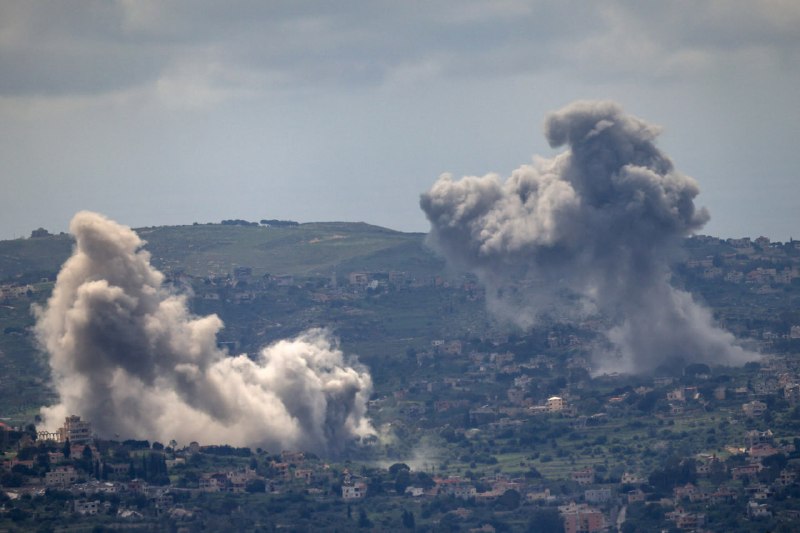
On the afternoon of 20 June 2026, Iran's paramilitary Revolutionary Guard announced that the Strait of Hormuz was closed to commercial traffic. The trigger, Tehran said, was not Gulf politics but Lebanon: at least 83 people killed in Israeli strikes over the previous 24 hours, what Iranian state-aligned media described as "Zionist crimes" and a deliberate breach of an unnamed ceasefire arrangement. Within ninety minutes, US Central Command offered a flat contradiction — 55 vessels had transited the strait that day, traffic was up, and American forces were "supporting freedom of navigation" in the general area. The two statements, issued almost in tandem, define the crisis now unfolding in the world's most important energy chokepoint.
The pattern is by now familiar: an Iranian announcement of closure, a Western naval command reporting the waterway remains open, a market that briefly panics and then waits to see who blinks first. What is different this round is the trigger. The closure was framed, from Tehran outward, as a retaliatory gesture for Israeli military operations against Lebanon rather than as a direct response to anything done to Iran itself. The leverage is regional; the casus belli is Lebanese.
The trigger: a Lebanese escalation, not a Gulf one
The strike campaign that Iran cited runs along the Israel–Lebanon border and into southern Lebanese towns. According to the Iran-aligned outlet The Cradle, the 83 deaths occurred over a 24-hour window, with officials in Tel Aviv having "openly urged the army" to expand the operation. The phrasing matters: the framing positions Beirut, not Bandar Abbas, as the territory in dispute. France 24's reporting on the closure echoed the same logic, citing "continued Israeli strikes in Lebanon" as the proximate cause and describing the strait order as the "first step" in a graduated Iranian response.
The ceiling of that escalation is unclear. Iran's foreign ministry, per Middle East Eye coverage of the announcement, warned of "further steps being taken" without specifying what they would be. In the past, Iranian escalations have followed a recognisable ladder — proxy mobilisation, then drone and missile demonstrations, then tit-for-tat strikes on shipping, then direct missile exchanges. The current step sits on the second or third rung, depending on whether the closure order is enforced.
The counter-narrative: 55 ships, traffic up
Within minutes of Iran's closure announcement, US Central Command pushed back. Clash Report relayed the CENTCOM read: commercial traffic had increased on 20 June, and US naval forces were operating in the general area to "support freedom of navigation." Middle East Eye cited the same CENTCOM figure — 55 vessels through the strait that day. The implication was blunt. Iran had announced a closure; the US Navy, which has maintained a continuous presence in the Gulf since 2024, was reporting business as usual.
This is the contradiction that will define the next 72 hours. If the strait is genuinely closed, the 55-vessel figure is wrong. If the figure is right, the closure is a political statement rather than a physical reality — a symbolic tap on the shoulder, designed to be read in capitals from Riyadh to Tokyo, not enforced by IRGC Navy fast boats. The most likely read is the second. Iran has used the threat of Hormuz disruption for years as a bargaining chip in nuclear and sanctions negotiations; the track record of actually halting tanker traffic in the face of an American carrier strike group is thin.
The structural frame: leverage without a sanction gun
What sits beneath the headline is a structural problem Iran has been living with since the reimposition of maximum-pressure sanctions: its conventional deterrent against a US carrier strike group is limited, and its asymmetric lever — the ability to threaten Gulf shipping — has been slowly devalued. Gulf monarchies have spent two decades building bypass pipelines and storage capacity. Saudi Arabia's east–west pipeline, the UAE's Fujairah terminal, and Iraqi export reroutes mean that not every barrel transits Hormuz. The closure threat still moves Brent crude, but it does not move it as much as it once did, and the political cost of a genuine, sustained closure — to Iran's own exports, to its relationships with Beijing and New Delhi, to its room for manoeuvre in any future nuclear deal — is now higher than the leverage it produces.
That calculation is what makes this round of posturing interesting. The closure was framed as a response to events in Lebanon, not as a Gulf dispute. By decoupling the strait threat from any direct Iranian grievance, Tehran is signalling to a wider audience — the Axis of Resistance network, domestic hardliners, perhaps Beijing — that it will use Hormuz not only when its own interests are at stake but also when its regional posture is challenged. The bet is that the symbolic reach of the threat matters more, in the current configuration, than its physical enforcement.
The stakes: an oil shock, a precedent, or both
The market reaction will be the first hard data point. A genuine closure of even 48 hours, with physical enforcement, would lift Brent crude prices by an order of magnitude that the post-2022 sanctions environment has not yet seen. Saudi spare capacity is real but finite; SPR releases can dampen but not absorb a sustained disruption. The political shock would land hardest in Asia — China and India together take the majority of Gulf crude that does transit Hormuz — and would complicate, not simplify, Beijing's posture on a Middle East it has been trying to keep at arm's length.
The precedent, however, is the more durable risk. If Iran's announcement is allowed to stand even as the strait remains physically open, two things become true at once. First, that Iran can announce a closure for political purposes without the US responding militarily — a kind of rhetorical sovereignty over the waterway that the Fifth Fleet has historically denied. Second, that the next closure announcement will carry the same ambiguity, and the market's response will degrade with repetition. The lesson of the past decade is that threats compound: a closure that once moved oil by 20% in 2019 moves it by less today, and the next one will move it by less still. Washington can either re-establish the credibility of its counter-position now, with a Navy posture that physically contests any enforcement, or it can let the precedent sit.
What we do not yet know
Three things remain genuinely unresolved as of the afternoon of 20 June 2026. First, whether the IRGC Navy has the capacity, and the political authorisation, to physically stop a tanker that defies the order. The Centcom statement implies that the answer, for now, is no. Second, whether the Lebanese strikes will continue at the pace Tehran cited — 83 killed in 24 hours is a high baseline, and the operational tempo on the Israel–Lebanon border over the next 48 hours will determine whether Iran has to escalate further. Third, and most consequentially, whether the unnamed "ceasefire" Iran alleges the US and Israel are violating is the November 2024 arrangement that paused fighting between Israel and Hezbollah, or a separate, less formalised understanding. The Cradle, France 24 and Middle East Eye all reference a ceasefire; none of them name which one. The ambiguity is doing diplomatic work — it lets Tehran position itself as defender of an agreement the US is allegedly breaking, rather than as the initiator of a new escalation.
This article treats the Iranian announcement and the US Central Command contradiction as equally weighted inputs, rather than privileging the Western wire read. The structural bet — that a closure can be announced but not enforced — is one Iran has made before; the Lebanese trigger is the variable that makes this round genuinely new.
Wire provenance
This editorial synthesis draws on the following public wire/social posts:
- https://t.me/thecradlemedia
- https://t.me/StandardKenya
- https://t.me/ClashReport
- https://t.me/thecradlemedia
- https://t.me/StandardKenya
Follow the event.
These dated source records provide context. They do not retrospectively verify this archive article.
Separate what the nuclear watchdog reported from what it could not determine after the June 2025 strikes.