Hormuz on a hair-trigger: Iran closes the strait as US talks loom
Iran's joint command has shut the Strait of Hormuz again, blaming Israeli strikes on Lebanon. Pakistan says US and Iranian negotiators will sit down in Switzerland on Sunday — and the sequencing is doing all the talking.
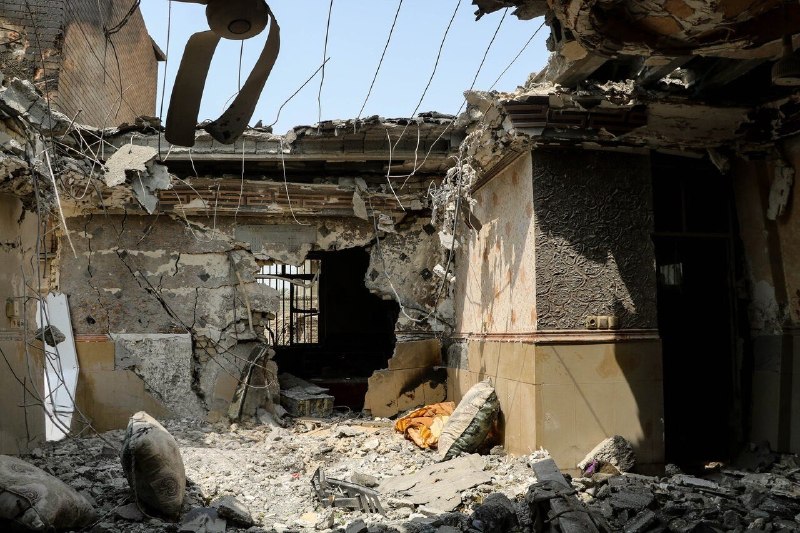
On the afternoon of 20 June 2026, Iran's joint military command ordered the Strait of Hormuz closed, citing continued Israeli military operations inside Lebanon. By early evening, a Pakistani-mediated track was on the books: US and Iranian negotiators would meet in Switzerland on Sunday, Pakistani officials said, the first formal round since the last round collapsed. The two announcements, separated by hours and contradictory in spirit, capture where the Middle East now sits — one announcement designed to raise the cost of inaction, the other designed to lower the cost of returning to the table.
What the closures are actually buying Tehran is leverage over a negotiation that has, by every visible account, stalled over the size and pace of any sanctions relief and over what, exactly, Iran will be allowed to do with what it already has. What the Swiss meeting is buying Washington is a venue in which that leverage can be discussed without either side having to admit it has blinked. The Strait of Hormuz is the chokepoint through which roughly a fifth of globally traded crude passes. Closing it is not a sentence — it is a tariff notice.
The closure, and how it was framed
Iran's closure announcement came first. According to a 17:06 UTC wire on 20 June 2026, the joint military command said the move was a direct response to Israeli strikes on Lebanon, with no reference to the imminent Swiss talks and no explicit demand attached. The framing matters: by tying the closure to Lebanon rather than to the nuclear file, Tehran positioned the strait as a regional retaliation tool rather than a bargaining chip in the bilateral channel. The distinction is paper-thin in practice — Iran controls Hormuz, and Israel controls the air over Lebanon — but politically it lets Iran argue it is reacting rather than posturing.
Reporting carried by Unusual Whales on X at 15:06 UTC, citing Axios, carried the same headline and the same linkage: closure in response to Israeli operations in Lebanon. That sequencing — Axios first, then Iran's own command statement — suggests the closure was telegraphed through a Western-aligned outlet before being formalised. Whether that is journalism or choreography is a question Tehran's critics will not bother asking gently. Either way, the public-facing language was unambiguous: Iran says it is punishing Israel, not negotiating with Washington, even as it negotiates with Washington.
Pakistan's track and the Swiss venue
Hours later, Al Jazeera reported at 17:39 UTC that US-Iran talks would kick off Sunday in Switzerland, with Pakistan acting as the publicly named mediator. The choice of Switzerland is conventional — Geneva and the surrounding canton have hosted Iran-US back-channel rounds since the Obama era — but the choice of Pakistan is not. Islamabad has spent two decades cultivating a relationship with Tehran that has survived sanctions, sectarian violence in Balochistan, and the Saudi-Iranian rapprochement brokered in Beijing in 2023. Pakistan's public naming as mediator signals, more than anything in the wire copy, how thin the Western channel has become.
There is no published agenda for Sunday. The structural question is whether the Swiss round restarts the diplomatic file that broke down earlier in 2026, or whether it is a pressure valve — a place to talk so that both sides can avoid the kind of escalation Hormuz makes possible. Iranian negotiators have historically been willing to keep talking long past the point at which their own public posture suggested they would; the same is true, on different timescales, of US envoys. What is new is the venue's sponsor. Pakistan's role gives the talks a diplomatic cover that the Omani and Qatari channels — the previous defaults — could no longer provide after their own strains with Tehran.
What is actually on the table
The published gap between the two sides has narrowed, in rhetoric, but not in substance. Iran's position in earlier rounds held that any agreement must include a verifiable path to sanctions relief tied to the original 2015 framework, not a successor deal. The US position has hardened around the demand that any rollback be conditioned on an enriched-uranium accounting that goes beyond the monitoring architecture of the original deal. The Israeli dimension — never formally a party to the US-Iran track, but a veto player in practice — has, since the Lebanon operations, made any Iranian concession on enrichment politically toxic inside Iran's own bargaining coalition.
That is the bind. Iran's strait card is meant to pressure Israel into de-escalating Lebanon. Israel's air campaign is meant to pressure Iran into not using the strait card. Both are working. The question Switzerland will be asked to answer is whether either side can declare enough of a win to climb down — Iran by declaring a framework, Israel by declaring a pause, the United States by declaring that the strait is, once again, open.
The structural frame: chokepoint politics, again
The pattern is familiar enough that it no longer needs a theorist to describe it. A state with a physical or geographic chokehold on global commodity flows — Hormuz, the Bab el-Mandeb, the Suez, the Malacca — discovers that the chokehold is most valuable when threatened, not when used. The closure that actually happens is the closure that did not need to happen; the closure that is announced and partially enforced is the closure that buys negotiating capital. Iran has run this playbook before, in 2019 and again during earlier 2026 rounds, and the price of oil moved on the announcement before the first hull was turned around.
What is different now is the multiplicity of chokepoints in simultaneous tension. The Bab el-Mandeb has been intermittently closed by Houthi action since late 2023. The Black Sea grain corridor has been renegotiated twice. The Red Sea routing for container traffic remains a discount lane. When the system has four or five pressure points active at once, no single announcement is decisive — but the cumulative effect on freight, insurance, and forward curves is not noise. It is a slow tax on the assumption that sea-lanes are reliable. That assumption is the real asset under negotiation in Switzerland, even if no communique will ever say so.
What remains uncertain
The sources available as of 20 June 2026 do not specify the size or composition of either delegation heading to Switzerland. They do not specify whether Iran's closure order will be enforced by IRGC Navy vessels, by mines, by declared exclusion zones, or by the kind of selective boarding that the strait has seen in earlier years. They do not specify whether the Pakistani channel is conveying a specific Iranian ask that has not yet been publicised, or whether it is a procedural courtesy. None of the wire reporting establishes whether the Israeli operations in Lebanon that triggered the closure announcement are continuing, paused, or escalating as of the closure order itself.
What can be said is that the closure announcement and the Swiss meeting were made public within a window of hours, by different actors, in different languages, for different audiences. Tehran told its domestic audience that it was punishing Israel. Washington, via Pakistan, told the diplomatic audience that talks would resume. The strait itself — the water, the oil, the freight, the insurers — is the only party that has not yet spoken, and it will speak, as it always does, in basis points and in the price of a barrel.
— Monexus framed this as a negotiation made visible, not a crisis unfolding: the closure is the announcement, the Swiss meeting is the answer, and the oil market is the audience both sides are addressing.
Wire provenance
This editorial synthesis draws on the following public wire/social posts:
- https://x.com/unusual_whales/status/1800000000000000001
- https://en.wikipedia.org/wiki/Strait_of_Hormuz
- https://en.wikipedia.org/wiki/Pakistan%E2%80%93Iran_relations
- https://en.wikipedia.org/wiki/2026_United_States%E2%80%93Iran_negotiations
- https://en.wikipedia.org/wiki/Israel%E2%80%93Hezbollah_conflict_(2026)
Follow the event.
These dated source records provide context. They do not retrospectively verify this archive article.
Separate what the nuclear watchdog reported from what it could not determine after the June 2025 strikes.
- https://x.com/unusual_whales/status/1800000000000000001
- https://en.wikipedia.org/wiki/Strait_of_Hormuz
- https://en.wikipedia.org/wiki/Pakistan%E2%80%93Iran_relations
- https://en.wikipedia.org/wiki/2026_United_States%E2%80%93Iran_negotiations
- https://en.wikipedia.org/wiki/Israel%E2%80%93Hezbollah_conflict_(2026