A single MP's television outburst, and what it tells us about Iran's information guardrails
An airport outburst by Majles Speaker Mohammad Bagher Ghalibaf against a state-television host has revealed less about Iranian policy than about who is permitted to argue about it on state air.
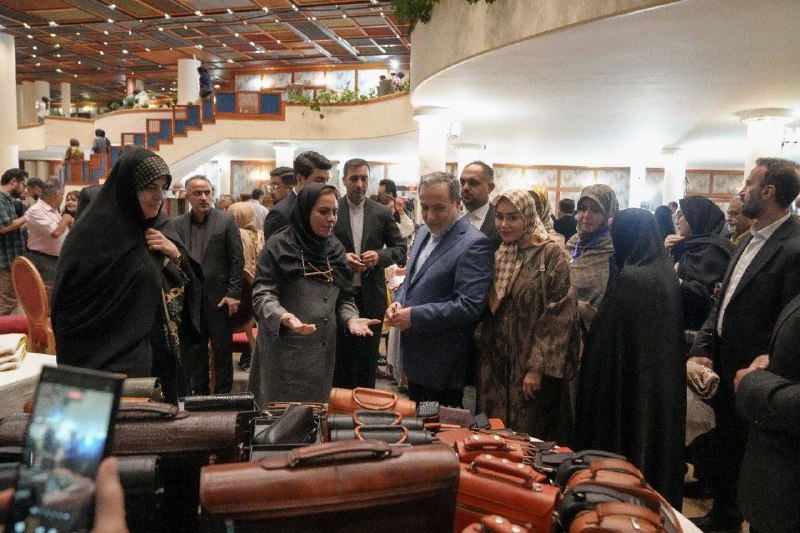
At 22:29 UTC on 22 June 2026, a closed-circuit clip surfaced that said almost nothing about Iranian policy, and almost everything about who is allowed to argue about it. Mohammad Bagher Ghalibaf, the Speaker of the Islamic Consultative Assembly, was caught on microphone at an airport railing at the very negotiators he was meant to be sending off. State television had, by his own account, been broadcasting a programme in which a commentator said he wished Mehrabad had been shut so the delegation could not fly to Switzerland. Ghalibaf's response, on the steps before the cameras, was to pick up the grievance and run with it: if the broadcast bothered him, the broadcast was already a problem. The image of a parliamentary Speaker publicly sparring with the editorial line of Islamic Republic of Iran Broadcasting (IRIB) is rare enough on its own. That he did so while a technical team led by Deputy Foreign Minister Kazem Gharibabadi was finalising arrangements for a new round of indirect talks with the United States, mediated in Muscat, makes the timing impossible to ignore.
The episode matters less for what Ghalibaf actually said than for what the reaction to it reveals. Tasnim News Agency, the Farsi-language outlet closest to the Islamic Revolutionary Guard Corps and the principal carrier of state-aligned foreign-policy framing in English, summarised the moment and moved on. The English-language Tasnim channel reposted Oman's readout almost in parallel, as if to fold the Speaker's irritation into a single, sanctioned narrative about diplomatic progress. A rival state-aligned feed, the international-facing account associated with IRIB's late-night current-affairs slot, ran a separate item in which host Murad Vesey framed the negotiations themselves as a kind of betrayal: an "overthrow" of national interest that patriotic viewers were implored not to accept. Two registers, one story.
A Speaker, a microphone, and a permitted script
Ghalibaf is not a backbencher. He presides over the Majles, the 290-seat Islamic Consultative Assembly, which on paper ratifies treaties, approves the cabinet, and supervises the work of the executive. In practice, parliamentary manoeuvres under the Islamic Republic operate inside a tight envelope set by the Guardian Council and the Supreme National Security Council. For a Speaker to publicly identify a named programme on IRIB as an obstacle to executive diplomacy is to assert that the legislature's prerogative to "supervise" extends, in this moment, to the editorial choices of the state broadcaster. That is a notably broad reading of the role, and one that the institution normally does not perform out loud.
The reason it could be performed here is structural. The Majles's conservative faction has spent much of 2026 attacking the negotiating track with Washington as capitulation; the Ghalibaf wing of that faction has used parliamentary speeches, public letters, and, now, off-hand remarks to register disapproval without blocking the talks outright. The Speaker's airport performance is the parliamentary version of a market signal: it tells the base that the institution is watching, that concessions will be expensive domestically, and that no negotiator can pretend they have a domestic blank cheque. It does not derail the Muscat channel. It prices it.
The IRIB programme Ghalibaf complained about is not anonymous. Tasnim's English feed ran a separate item quoting the host Murad Vesey as "very angry" about the negotiations, urging viewers "not to be disappointed by the overthrow" of Iranian negotiating positions. The framing is conspiratorial and accusatory: the diplomacy is framed as a handover, not a negotiation. Vesey is a known voice on the network's international-facing current-affairs slate, and his appearance is itself a permission granted by IRIB's editorial hierarchy. The interesting question is not whether his tone is critical; Iranian state media runs the gamut, including overt criticism of ministers. The interesting question is why a parliamentary Speaker felt compelled to answer him publicly, on camera, on the day the delegation flew.
What Tasnim will and will not carry
Tasnim News Agency is the principal wire through which the IRGC's foreign-policy worldview travels into the Farsi-language press and, in reduced form, into English. Its editorial posture is technically state-aligned but operationally factional: when the foreign-policy establishment and the security establishment agree, Tasnim is the megaphone; when they diverge, Tasnim carries the security line and the diplomats work around it. On 22 June, Tasnim's English channel posted back-to-back: Oman's readout on the Strait of Hormuz at 21:54 UTC, then the Ghalibaf clip folded into a broader diplomatic frame within the hour. The architecture is telling. The agency is willing to acknowledge the Speaker's irritation, but only adjacent to an Oman-mediated readout that re-anchors the story in diplomacy.
What is conspicuously absent is the policy substance. The English wire in the same window carries Gharibabadi's confirmation that arrangements for "future negotiations with the United States" have been agreed (Tasnim, 22:54 UTC), Oman's foreign minister Badr al-Busaidi describing "constructive talks" on a memorandum of understanding and the Strait of Hormuz (Tasnim, 22:05 UTC), and a separate Al Alam summary of the same. There is no English-language Tasnim item laying out Iran's negotiating demands; no comparable item specifying what Iran is prepared to concede on uranium enrichment, missile inventories, or the fate of the IRGC Quds Force designations. The audience is told that talks are happening, where they are happening, and that a domestic argument is unfolding around them. The audience is not told what the talks are about.
That is the guardrail. Information about whether talks happen is permitted; information about what the talks contain is filtered. The Ghalibaf outburst is the rare leak in the other direction: a senior official using the public space to dispute, on a meta level, the framing of the talks, rather than the substance of them.
A second channel, in a different key
Parallel to the Tasnim line, Fars News Agency and the international-facing Arabic and Russian services of IRIB were carrying a different combination of material. Fars posted a clip of Trump giving a "vague answer" about Israel's continued presence in Lebanon, framed as a "knot" in the negotiations (Fars, 22:08 UTC). Reuters, separately, had Trump on the record at 22:00 UTC saying he would "do what I have to do" if Iran does not stick to its agreement. The two are aimed at different audiences but produce a similar pressure profile: a sense that the diplomatic window is narrow and that the United States has set a public tripwire. Fars's selection of the Trump-Lebanon item, rather than Trump's broader Iran remarks, is a quiet editorial choice; it lets Iranian readers infer that Israel is being permitted to be a spoiler without Tasnim having to say so directly.
The Russian-language IRIB service, Two Majors-adjacent channels, and other IRGC-aligned feeds used the same window for unrelated historical content, including long-form pieces about the Soviet role in the Second World War. None of this is coincidental. The state-aligned information ecosystem around Iran does not run on a single clock. On a heavy diplomatic day, the architecture spreads the load: Tasnim carries the Speaker and the diplomacy in parallel; Fars carries the external pressure; Arabic-language Al Alam carries the Omani readouts; Russian-facing services carry the historical frame. The domestic audience is not overwhelmed by any single narrative, and each audience gets the version of the day's events most suited to its task.
The choreography of permitted speech
The temptation, reading the wire, is to treat Ghalibaf's outburst as a crack in the wall: a senior official saying something uncomfortable in public about state broadcasting. That is the wrong frame. The wall is intact; what is interesting is that a corner of it is now used for ventilation. Iran has long allowed internal factional arguments to be aired through state-aligned outlets, provided the underlying foreign-policy trajectory is not denied. The Speaker is not denying the negotiating track. He is pricing it.
What the day's wire really exposes is the perimeter of what Tasnim, Fars, and IRIB will carry in English. They will carry: confirmation that talks are happening, who is mediating, that domestic disagreement exists, and that Iran is being firm. They will not carry: the technical content of the negotiations, Iranian red lines on specific files, or any acknowledgement that the negotiating team's mandate might be constrained by the parliamentary outburst itself. Everything else is set dressing.
The next telling detail will be whether Tasnim, in the days that follow, runs a single Farsi-language item naming the IRIB programme Ghalibaf criticised, with a response from the broadcaster. If it does, the Speaker's remark will have been retroactively legitimised as institutional critique. If it does not, the moment will be archived as a one-day flare: real enough for those who follow the channel-by-channel traffic, opaque enough that the wider English-language reader will never see the seams. The guardrail is not that nothing leaks. The guardrail is that almost no one outside the country is watching carefully enough to know what leaked.
Sources
- https://t.me/tasnimnews_en
- https://en.wikipedia.org/wiki/Islamic_Consultative_Assembly
- https://en.wikipedia.org/wiki/Islamic_Republic_of_Iran_Broadcasting
- https://en.wikipedia.org/wiki/Tasnim_News_Agency
- https://t.me/TSN_ua
- https://t.me/tasnimplus
- https://t.me/farsna
- https://t.me/osintlive
- https://t.me/alalamfa
Desk note: The wires are read here as a single choreography, not as a news story. The Ghalibaf clip is the visible move; the channel-by-channel selection of which translation of the day's events to push is the structure.