Tehran Touches Down in Geneva: Iran's 'Minab 168' Delegation Lands in Switzerland as Vance Heads the Same Way
Iran's negotiating team, named in tribute to schoolchildren killed in Minab, has landed in Switzerland. A US vice-presidential plane is in the air behind it.
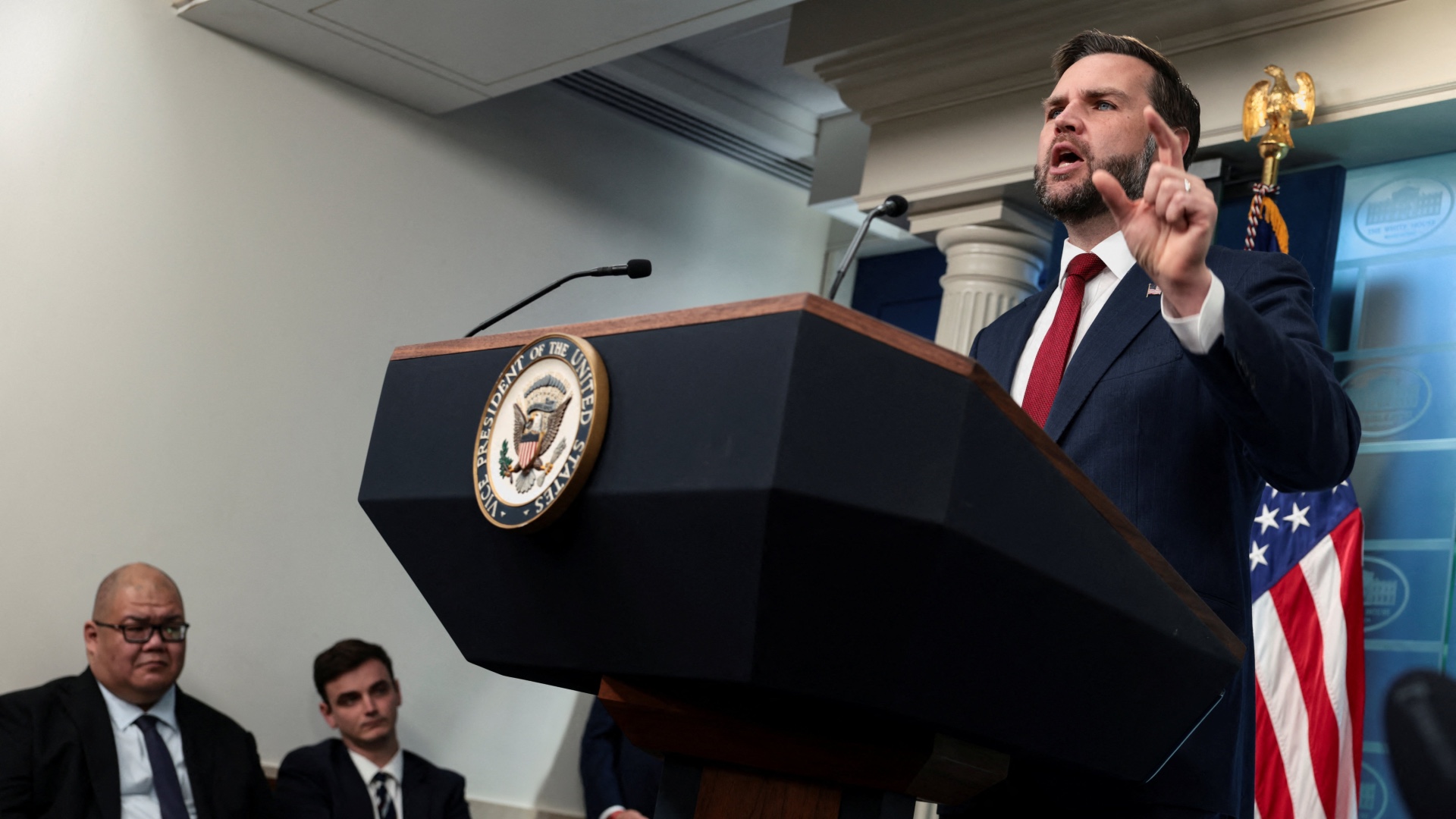
At 21:23 UTC on 20 June 2026, a regional Telegram channel with close ties to Iran's negotiating apparatus posted a single line: the Iranian negotiating delegation 'Minab 168' had arrived in Switzerland. Two minutes later, two more channels repeated the same item, word for word. The aircraft, named for the Minab schoolchildren killed by the United States, was on the ground. Somewhere over the North Atlantic at the same hour, a separate US government flight was pointing in the same direction.
What is unfolding on the evening of 20 June 2026 is a piece of stagecraft as much as a piece of diplomacy: the symbolism of a flight number, the choreography of two governments converging on neutral Swiss soil, the very public naming of victims at a moment when both sides are bargaining. The Iranian delegation is led by Mohammad Bagher Ghalibaf, Speaker of the Islamic Consultative Assembly and a senior figure in the country's national-security establishment. Vice-President JD Vance is en route, per two of the same channels. The substantive agenda — what is being negotiated, who has the upper hand, what a deal would actually buy — sits underneath the symbolism, but the symbolism is not incidental.
A name written on the fuselage
The aircraft on which the Iranian team travelled carries the designation 'Meraj Minab168', with '168' understood by regional Telegram outlets as a reference to the schoolchildren killed in Minab, in southern Iran, in a strike attributed to the United States. The naming is itself a message: Tehran is not arriving at the table as a supplicant, nor as an abstract sovereign, but as the representative of a population that has, in its government's telling, paid a specific and recent price in blood for the confrontation with Washington. The choice of aircraft is a delegation's first public act, and this one was deliberate.
Ghalibaf's presence at the head of the delegation is also a statement of political weight. The Speaker of Iran's parliament is not the figure who signs final undertakings on the nuclear file — that role has historically rested with the foreign ministry, the presidency, or the Supreme National Security Council. His elevation to lead this delegation suggests either that the domestic political stakes of any deal are now high enough to require a senior legislative figure at the table, or that Tehran wants the optics of a heavyweight, or both. Either reading, the choice is a signal to Washington about what kind of signature Tehran intends to put on whatever emerges.
The US side is signalling in parallel. A vice-presidential presence on a negotiating track is unusual at this stage of a US-Iran cycle: in previous rounds, the working-level face of the United States has tended to be the special envoy, with the secretary of state or a deputy attending only at decisive moments. Vance's reported transit — flagged by the same channels covering the Iranian landing — raises the political ceiling of whatever the two sides are about to attempt. It also raises the cost of failure: a vice-president who flies home empty-handed absorbs a different reputational hit than an envoy who does.
What the sources agree on, and what they do not
Three of the four items in the cluster that Monexus reviewed converge on a single factual claim: the Iranian delegation, headed by Ghalibaf, has arrived in Switzerland on a plane bearing the 'Minab 168' name, in memory of the schoolchildren killed by the United States. A fourth item, from The Cradle Media's main channel, repeats the arrival in a shorter form. None of the four items, taken individually, constitutes an independent piece of original reporting in the wire-service sense — they are cross-posts of a single underlying announcement, distributed across channels with different editorial alignments.
The channels that carried the item are worth naming, because their alignments tell the reader how to weight the framing. Middle East Spectator and Fotros Resistance are regional outlets with a generally pro-Iran editorial posture; The Cradle Media is a Beirut-based outlet that has built a substantial readership on coverage that is sympathetic to the Iranian negotiating position and sceptical of US framing of the file. The convergence of these three channels on a single piece of information, at nearly the same minute, is consistent with a coordinated announcement by Tehran rather than with three outlets independently breaking news. That is a normal feature of how state-aligned communications propagate; it is also a reminder that the announcement is, in the first instance, an Iranian one.
What the sources do not specify is the venue within Switzerland, the agenda, the composition of the US delegation beyond Vance's reported transit, or the underlying state of play between the two governments. The reader should not infer from the convergence of these channels that a substantive deal is imminent. The most that can be said from the available material is that a meeting is in preparation, that both sides have chosen to send senior figures, and that Iran intends the meeting to be read as the continuation of an argument about Minab as much as a conversation about enrichment.
The structural picture underneath the flight
The Minab incident sits inside a longer pattern in which US-Iran friction has migrated from the nuclear file into a broader catalogue of incidents, sanctions, and retaliatory actions. The Iranian decision to write '168' on the delegation's aircraft is a way of refusing to compartmentalise that catalogue — a refusal, in plain terms, to allow a nuclear negotiation to proceed as if the rest of the relationship were settled. From the Iranian side, this is a coherent position: a government that signs a nuclear constraint while its counterpart is, in its telling, also the government responsible for the deaths of children is signing under a cloud, and the cloud is the point. From the US side, the calculation is different: a vice-presidential presence is a way of signalling that Washington is willing to do business on a narrow file even when the broader relationship is unresolved, and that the narrow file is consequential enough on its own terms to justify the trip.
A secondary structural question is what Geneva — rather than Vienna, Muscat, or Doha — signals. Switzerland has historically hosted US-Iran contacts through the Interests Section in Bern and the regular track at Geneva's diplomatic venues; it is neutral ground, but it is also ground on which both sides have well-established back-channels. The choice of venue reduces the friction of logistics without conferring political advantage on either side, which is precisely why it tends to be picked when both governments want to talk but neither wants to be seen travelling to the other's preferred stage.
A third question is the role of the Iranian parliament in the negotiation. Iran's negotiating process runs through the Supreme National Security Council and the foreign ministry, but any final deal must, in practice, survive the scrutiny of the Majles and the broader conservative political ecosystem. Sending Ghalibaf — a figure with deep ties to the Islamic Revolution Guards Corps political ecosystem and to the conservative parliamentary bloc — is one way of front-loading that scrutiny at the negotiating table rather than after a text has been agreed. It is also a way of telling the United States, in advance, that the text will have to be defensible inside Iran, not merely in Washington.
Stakes, and what to watch over the next seventy-two hours
If the meeting produces a substantive framework — a freeze-for-freeze arrangement, an interim limits-for-relief deal, or a roadmap back to the original Joint Comprehensive Plan of Action — the immediate beneficiaries are the financial actors with exposure to Iranian oil sales, the European companies that have been operating under secondary-sanctions pressure, and the regional states that have an interest in reducing the temperature of the Gulf. The immediate losers are the political constituencies inside Iran, the United States, and Israel that have built their public position on the assumption that no such deal is possible. A deal would not resolve the underlying rivalry, but it would defer the most acute military risks for a measurable period and reopen a channel that has been largely closed since 2018.
If the meeting collapses, the trajectory is more familiar: a return to the incremental escalatory cycle that has characterised the relationship for the past two years, with the additional cost that a vice-presidential failure is harder to walk back than an envoy-level one. The Israeli political reaction to a US-Iran deal — or to a US-Iran collapse — is, on the evidence of recent cycles, the single most reliable predictor of the next move on the US side of the relationship. That reaction is not, in turn, legible from the four items in this cluster.
What remains genuinely uncertain, and what the sources do not resolve, is the underlying state of negotiation. A landing in Switzerland is not a deal. A vice-presidential plane in the air is not a concession. The Minab 168 designation is a message about how Iran intends to read whatever comes next, but it is not, in itself, a reading of what will come next. The next seventy-two hours will tell whether the symbolism was the opening of a substantive track or the closing of one. Until then, the most that responsible reporting can do is name what is known: two governments, two senior figures, one named aircraft, one neutral venue, and a question about whether the children written on the fuselage will, in the end, be the reason a deal is possible — or the reason one is not.
Desk note: Monexus treats this story on the basis of four Telegram items from three outlets, all converging on a single announcement. The piece names the outlets and flags the Iranian origin of the announcement in plain prose; it does not pad the source list with URLs that the pipeline did not read.
Wire provenance
This editorial synthesis draws on the following public wire/social posts:
- https://t.me/Middle_East_Spectator
- https://t.me/FotrosResistancee
- https://t.me/thecradlemedia
- https://t.me/TheCradleMedia
Follow the event.
These dated source records provide context. They do not retrospectively verify this archive article.
Separate what the nuclear watchdog reported from what it could not determine after the June 2025 strikes.