Iran Names Its Delegation 'Minab 168' as Geneva Talks Open
A 168-person Iranian delegation touches down in Zurich under the label 'Minab 168,' foregrounding a security incident closer to home rather than the nuclear file on the table in Geneva.
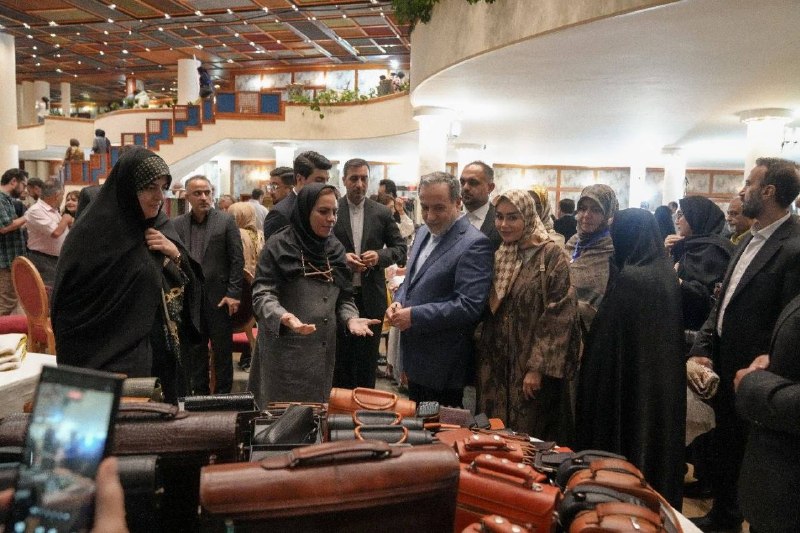
A 168-member Iranian delegation touched down in Zurich on 20 June 2026 carrying a name that pointed not to the file waiting for it in Geneva, but to a smaller city on the southern coast of Iran. The delegation, dispatched for indirect nuclear talks with the United States, has been designated "Minab 168" — a label its lead negotiator chose to invoke within minutes of landing. The branding is deliberate, and it tells you which constituency Mohammad Bagher Qalibaf is most interested in addressing this week.
Qalibaf framed the talks, in his first public statement on arrival, as an act conducted under the gaze of the "oppressed children of Minab" and "all the martyrs of dear Iran." The choice of label and language is not incidental diplomatic colour. It places a domestic security incident at the moral centre of a diplomatic process otherwise defined by enrichment percentages, sanctions architecture, and a long-running exchange of demands between Tehran and Washington. The delegation that arrived in Switzerland on Saturday is, on paper, a nuclear negotiating team. In the language its head has chosen, it is something else: an emissary of grief.
The name on the side of the plane
Iranian state media carried the arrival in near-real time. Tasnim, Fars, and Al-Alam all published photographs and Qalibaf's remarks within minutes of touchdown at Zurich airport. Tasnim's English feed identified Qalibaf as the head of the "Minab 168" negotiating team. Fars and Al-Alam, in Persian, carried his statement that the children of Minab and the martyrs of Iran were watching his actions "every moment" and that the delegation was answerable to them. The same phrasing appeared across all three channels, suggesting a coordinated messaging line rather than off-the-cuff remarks.
The label compresses two referents into a single string. The figure 168 is, on its face, a count of delegates — large for a nuclear negotiating team, even by Iranian standards, and a data point in itself about how Tehran is staffing this round. The "Minab" prefix is the harder signal. Minab is a city in Hormozgan province, on the coast of the Strait of Hormuz, and the site of a security incident earlier in June that Iranian authorities have framed as a terror attack with significant civilian casualties. By naming the delegation after the city, Tehran is doing two things at once: commemorating the dead, and reminding any audience watching the talks that the Islamic Republic considers itself under sustained domestic attack, not merely engaged in a technical dispute over centrifuges.
What is actually on the table in Geneva
The headline file is the nuclear one. Iran and the United States have been engaged for months in an indirect channel that has, in earlier rounds, been hosted in Oman and in Muscat-adjacent venues. The Swiss leg signals a new venue and, by convention, a new phase. The composition of the Iranian side — large, security-heavy, and led by a former Islamic Revolutionary Guard Corps commander and current Speaker of Parliament rather than by Foreign Minister Abbas Araghchi alone — suggests that the brief is broader than the technical nuclear file alone.
What the public sources do not specify is the precise agenda for the Geneva round. The Telegram dispatches from Tasnim, Fars, and Al-Alam concentrate on arrival logistics and on Qalibaf's framing remarks. They do not enumerate Iranian demands, American demands, or the sequencing of the talks. That is consistent with how Iranian state media normally treats indirect negotiations: the substance leaks later, and only through carefully selected channels, while the public-facing material emphasises resolve, dignity, and the weight of the moment. A reader looking for the technical state of play — enrichment levels, IAEA access terms, the fate of the 60% stockpile — has to wait for the post-meeting readouts or for Western wire reporting, neither of which has yet appeared in the source material in front of this article.
The absence of substantive detail in the available sources is itself a fact. It is the journalistic equivalent of a curtain that has not yet been pulled back. What we know is that the delegation has arrived, that it is unusually large, that its leader has chosen to brand it after a domestic tragedy, and that the venue has shifted from Omani territory to Switzerland. The why of each of those choices will only become clear once the readouts emerge.
Why 'Minab 168' is the story
Western wire coverage of Iran nuclear talks typically organises itself around a familiar set of beats: enrichment numbers, the fate of sanctions, the politics of snapback, the role of Israel and the Gulf states as spoilers, and the question of how many weeks the diplomatic window has left before it slams shut. The 'Minab 168' label does not fit any of those templates. It is a piece of political theatre directed at a domestic Iranian audience, and it carries three messages that the technical agenda cannot.
The first message is grief. By invoking the children of Minab, the delegation is asserting that the security situation inside Iran is part of the diplomatic context, not a separate file. This is a longstanding Tehran position, but the explicit naming of the city — and the choice to make it part of the delegation's working identity — raises the rhetorical stakes. Any Western interlocutor who arrives in Geneva expecting a clean separation between counter-terrorism and nuclear diplomacy is being told, in advance, that Iran does not see that separation.
The second message is institutional. Leading the delegation, rather than a foreign-ministry official, is the Speaker of the Iranian Parliament — a senior figure, a former IRGC commander, and a man with a clear political base inside the system. The choice signals that the file is being treated as a matter of national stature, not a routine diplomatic engagement. It also narrows the room for compromise framed as technocratic adjustment. Whatever comes out of Geneva will have to be defensible to the constituency that sent Qalibaf, not merely to the foreign-policy establishment.
The third message is deterrence. A 168-person delegation, branded after a security incident and led by a hardline Speaker, is a signal to Washington — and to any third party watching from Tel Aviv, Riyadh, or Muscat — that the Iranian side intends to negotiate from a posture of strength and victimhood combined. It is harder to pressure a delegation that has publicly framed itself as answerable to the martyrs of a terror attack than one that has framed itself as a routine technical mission.
Counter-frames worth taking seriously
The dominant Western reading of any Iran nuclear round tends to be technocratic: which numbers move, which sanctions stay, which verification regime emerges. On that reading, the 'Minab 168' label is colour, not content. The serious business is enrichment, and the serious risk is a collapse of the talks leading to escalation.
A second reading, more common in regional and Global South commentary, treats the 'Minab 168' framing as a deliberate political signal that ought to be read on its own terms. On this account, Iranian security grievances — including the Minab incident, the long shadow of the January 2020 killing of Quds Force commander Qasem Soleimani, and the cumulative effect of Israeli operations on Iranian territory — are not a distraction from the nuclear file. They are the political context inside which any Iranian negotiator is operating, and any deal that does not register that context will be unstable the moment it is signed.
A third reading, more sceptical, is that the 'Minab 168' label is internal regime politics: a Speaker of Parliament using an overseas trip to associate himself with a popular grief narrative ahead of a political moment at home. On this reading, the substance in Geneva is what the substance is, and the branding is for the cameras in Tehran.
Each of these readings has weight. The third is the most parsimonious; the second is the one that the Iranian state media coverage is plainly trying to install; the first is the one most likely to dominate the Western wire readouts when they appear. The honest position is that the available sources do not yet let a careful reader separate the three. What can be said is that all three readings treat the label as consequential, which is itself a measure of how deliberately it was chosen.
The structural frame: nuclear talks as a venue for other fights
What the 'Minab 168' label makes visible, in plain language, is that nuclear negotiations between Iran and the United States have never been only about the nuclear file. They are the most legible bilateral channel between two governments that otherwise have very few, and as a result they have become a venue on which a wide range of disputes — sanctions, regional posture, security incidents, the politics of the Strait of Hormuz, the question of Israeli operations — gets staged.
This is not a new development. The Joint Comprehensive Plan of Action era, the Trump-era maximum-pressure period, and the post-2020 attempts at a return all sat inside the same structural reality: a thin diplomatic channel carrying a heavy political load. What the 'Minab 168' branding does is make the load-bearing function explicit. A 168-person delegation, named after a domestic security incident, is not a negotiating team in the usual sense. It is a travelling parliament, a security council, and a domestic-messaging operation in one. The Geneva talks will succeed or fail on the technical file, but they will be conducted by a delegation that is doing several other jobs at the same time.
That structural fact is the most useful thing a reader can take from the day's news. The official readouts, when they come, will describe positions, proposals, and disagreements. The real story is that the Iranian side has decided to negotiate in a way that refuses to separate the security file from the nuclear file, and that the size and branding of the delegation are the message, not the noise around it.
Stakes and what to watch next
The immediate stakes are familiar: a diplomatic window that has been narrowing for months, with the technical distance between Iranian and American positions on enrichment and sanctions still substantial; an Israeli government that has historically been sceptical of grand bargains with Tehran; a Gulf monarchy system that is hedging across the conversation; and a US administration that will eventually have to decide whether to make the political investment a real deal requires.
What to watch over the next forty-eight hours is straightforward. First, whether the readouts that follow the Geneva session mention Minab by name — a confirmation that the branding has entered the substance of the talks, or a quiet folding of it back into the technical file. Second, whether the size of the Iranian delegation produces an equally large American side, or whether Washington treats the 168 figure as theatre and sends a smaller counter-delegation. Third, whether the IAEA publishes anything in the interval that changes the technical baseline. Fourth, whether Israeli or Saudi commentary publicly aligns with, or distances itself from, the Iranian framing of the talks.
What remains genuinely uncertain, as of this article's filing, is the actual content of the Iranian and American positions in the room. The sources carried in this article are arrival-side material, not negotiating substance. A reader who wants a definitive read on the state of play is, for the moment, reading headlines about a label on a delegation. That label is, for now, the most newsworthy thing in Geneva, and that is itself a fact about how the Iranian side intends the round to be read.
This article foregrounded the 'Minab 168' branding and the security framing of the Iranian delegation, consistent with the lead available in Iranian state-media coverage. The technical substance of the talks will be reported in a follow-up once readouts become available.
Wire provenance
This editorial synthesis draws on the following public wire/social posts:
- https://t.me/alalamfa
- https://t.me/alalamfa
- https://t.me/farsna
- https://t.me/tasnimnews_en
- https://t.me/wfwitness
Follow the event.
These dated source records provide context. They do not retrospectively verify this archive article.
Separate what the nuclear watchdog reported from what it could not determine after the June 2025 strikes.