Tehran’s Strait of Hormuz gambit collides with Tehran’s own deal-making
On the same June 2026 day Iranian diplomats confirmed a new agreement is in force, a Foreign Ministry spokesperson announced the closure of the Strait of Hormuz and accused France of “hypocrisy” — a contradiction that exposes how Tehran speaks to two audiences at once.
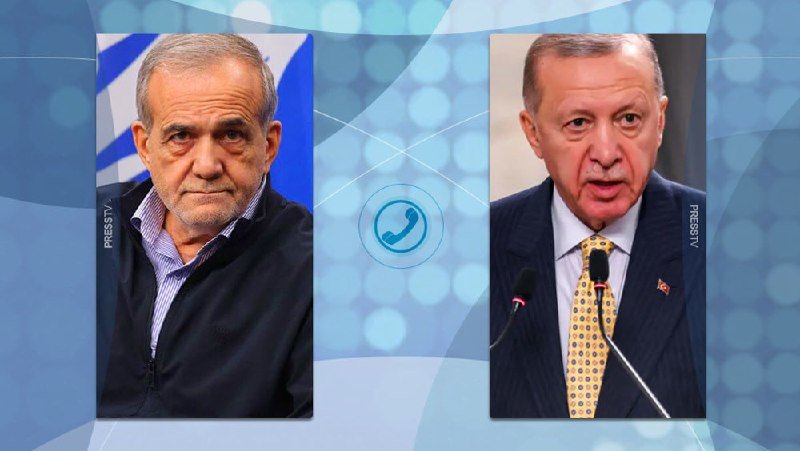
At 14:09 UTC on 20 June 2026, the open-source monitoring account OSINTdefender reported that Iran’s Foreign Ministry spokesperson Esmail Baghaei had told the state-backed outlet IRNA that an Iranian decision to close the Strait of Hormuz had been formalised. Forty minutes later, at 14:45 UTC, Press TV — the English-language arm of Iranian state broadcasting — carried Baghaei’s separate broadside against the French foreign minister, accusing Paris of “hypocrisy” over comments about the Iranian people. And earlier still, at 02:01 UTC the same day, the markets account Unusual Whales reported that the same Foreign Ministry had, through Baghaei, confirmed that a different agreement — long the subject of off-and-on diplomacy — was now in force, with the text “finalised” and “implementation… begun.”
The sequence is the story. In a span of roughly thirteen hours, a single spokesperson was used to confirm a binding deal, to announce the closure of the world’s most consequential oil chokepoint, and to denounce a European capital. The contradiction is not a slip; it is a posture. Tehran has long found it useful to speak in the language of agreement to the powers it is negotiating with, and in the language of disruption to the powers it is not.
The chokepoint calculus
The Strait of Hormuz is the narrow seal between the Persian Gulf and the Gulf of Oman through which roughly a fifth of globally traded crude passes. Any credible threat to its operation moves oil futures and freight rates the moment it is uttered, regardless of whether the threat is implemented. Baghaei’s IRNA statement, relayed by OSINTdefender, that an Iranian closure decision has been made therefore belongs to the same coercive vocabulary Tehran has used periodically since the early 2010s: a signal aimed less at actual interdiction than at shaping the bargaining space around sanctions, nuclear files, and the security of Gulf shipping lanes. The threat is the asset.
Two structural points follow. First, a Hormuz closure is not a unilateral button; it is a posture that depends on Iranian Revolutionary Guard Corps naval assets, on continued traffic from Iraq, Kuwait, Saudi Arabia, the UAE, and Qatar, and on the tolerance of those Gulf states, whose own exports run through the same waterway. A Tehran announcement of closure is therefore better read as a marker of intent than as a forecast of effective shutdown. Second, when paired with simultaneous confirmation of a separate agreement “in force,” the closure rhetoric signals that Tehran intends to keep the pressure on multiple fronts at once — an arrangement that lets the deal move forward while the chokepoint remains a hostage.
The Baghaei–France exchange
The French foreign minister’s comments, to which Baghaei responded at the 14:45 UTC press conference, were not detailed in the source material; what is on the record is the Iranian characterisation of them as the “height of hypocrisy and duplicit[y]” directed at the Iranian people. This is a familiar Tehran register: the European interlocutor is lectured to in the name of the Iranian people rather than answered in the name of the Iranian state. Press TV is the natural vehicle for that framing — it broadcasts to an external audience in English, while IRNA carries the same official’s line to the domestic one.
The choice of France is not incidental. Paris has been among the more vocal European critics of Iran’s regional posture, including over ballistic-missile questions and over the harassment of dual-national detainees. Tehran’s instinct to use the French foreign minister as a rhetorical foil — a counter-punch that costs little because no deal is in jeopardy — suggests the real target is the European Union’s appetite for renewed sanctions, not Paris specifically. The “hypocrisy” framing, in other words, is best read as a warning to Brussels dressed up as a quarrel with the Quai d’Orsay.
What we verified / what we could not
Verified. A single Iranian spokesperson, Esmaeil Baghaei, is the named source for three distinct claims carried by three distinct channels on 20 June 2026: a deal “in force” (Unusual Whales, 02:01 UTC), a Hormuz closure decision (OSINTdefender citing IRNA, 14:09 UTC), and an attack on the French foreign minister (Press TV, 14:45 UTC). The temporal sequence — confirmation of the deal first, closure announcement second — is established by the absolute timestamps of the source items.
Could not verify from the available material. The substance, counterparties, and text of the agreement Baghaei says is in force were not specified in the source items; the “agreement” remains an unnamed object. The specific comments by the French foreign minister that triggered Baghaei’s rebuke were not reproduced; only the Iranian characterisation is on the record. The operational implementation of any Hormuz closure — whether Iranian naval forces have been ordered to act, whether traffic has actually been impeded, or whether the announcement is a declaratory posture — is not addressed in the available reporting. The source items also do not specify which Gulf states, if any, have been consulted.
This last gap matters. Iran does not own the Strait of Hormuz alone. Without confirmation from the GCC side — or from the US Fifth Fleet in Bahrain, which is the principal Western naval presence in the Gulf — the closure announcement is, in this Monexus reading, rhetorical ballast rather than operational fact.
Structural frame: the same spokesperson, two audiences
Western wire coverage of the Iranian state tends to treat contradictory statements by the same official as a sign of confusion, or as a “mixed signal.” That framing is generous to the West and ungenerous to the evidence. The more honest read is that Tehran runs a bifurcated communications architecture on purpose. One channel — multilateral negotiations, IAEA briefings, official letters to the UN secretary-general — speaks the language of agreement, reciprocity, and implementation. The other — Press TV, IRNA’s English desk, Friday sermons, and parliamentary speeches — speaks the language of resistance, grievance, and the “hypocrisy” of Western powers. Baghaei on 20 June 2026 was operating both channels in a single day. The contract here is not incoherence; it is portfolio management.
For a publication that tries to report the file fairly, the consequence is methodological. Where a Western wire is tempted to report the deal as a “breakthrough” and the closure threat as a separate “escalation,” the honest line is that they are the same move, expressed to different audiences, by the same spokesperson, on the same day. Reporting them in isolation flatters one audience and misleads both.
Stakes
The short-term stakes are financial. A credible Hormuz threat pushes Brent and WTI futures higher, raises war-risk insurance premiums for Gulf shipping, and pressures the central banks that are still absorbing the inflation legacy of 2022. The medium-term stakes are diplomatic. If Tehran is genuinely implementing an agreement while signalling willingness to close the Strait, the deal is being conducted under duress in both directions: the United States and its partners are signing a deal with one hand on a trigger, and Tehran is signing with the other hand on a chokepoint. That is not a stable equilibrium.
The longer-term stakes are structural. The Gulf shipping lanes are the physical plumbing of the dollar-priced oil system. Any actor — Iranian, Houthi, or otherwise — that can credibly threaten that plumbing is, in effect, holding a fraction of the international monetary system hostage to its foreign-policy demands. The question for the coming months is whether the agreement Baghaei confirmed at 02:01 UTC reduces that leverage, or merely prices it in.
What remains uncertain
The available source items do not name the agreement Baghaei says is in force, do not describe the French comments he is responding to, and do not specify whether the Hormuz closure is operational or declaratory. A reader wanting to act on this report — a trader pricing oil, a diplomat briefing a foreign minister, a shipowner deciding whether to transit the Gulf — should treat the deal as confirmed, the closure as a posture, and the France exchange as rhetoric, in that order, until the operational facts change. Monexus will update as the picture sharpens.
This Monexus file treats the three Baghaei statements as a single coordinated act of communications rather than as three separate news beats — a reading closer to the Iranian state’s own architecture than to the wire consensus, which is still parsing them as competing stories.
Wire provenance
This editorial synthesis draws on the following public wire/social posts:
- https://t.me/presstv
- https://t.me/osintlive