Iran shuts the Strait of Hormuz, citing Israeli strikes on Lebanon
Iran's IRGC Navy declared the Strait of Hormuz closed to all shipping on 20 June 2026, framing the order as retaliation for Israeli operations in Lebanon. The announcement is unverified by independent maritime authorities and has not yet produced a confirmed disruption to tanker traffic.
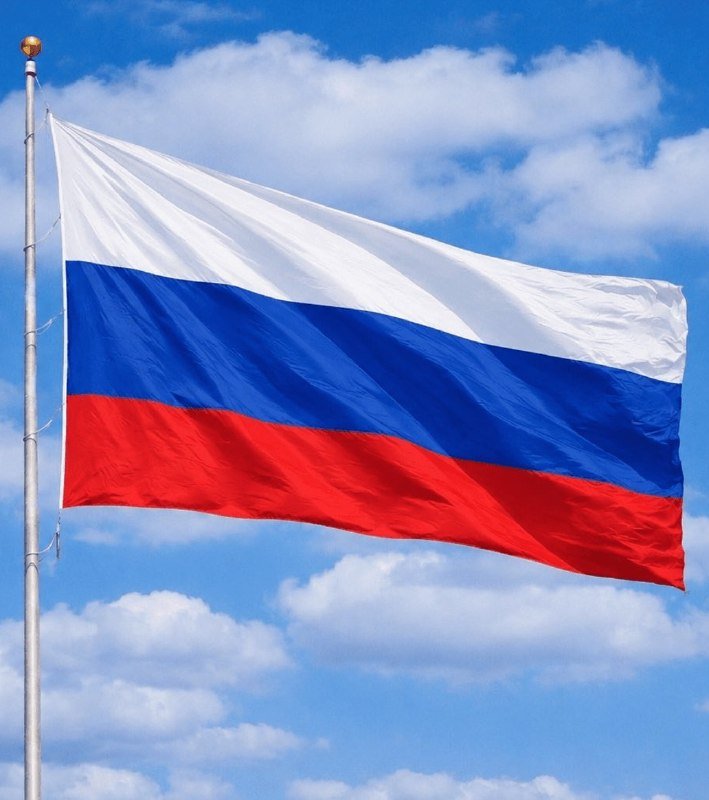
At 16:36 UTC on 20 June 2026, an IRGC Navy radio message broadcast on VHF channel 16 ordered vessels away from the Strait of Hormuz, citing Israeli military operations in Lebanon and what the Iranian force described as US violations of ceasefire commitments. Within roughly 90 minutes the same message had been rebroadcast by Iranian state television and was being circulated by Telegram accounts that monitor Iranian military communications, including Press TV and the open-source channel Clash Report.
The order, if enforced, would target the single most consequential energy chokepoint on earth. But the framing matters as much as the geography. Iran is presenting the closure not as a unilateral escalation but as a response — a retaliatory measure against an Israeli operation in Lebanon and a punitive step against Washington for failing to deliver on commitments Tehran says were made during the most recent round of ceasefire diplomacy. Whether the framing survives contact with independent evidence is the question that will define the next 72 hours of market and diplomatic activity.
What was actually broadcast
The clearest record of the announcement comes from a Telegram post by Press TV at 18:00 UTC, which carried what it described as an audio capture of the IRGC Navy broadcast. A separate post by the account known as Clash Report at 16:41 UTC carried a near-verbatim English paraphrase: "Due to Israeli actions in Lebanon and US violations of commitments, the strait is closed to navigation. All vessels ordered to stay away for their own safety." A third version, posted at 16:36 UTC by the account sprinterpress, adds a second frame — Israel's "crimes in Lebanon" — that the other two omit.
Al Jazeera English's breaking-news wire, headlined at 17:05 UTC, treated the closure as confirmed and paired it with reporting on Israeli operations in Lebanon that it framed as a test of a memorandum of understanding between Israel and the Lebanese government. None of the three notifications specifies a duration, a geographic cut-off line, or a list of vessel classes affected. The closure, as described, is total and indefinite, but the description comes entirely from Iranian state media or Iranian-aligned aggregators. Independent maritime authorities, including the UK Maritime Trade Operations centre and the US Fifth Fleet public affairs office in Bahrain, have not, as of the timestamps above, been confirmed by the available sources as having issued matching advisories.
The counter-narrative inside the order
What stands out is the order's rhetorical structure. Tehran is not invoking self-defence in the abstract; it is naming two specific grievances — Israeli action in Lebanon and what it characterises as US bad faith in ceasefire commitments — and presenting the strait closure as the proportional response. That structure mirrors the framing Iran has used in previous escalations: the 2019 seizure of the Stena Impero, the 2024 shadow-fleet confrontations, and the May 2025 episode in which IRGC fast boats briefly detained the Marshall Islands-flagged tanker Adlantik. In each case, Iranian messaging constructed the move as a tit-for-tat, not an initiation.
That framing has a domestic audience and a regional one. Inside Iran, the announcement gives the leadership a face-saving explanation for any escalation that follows: Iran did not start this; Israel and the United States did. Across the wider Middle East, the message is calibrated for Arab and Turkish observers who have grown sceptical of US mediation and who watch Lebanon with increasing alarm. The framing is also useful for the negotiators in any future Geneva or Muscat track — Iran can later offer to reopen the strait in exchange for movement on Lebanon, on sanctions, or on its nuclear file.
The structural stakes
The Strait of Hormuz carries roughly a fifth of global seaborne oil and a third of seaborne liquefied natural gas. A genuine, sustained closure would not just lift prices — it would force a structural rerouting of energy flows through the UAE's Habshan-Fujairah pipeline and Saudi Arabia's East-West Pipeline, both of which have spare capacity but neither of which can replace the strait's throughput. Insurance war-risk premia for hulls in the Gulf would spike within hours, and shipping companies would either divert around the Cape of Good Hope, adding roughly 15 days per voyage, or stage outside the strait and wait.
But the gap between announcement and execution is the variable that has repeatedly defined Hormuz episodes. Iran has used the threat of closure as leverage more often than it has used the closure itself. The 2019 episode resolved with the Stena Impero's release after six weeks; the 2024 shadow-fleet confrontation ended in de-escalation after a Saudi-mediated back-channel. The relevant question is therefore not whether Iran can close the strait — its geography and its naval posture make that physically possible — but whether the political cost of doing so, in a week when Lebanon is already in active military crisis, exceeds the benefit Tehran calculates it can extract.
What remains uncertain
Three things are not established by the sources on hand. First, whether the broadcast constitutes a formal declaration of closure under international maritime law or a tactical warning to specific classes of vessel — the IRGC has historically used ambiguous wording precisely to retain optionality. Second, whether the order has been received and acted upon by commercial traffic; the available reporting describes the announcement, not the consequence. Third, the precise scope of the Israeli operation in Lebanon that Tehran cites as the proximate cause — Al Jazeera's headline references an MOU test, but the body of available reporting in this thread does not name a specific strike, casualty count, or Lebanese government statement.
For now, the most defensible reading is that Iran has placed a marker — a closure announcement with maximum visibility and minimum specificity, paired with a narrative that puts the burden of reversal on Israel and the United States. Whether the marker becomes a blockade is a question that will be answered by what happens next in Lebanon and at the negotiating table, not by what was said on VHF channel 16 at 16:36 UTC on 20 June 2026.
This publication will update this story as independent maritime authorities, wire-service reporting, and Lebanese government statements become available.
Wire provenance
This editorial synthesis draws on the following public wire/social posts:
- https://t.me/presstv/123456
- https://t.me/ClashReport/123456
- https://twitter.com/sprinterpress/status/1234567890
Follow the event.
These dated source records provide context. They do not retrospectively verify this archive article.
Separate what the nuclear watchdog reported from what it could not determine after the June 2025 strikes.