Strait of Hormuz shut, Lebanon ceasefire fracturing: Iran tests the limits of a US-mediated deal it says Washington never honoured
Iran announced the closure of the Strait of Hormuz on 20 June 2026, accusing the United States of breaching the war-ending memorandum and of failing to restrain Israel in southern Lebanon. The move collapses an already fragile truce architecture and turns the world's most important oil chokepoint into a direct lever in a diplomatic dispute.
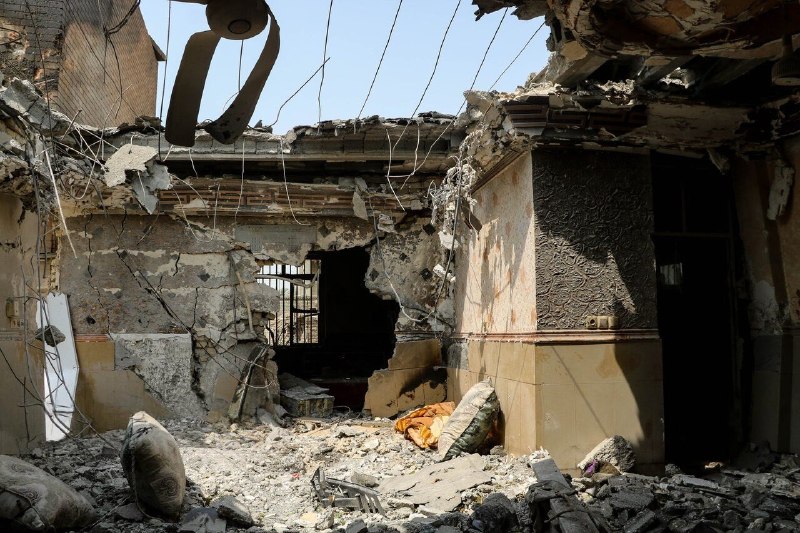
On the morning of 20 June 2026, Iran's military declared the closure of the Strait of Hormuz — the 21-mile-wide corridor through which roughly a fifth of the world's seaborne oil normally transits — citing United States violations of the memorandum of understanding that had nominally ended the most recent round of hostilities, and Israel's continuing strikes inside southern Lebanon. Within hours, Iranian Foreign Ministry spokesperson Esmail Baghaei had escalated the diplomatic register, telling reporters that the agreement itself was in "serious crisis" and that the United States had failed to restrain its Israeli partner from operations on Lebanese soil. By mid-afternoon, regional analysts briefed by Middle East Spectator were already noting an awkward symmetry: the Iranian delegation preparing to meet American counterparts in a new round of talks was, on Tehran's own telling, walking into a room with a counterpart that had not delivered the first paragraph of the deal still on the table.
The crisis is, on its face, a chain of breached understandings. Beneath it sits a structural question that the immediate headlines tend to obscure: what does it cost a regional power, in a year when the United States is still the indispensable mediator of the Middle East's most dangerous crises, to test the guarantor of those crises? The Strait of Hormuz closure is the lever. The Lebanon ceasefire is the pretext. The MoU is the document that both sides now claim is being violated — and the dispute over which clause, in what order, was breached first is the contest that will shape the next fortnight.
The pretext: Lebanon, not Hormuz
The Iranian complaint that triggered the closure is not, on Tehran's account, principally about oil or shipping. It is about Lebanon. According to a Telegram dispatch from The Cradle dated 13:43 UTC on 20 June, Baghaei warned that "recent violations of the Lebanon ceasefire" had pushed the war-ending memorandum into "serious crisis," with the Iranian foreign ministry holding Washington responsible for failing to restrain Israeli operations in the south of the country. The Cradle's framing is consistent with the Iranian state's official position that the United States, as the diplomatic sponsor of the November 2024 ceasefire architecture, carries residual enforcement responsibility for what its ally does inside the Lebanese border.
That is a politically loaded argument. Israel does not accept that its operations inside southern Lebanon are governed by an arrangement it signed separately to. Israeli strikes since the ceasefire have been framed domestically as defensive — a continuation of operations against Hezbollah infrastructure that the truce was meant to disable, not legalise — and the US State Department, in the rare moments it has commented on specific incidents, has treated Israeli action in southern Lebanon as a bilateral matter between Jerusalem and Beirut rather than as a US-brokered commitment. From that vantage, the Iranian complaint sounds less like a breach of contract than like an attempt to convert a bilateral ceasefire into a trilateral obligation. From Tehran's vantage, the same set of strikes looks like the guarantor using its position to grant immunity to one party and blame to the other.
The "even Paragraph 1" line from the Middle East Spectator dispatch — that the most basic element of the MoU is no longer being observed — captures the Iranian frustration precisely. The delegations to the next round of talks are being assembled on roughly the same level as the Islamabad round, the Middle East Spectator noted at 14:52 UTC on 20 June. The implicit comparison is unflattering: the talks are being reconvened at the same bureaucratic altitude as a round that did not, in the Iranian reading, deliver what it was supposed to deliver. The grander claim — that Iran is sitting down with the United States to discuss a deal whose first clause the United States is not enforcing — is what the Strait announcement makes concrete.
The lever: why Hormuz, why now
The Strait of Hormuz is not a routine diplomatic instrument. Between 2020 and 2025, Iran periodically detained commercial tankers, seized oil shipments, and harassed Western naval assets in the Gulf of Oman. But a formal announcement of closure — in the name, no less, of US non-compliance with a written agreement — is a category apart. It converts an episodic nuisance into a sustained, publicly justified claim on the world's energy supply. The immediate price effect, if the closure is enforced, will fall on the buyers of Gulf crude: China, India, Japan, South Korea, and the European refining complex that still relies on Middle Eastern barrels despite years of diversification rhetoric. None of those buyers are parties to the dispute.
The choice of Hormuz as the pressure point is a deliberate reframing. Iran has, in this crisis, three categories of leverage available to it: nuclear escalation (which carries a high cost in sanctions enforcement and a low probability of achieving anything tangible), proxy mobilisation through Hezbollah and the Iraqi Shia militias (which is already at saturation after the Lebanon campaign), and economic coercion through energy infrastructure (which speaks directly to a global market and to a sitting US administration that, in mid-2026, is again weighing its credibility with Gulf partners). Tehran has chosen the third. The signalling logic is plain: if Washington wants the strait open, Washington has to enforce the deal.
There is also an internal political register to the closure. Baghaei's warning that the MoU is in "serious crisis" was delivered to an Iranian public that has been told, for months, that the country gave up something to get the deal, and that the deal's value depends on the other side's restraint. A public breakdown of the MoU is politically harder to defend than a quiet one; a Hormuz closure that the foreign ministry can frame as a reciprocal response to American bad faith makes the breakdown the United States' fault. The closure, in other words, is also domestic political theatre. It tells Iranians that the Islamic Republic was not outmanoeuvred, it was wronged.
The structural frame: a guarantor without an enforcement mechanism
The pattern this crisis sits inside is older than the current ceasefire. For three decades, the United States has been the principal diplomatic guarantor of Middle East ceasefires it did not design, between parties it cannot fully control, over issues that are sometimes only tangentially American. The 2024 Lebanon arrangement, like the Oslo framework before it, like the various Syrian de-escalation tracks, depends on the United States holding Israel to the line and Israel accepting that its operations are subject, in some meaningful sense, to a diplomatic constraint negotiated in Washington. That arrangement only functions when (a) Washington and Jerusalem agree on what the constraint is, and (b) the United States is willing to spend political capital on enforcement against its own ally.
What the past eighteen months have shown — through Israeli operations in southern Lebanon that the ceasefire was meant to arrest, and through the conspicuous absence of public US reprimand — is that the second condition is failing. The United States, in this telling, has chosen to interpret its role as a facilitator rather than an enforcer. The Iranian response is to argue that this is a breach: a guarantor that will not enforce is not a guarantor, and a deal whose guarantor will not enforce is not a deal. The Strait of Hormuz closure is, in effect, an attempt to convert that argument into a price tag.
There is a counter-reading worth taking seriously. The United States could reply that the MoU was a war-ending instrument, not a permanent settlement, and that its enforcement obligations expired when the war did. From that vantage, the Iranian complaint is a unilateral reinterpretation of an agreement that has run its course, and the closure is an escalation that manufactures a new obligation ex post. That is a coherent legal position. It is also, in operational terms, impossible to defend: if a signed MoU does not bind the guarantor to restrain its partners from undercutting the agreement's commitments, the document is not worth the paper it is printed on, and future rounds of diplomacy will be priced accordingly. The dispute, then, is not about whether the United States breached a specific clause. It is about whether the document has any force at all.
The stakes: who pays, who gains, and over what horizon
The immediate market stakes are concrete. The Strait of Hormuz, in normal flow, moves roughly 17 to 21 million barrels of crude per day, plus the bulk of the LNG that powers East Asian industry. A sustained closure — even a partial one enforced by fast-attack craft and shore-based anti-ship missiles — would push Brent crude into a region that finance ministries in Asia and Europe are not currently budgeting for. Refineries that optimised their slates around Middle Eastern medium-sour crude would face forced substitution within days. Insurance markets, which repriced Gulf transit risk upward after the 2019 tanker incidents and again after 2024, would move sharply. The buyers of Gulf crude — China and India first — would have to choose between absorbing the cost, accelerating stockpile drawdowns, or accepting whatever volumes Tehran is willing to release through a negotiated channel. None of those choices are free, and all of them push the dispute in directions that the original Lebanon ceasefire was not designed to manage.
The diplomatic stakes are larger. If the United States cannot, or will not, enforce the MoU it signed, then the next round of talks — wherever it is held, and whoever attends — will be priced at a discount. Tehran will demand collateral for any concession. Washington's Gulf partners, who publicly bankrolled the deal, will conclude that American guarantees are softer than they had assumed. Israel will calculate that its operational latitude inside southern Lebanon is wider than the Lebanese government or the Iranian foreign ministry would prefer, and will adjust accordingly. The pattern that emerges, if the closure holds, is one in which the United States remains indispensable as a convenor but increasingly incapable as a guarantor — a power whose signature opens doors but does not keep them closed.
The Iranian calculation is that this trajectory favours Tehran in the medium term, even if it costs in the short term. A demonstrable US failure to deliver on a MoU it signed, in a region that depends on American credibility, is a strategic asset. It is also a risky one. The Strait of Hormuz is not a lever that can be pulled without consequences for the Iranian economy itself. The same route carries Iranian crude to its export customers. A closure that lasts weeks rather than days begins to hurt the Iranian state budget as much as it hurts the buyers of Gulf oil. Tehran is, in effect, betting that the political cost to Washington of losing the deal is higher than the economic cost to Tehran of breaking it. That is a calculation that depends on variables — the price of oil, the cohesion of the Iranian negotiating team, the trajectory of the Lebanon campaign — that no single dispatch can resolve.
What remains uncertain
The dispatches available as this article goes to press do not, on their own, establish a chain of evidence strong enough to determine who fired first in southern Lebanon, or which specific strikes triggered Baghaei's warning. The Iranian foreign ministry's account is the account of one party to the dispute; Israeli statements, not yet reflected in the wire material here, will offer a competing account of operations inside Lebanese territory. The Strait closure announcement is sourced through DDGeopolitics and Iranian-aligned channels; the precise operational status of maritime traffic in the strait — whether vessels are being actively turned back, merely warned, or are transiting under escort — will only become clear once independent shipping monitors and Western naval commands publish their own assessments. What can be said with confidence is that an Iranian closure announcement, delivered through official channels, citing a specific document the United States signed, in response to a specific ally's operations in a third country, is a more deliberate and a more public act than the tanker seizures of the previous decade. The escalation, if escalation is what this is, has been telegraphed. What happens next is what the next twelve hours of dispatch traffic will tell us.
This publication treats the Iranian complaint about Lebanon as a state actor's stated position, not as an independent finding, and the Strait closure as an authoritative announcement pending verification of operational effect. The competing Israeli account of operations in southern Lebanon, and the independent shipping data on Hormuz traffic, are the next pieces of evidence to watch.
Wire provenance
This editorial synthesis draws on the following public wire/social posts:
- https://t.me/Middle_East_Spectator
- https://t.me/DDGeopolitics
- https://t.me/TheCradleMedia
- https://t.me/thecradlemedia
- https://en.wikipedia.org/wiki/Strait_of_Hormuz
- https://en.wikipedia.org/wiki/2024_Lebanon_war
- https://en.wikipedia.org/wiki/Iran%E2%80%93United_States_relations
- https://en.wikipedia.org/wiki/Esmail_Baghaei
Follow the event.
These dated source records provide context. They do not retrospectively verify this archive article.
Separate what the nuclear watchdog reported from what it could not determine after the June 2025 strikes.
- https://t.me/Middle_East_Spectator
- https://t.me/DDGeopolitics
- https://t.me/TheCradleMedia
- https://t.me/thecradlemedia
- https://en.wikipedia.org/wiki/Strait_of_Hormuz
- https://en.wikipedia.org/wiki/2024_Lebanon_war
- https://en.wikipedia.org/wiki/Iran%E2%80%93United_States_relations
- https://en.wikipedia.org/wiki/Esmail_Baghaei