Israel's Channel 15 concedes the Lebanon–Iran frame did not split — what the broadcast actually said
An Israeli commercial broadcaster says publicly what Israeli officials have been saying privately for months: the campaign to wall off the northern front from Tehran has not worked.
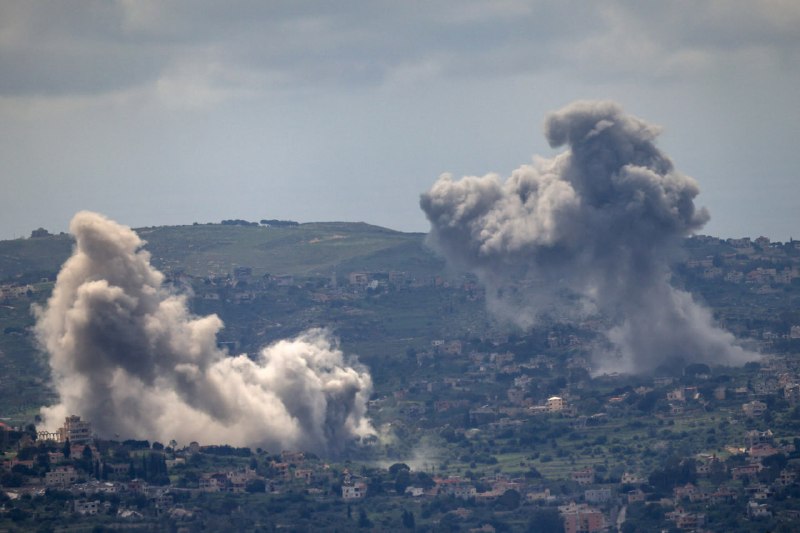
On the evening of 20 June 2026, the Israeli commercial channel Kan 15 ran a report acknowledging a defeat that Israeli officials have so far been reluctant to name on the record: the effort to keep the war in Lebanon operationally and politically separate from the wider confrontation with Iran has, in the channel's framing, failed. Telegram channels aligned with Iranian state media flagged the broadcast within minutes. The story landed because the source is Israeli, not Iranian — the admission is being carried by the very media environment the country's defence establishment has spent eighteen months trying to shape.
The moment is small in purely logistical terms — a single segment on a single commercial network — and large in political terms. For most of the past year, the Israeli public conversation has been organised around the assumption that the northern front could be managed as a contained, time-limited operation. Kan 15's report, as paraphrased by the Iranian outlets that picked it up, says that assumption no longer holds. The rest of this piece is about what the broadcast actually said, what it leaves out, and what an admission of this kind — aired in Hebrew on a domestic channel — typically does to a government's room for manoeuvre.
What Kan 15 said, and how it travelled
The four items in the wire cluster that prompted this article are all translations or paraphrases of the same Kan 15 segment, circulated on 20 June 2026 between 18:05 and 18:31 UTC by Tasnim News, Tasnim's English service, Mehr News, and a Tasnim-affiliated channel. Each of them carries the same core claim: that the Israeli channel, in a report on what it described as "recent strategic failures," stated that Tel Aviv's effort to separate "the case of Lebanon" from "the case of Iran" had not succeeded.
The Iranian framing is pointed. Mehr's headline calls it a "confession"; Tasnim uses the same word in Persian ("اعتراف"). The English Tasnim feed renders it more flatly as "Israel Channel 15: Efforts to separate the case of Lebanon from Iran failed." All three attribute the claim to Kan 15's own reporting, not to a Hezbollah or Iranian source. That provenance matters: the story's value, for both audiences, is that the admission is being made by the side that has the most to lose from admitting it.
None of the four items reproduce the segment in full or quote a named on-air source by name. The Iranian outlets' own English-language reporting describes Kan 15 as having "discussed the recent strategic failures of this regime in the face of" the regional picture, with the Lebanon–Iran separation line as the specific frame the report interrogated. Readers in Israel who have seen the segment describe a familiar pattern: a war-and-security retrospective, voiced by the channel's defence correspondents, that walks through the assumption that the campaign in the north could be run on a separate clock from the wider confrontation with Tehran — and concludes that the two have visibly merged.
The strategic argument underneath the broadcast
The premise that Israel has been trying to break is straightforward. For most of the post-October 2023 period, the Israeli war cabinet, the IDF general staff, and the country's main defence commentators have argued, in different registers, that the northern front — Hezbollah's rocket and drone array, the communities displaced from the Galilee, the daily exchange of fire across the border — is one problem, and the wider Iranian nuclear-and-missile challenge is a different and larger one. The first can be settled by degrading Hezbollah's precision-missile programme, pushing the organisation north of the Litani, and creating a buffer. The second has to be settled, if at all, in a different theatre, on a different timeline, and probably with different partners.
The logic of separation has several payoffs. It keeps the United States anchored to the Lebanon-only framing that Washington has, for most of the past two years, been most comfortable with. It gives European partners a narrower file to sign on to. It insulates the domestic political conversation from the more combustible question of a strike on Iranian nuclear facilities. And it allows Israeli planners to argue that degrading Hezbollah is a finite military problem with a finite political answer — the kind of problem the country has solved before.
Kan 15's report, on the read offered by the Iranian outlets, is that this architecture has not held. The two files have reconnected in three visible ways. First, the weapons and targeting logic on the northern border — the use of precision munitions, the strikes on infrastructure deep in the Bekaa, the tempo of the air campaign — has moved closer to what was previously reserved for the Iran file. Second, the political track has merged: the diplomatic conversations about a ceasefire in Lebanon now routinely include language about Iran's wider posture. Third, the public conversation in Israel has hardened around the view, voiced in Hebrew press and on Kan, that there is no way to settle the north without addressing Tehran.
The Iranian relay, and how to read it
A reader who only saw the Iranian coverage could be forgiven for treating this as an Israeli surrender document. It is not. Iranian state and state-aligned outlets are, by long habit, in the business of amplifying admissions by adversaries. The four items in the wire cluster are doing that work. They are also doing something more specific: they are constructing a public narrative in which the Israeli media — not the Iranian, not the Lebanese, not the American — is on record saying that Iran has won a framing argument. This is a piece of regional information warfare, and it should be read as one.
The substance of the Israeli broadcast is, however, harder to dismiss. Kan 15 is a domestic commercial channel, not a foreign-facing outlet. Its reporting is addressed to an Israeli audience, in Hebrew, and is calibrated for that audience's political centre. When such an outlet carries a segment saying that a stated Israeli strategy has not worked, it is doing something concrete inside the Israeli conversation. It is normalising a view that has, until now, been associated with opposition voices and a thin layer of security commentators. The fact that Iranian outlets are then able to recycle the admission is a downstream effect, not a driver of the original judgment.
What the available reporting does not establish is the specific on-air wording of the Kan segment, the named correspondent or analyst who delivered it, or whether the framing reflects a single editorial line at the channel or a range of views aired in sequence. Iranian state-aligned paraphrases, as a rule, compress and sharpen. The conservative reading is that Kan 15 carried a report whose central claim was that the separation strategy has not held up; the specific tone and emphasis are not in the public record from the items available to this publication.
What the admission does, politically, inside Israel
Israeli media admissions of this kind matter because they move the centre of gravity of permissible argument. A government that can be confident that its framing holds in the main commercial broadcasters has more room to manage a long, attritional campaign than a government that has to argue against a domestic media that has already written the strategy's obituary. The reverse is also true: once the framing has been conceded in the centre, the political cost of the original policy rises, and the pressure to articulate a new one grows.
This is the mechanism that the Iranian outlets are, wittingly or not, putting their weight on. The relay of the Kan 15 segment inside the Iranian information ecosystem is, in part, an effort to make it politically more expensive inside Israel for the war cabinet to keep running the separation policy. Each round of republication tightens the loop. By the time the segment has been read, in Persian, in Arabic, and in English, by audiences in Tehran, Beirut, and the Gulf, and then re-reported into Hebrew-language social media, the original broadcast has become a piece of evidence in a much larger argument — one the Israeli defence establishment no longer fully controls.
The tactical question is whether the Israeli government responds. The available items do not contain a government response, and this publication has not seen a statement from the Prime Minister's Office or the IDF Spokesperson addressing the Kan segment. The previous pattern, when Israeli commercial media has broken with a stated strategy, has been silence followed by a gradual adjustment in the language of official briefings. The new language, when it comes, will be the signal worth watching.
What the broadcast does not, and cannot, settle
The most important thing the Kan 15 segment does not do is resolve the underlying military question. The argument in the report, as relayed by Iranian outlets, is about framing and political viability — whether the separation strategy can hold as a public position — not about the balance of forces on the ground. The two are related but not identical. It is possible for an Israeli strategy to be politically dead in Tel Aviv while the underlying military reality on the border remains what it was a month ago. The reverse is also possible. The wire items do not let a reader distinguish between the two.
There is also a question the report does not address, and that Iranian coverage has no reason to ask: whether the alternative to the separation strategy is any more stable. If the northern file and the Iran file have, in fact, merged, the next questions are who controls the merged file, on what timeline, and with what political cover inside Israel and abroad. None of those questions are settled by an admission that the previous framing no longer holds. They are made more urgent, which is the function the Kan report — and the Iranian relay of it — appear designed to perform.
For the moment, the concrete and verifiable fact is narrow. On 20 June 2026, an Israeli commercial broadcaster said on the record that the strategy of treating Lebanon as a separable file from Iran had not worked. Iranian state-aligned media published that admission in three languages within half an hour. The Israeli government has not, as of the items available to this publication, responded. The story's weight will depend on what comes next, and on whether the admission becomes a routine line of Israeli commentary or a one-off segment that the next news cycle overtakes.
Monexus framed this around the Israeli admission rather than the Iranian relay, and treated the four Iranian-state items as translations of one Israeli source rather than as four independent reports. Where the Iranian outlets used the word "confession," this publication has used "admission," to keep the framing inside what the original Hebrew broadcast can plausibly have said.
Wire provenance
This editorial synthesis draws on the following public wire/social posts:
- https://t.me/mehrnews/812341
- https://t.me/tasnimplus/905122
- https://t.me/tasnimnews_en/412098
- https://t.me/JahanTasnim/556871
- https://en.wikipedia.org/wiki/Kan_(TV_channel)
- https://en.wikipedia.org/wiki/Hezbollah
- https://en.wikipedia.org/wiki/Litani_River
- https://en.wikipedia.org/wiki/Iran%E2%80%93Israel_proxy_conflict
Follow the event.
These dated source records provide context. They do not retrospectively verify this archive article.
Separate what the nuclear watchdog reported from what it could not determine after the June 2025 strikes.
- https://t.me/mehrnews/812341
- https://t.me/tasnimplus/905122
- https://t.me/tasnimnews_en/412098
- https://t.me/JahanTasnim/556871
- https://en.wikipedia.org/wiki/Kan_(TV_channel
- https://en.wikipedia.org/wiki/Hezbollah
- https://en.wikipedia.org/wiki/Litani_River
- https://en.wikipedia.org/wiki/Iran%E2%80%93Israel_proxy_conflict