Israel halts attacks in southern Lebanon without pullout, Channel 12 reports
Hebrew-language reporting on 20 June 2026 says Israel has paused operations in southern Lebanon while keeping troops in place — a posture that leaves the disputed frontier in legal and operational limbo.
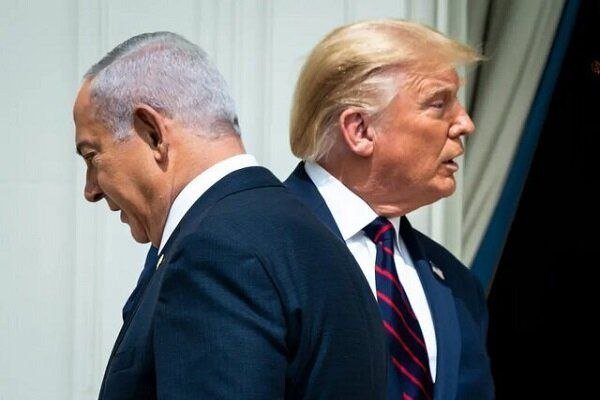
On 20 June 2026, at 14:53 UTC, Israeli Hebrew-language broadcaster Channel 12 reported that Prime Minister Benjamin Netanyahu and Israeli War Minister Katz had ordered the Israel Defense Forces to halt attacks in southern Lebanon, without accompanying orders to withdraw from territory the army currently holds in the area. The brief, picked up within minutes by Al-Alam Arabic (15:15 UTC), Iran's Fars News International, and the Beirut-aligned outlet The Cradle, framed the move as a unilateral de-escalation step from Tel Aviv — one that freezes a contested frontline in legal and operational limbo.
What the dispatches describe is not a ceasefire in the diplomatic sense, in which two parties agree to stop firing. It is an instruction, issued by Israel's civilian leadership, that IDF units in the south Lebanon theatre cease kinetic activity while remaining in position. The distinction matters: a halt-without-withdrawal leaves a foreign army in control of populated Lebanese territory indefinitely, and on terms set in Jerusalem rather than negotiated in Beirut or under international auspices.
What the order covers — and what it does not
The Hebrew-language reporting, as relayed by Iran's Fars News International, specifies that Netanyahu and Katz — the War Minister referred to in the Iranian state outlet's framing as "war minister of this regime" — directed the army to "stop all operations in southern" Lebanon. Al-Alam Arabic, carrying the same Channel 12 report, added the explicit caveat that the army will not withdraw from "the areas it controls." The Cradle's bulletin, posted at 14:53 UTC, used the same wording: a halt to attacks, with no corresponding redeployment.
Three things are absent from the dispatches circulated on 20 June. There is no mention of a Lebanese counterpart to the order, no reference to UN Security Council reporting or to UNIFIL (the UN Interim Force in Lebanon, which has monitored the Israel-Lebanon border since 1978) being notified or consulted, and no indication of a timeline. The order, as reported, is administrative rather than political: a directive from Tel Aviv, about Israeli forces, with no evident Lebanese signatory.
The Israeli security rationale
The framing Channel 12 itself carried — echoed in the initial Hebrew press cycle, though not preserved in the Telegram captions supplied here — has historically run along two lines. First, the operational argument: that IDF positions north of the border serve as a buffer against rocket and anti-tank fire into Israeli towns, the kind of threat that defined the 2023-2024 northern front. Second, the political argument: that any withdrawal before a verified demilitarisation of non-state armed groups in the area would amount to a strategic concession, an outcome the sitting government has publicly said it will not accept.
A halt-without-withdrawal can be read as an attempt to square those two pressures. It lowers the tempo of cross-border activity — a step that benefits residents of both northern Israel and southern Lebanon — without producing the political photograph of a flag-lowering ceremony in a Lebanese border town.
The Lebanese and regional read
Reporting framed from Beirut and Tehran reads the order more cautiously. The Cradle, which has consistently covered the southern Lebanon front from a Lebanese-aligned perspective, and Al-Alam, an Arabic-language outlet linked to Iranian state broadcasting, both emphasised the absence of a withdrawal clause. Fars News International, the English service of Iran's state news apparatus, framed the order as one that obliges "the army to stop all operations in southern" Lebanon while leaving occupation in place.
That framing converges with the position Beirut has taken in earlier negotiating rounds: that any arrangement short of full Israeli withdrawal and a return to the 2024 ceasefire understanding is not de-escalation, but the consolidation of a new occupation. The 2024 arrangement, brokered under US and French auspices, obliged Israel to wind down offensive operations and withdraw from southern Lebanese positions, with UNIFIL and the Lebanese Armed Forces monitoring compliance; whether the order described on 20 June is consistent with that framework is not addressed in the Channel 12 reporting cited above.
What remains contested
The dispatch as it stands is narrow: a single Hebrew-language report, carried by three outlets of differing editorial alignment, describing a directive about operations on one side of one border. Several questions the public record does not yet answer. Channel 12 has not been independently confirmed in the supplied sources by Reuters, the BBC, or the IDF Spokesperson's Unit, and Telegram relay of a wire brief is not the same as a formal Israeli government statement. The territorial scope — which villages, which ridge lines, whether the order covers air operations as well as ground — is not specified in the available reporting. And the legal status of Israeli forces remaining in southern Lebanon without a withdrawal timetable is, in international-law terms, a contested point: Israel characterises its presence as defensive and temporary; Lebanon and a wide cross-section of UN reporting have treated prolonged presence without Security Council authorisation as occupation.
What is clear, and what is unusual, is the duration of the freeze. A tactical pause during a single operation is mundane; a halt in attacks with troops held in place, ordered by the prime minister and the war minister, is a posture decision with diplomatic consequences. It signals that Jerusalem, for the moment, judges the cost of continued operations in southern Lebanon to exceed the cost of standing still there — while reserving the option to resume.
For residents of southern Lebanon, the difference between a pause and a withdrawal is not rhetorical. For northern Israeli communities, the difference between a pause and a verified cessation of incoming fire is not rhetorical either. The order, as reported, offers something to both — and a resolution to neither.
Desk note: Monexus has framed this around Channel 12's Hebrew-language reporting as relayed by Al-Alam Arabic, Fars News International, and The Cradle on 20 June 2026. The wire characterisations from those three outlets converge on the substance of the order but differ sharply on its political meaning, a divergence this publication has reported as it stands rather than smoothed over.
Wire provenance
This editorial synthesis draws on the following public wire/social posts:
- https://t.me/alalamarabic/
- https://t.me/FarsNewsInt/
- https://t.me/thecradlemedia/
- https://t.me/TheCradleMedia/
- https://en.wikipedia.org/wiki/United_Nations_Interim_Force_in_Lebanon