Israel and Hezbollah trade competing claims over Ali al-Taher ridge
Israeli forces say they have besieged Hezbollah fighters on a key ridge inside southern Lebanon. Hezbollah's media office calls the claim baseless, and the two narratives are now competing in real time.
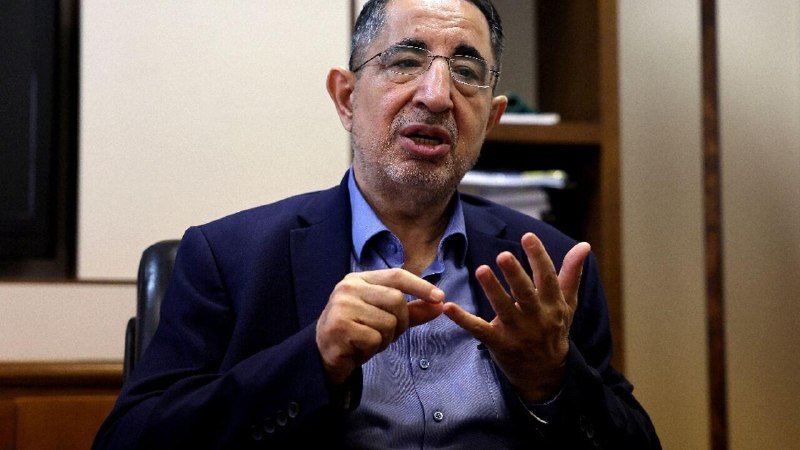
On the evening of 20 June 2026, two very different accounts of the same patch of southern Lebanese hillside were circulating within minutes of each other. One, attributed to the Israeli military and relayed through Lebanese and regional channels, said Israeli forces had laid siege to Hezbollah fighters on the Ali al-Taher ridge, a stretch of high ground inside Lebanon that has become one of the most actively contested points on the Israel–Lebanon frontier. The other, issued by Hezbollah's Media Relations Office to Al Jazeera and carried by pro-Hezbollah outlets, called the Israeli claim "baseless" and accused Israel of using battlefield spin to lift the morale of its own troops.
The episode is small in textual footprint but large in what it reveals about how this border war is being narrated, by whom, and through which amplifiers. Every claim about a ridge in southern Lebanon now travels in two parallel press ecosystems before the dust settles on the slope itself.
The Israeli framing: siege, then a five-hour pause
The Israeli line, as relayed by Lebanese field monitors, was that ground forces had encircled Hezbollah positions on the Ali al-Taher ridge. The phrase used in those early reports — "besieging the group's resistance fighters in the Ali al-Taher Heights" — is a specific military claim, not a generic one. It implies encirclement, not contact.
Within hours, however, the rhythm of the fire appeared to shift. At 21:40 UTC on 20 June, the field monitor WFWitness reported that Israeli airstrikes and artillery had not targeted Lebanese territory for the previous five hours, while reconnaissance drones continued to overfly the area. The pause is itself a data point. In an active encirclement, artillery typically does not go quiet unless commanders have decided to switch posture — to consolidate, to negotiate through intermediaries, or to set conditions for a political rather than tactical outcome. The thread does not say which.
The Hezbollah counter-narrative: the claim is false, and politically motivated
Hezbollah's media office, in statements relayed to Al Jazeera and republished by outlets including The Cradle, called the encirclement claim "baseless." The phrasing matters: the office did not say Hezbollah had withdrawn, did not say it had advanced, and did not give a different account of the ridge's status. It attacked the Israeli claim — its existence, its motive — and left the ground situation described only by negation.
That rhetorical choice is consistent with how non-state armed groups under fire typically manage information: deny the opponent's political dividend rather than offer a verifiable battlefield picture. It also tells the reader something useful about the source. Hezbollah's media office is, for the purposes of this article, the institutional voice of a party engaged in active hostilities with Israel. Its statements are reported by Al Jazeera and propagated by outlets such as The Cradle, and they warrant the same weight any official military spokesperson's denials warrant: real enough to report, caveated enough to keep.
The line the office pushed — that Israel is promoting the narrative to "boost the morale of its forces after their failure to advance" — is the inverse of the Israeli line. Israel says it is succeeding; Hezbollah says Israel is failing and lying about it. The two accounts cannot both be fully right. They could, however, both be partly right in the way that wartime narratives usually are: a tactical success in a localised area can coexist with a stalled broader operation, and denial of one can coexist with redeployment on the ground.
What the public record actually contains
Strip away the duelling statements and the verifiable record is thinner than either side would like. WFWitness, a field monitor with a track record of granular southern-Lebanon reporting, posted at 21:13 UTC that Israeli artillery had targeted Ali al-Taher, and then at 21:40 UTC that strikes and artillery had paused for five hours. Al Jazeera carried Hezbollah's denial, as did The Cradle and English-language pro-Hezbollah channels. The Israeli military's framing of "besieging" fighters on the ridge appeared in summary form via the same chain of Lebanese and regional monitors; the thread does not contain a direct IDF Spokesperson release with the operational claim in its full wording.
That matters. "Israeli forces say X" is a different claim from "X is the case." Without a primary IDF brief, the encirclement narrative is presently a frame being carried by intermediaries. The Hezbollah denial is similarly mediated. A reader looking for ground truth at 22:00 UTC on 20 June cannot get it from the public record; what they can get is a clean map of which outlets are carrying which line, and the speed at which the lines are hardening.
The structural pattern: ridge wars, narrated in real time
The Ali al-Taher ridge sits in the band of southern Lebanese terrain that has been fought over repeatedly since October 2023, and the way this small fight is being argued out is more revealing than the fight itself. Border warfare between Israel and Hezbollah has long been a contest of two informational systems as much as two armies: the IDF's English-language briefing pipeline, fast and image-rich, and Hezbollah's Al Jazeera–mediated Arabic-language denial pipeline, slower but institutionally embedded with the regional press.
The thread of 20 June is a clean case study. Israeli-aligned intermediaries published the encirclement claim. Within roughly an hour, Hezbollah's media office had produced a rebuttal. Within another hour, the rebuttal had been broadcast by Al Jazeera, republished by The Cradle, echoed by English-language pro-Hezbollah accounts, and pushed back into Lebanese field channels. The five-hour artillery pause then became a separate datapoint that the Israeli-aligned channels chose to highlight without reasserting the siege claim. Each side is, in effect, doing selective narration: emphasising the fact pattern that supports its line, omitting the fact pattern that complicates it.
The larger pattern is not unique to this border. The Israel–Gaza war has run on the same dual pipeline. So, before it, did the Syrian civil war. What is new is the speed: claims issued at 19:27 UTC were being rebutted at 20:22 UTC, in the same hour, on the same platform family, with the rebuttal framed in the language of one outlet (Al Jazeera) and the amplification running through another (The Cradle). The half-life of a battlefield claim is now shorter than the half-life of the artillery shell that prompted it.
Stakes, and what remains unknown
If the Israeli encirclement claim is accurate, the operational stakes are significant: a Hezbollah foothold on a dominant ridge inside Lebanese territory has been contested, and the group has been forced to deny rather than to showcase its position. If the Hezbollah denial is accurate — and the artillery pause is a signal that Israeli ground forces have stopped advancing — then the narrative fight is doing the work that manoeuvre on the ridge is not.
What neither side has offered, and what the public record does not contain, is an independent verification. The UN Interim Force in Lebanon (UNIFIL) does not appear in the thread. Reuters, AP and AFP wires are not in the thread. There is no confirmed casualty figure, no confirmed territorial delineation, and no direct quotation from a named IDF spokesperson beyond the mediated summary of the siege claim. The Al Jazeera relay of the Hezbollah denial is the strongest sourced item on the denial side; the strongest sourced item on the Israeli side is a Lebanese field monitor's paraphrased report of an Israeli claim.
That asymmetry — mediated Israeli claim, mediated Hezbollah denial, no neutral ground-truth — is itself the story. On the southern Lebanese border in mid-2026, the news of a battle is now reliably outrunning the news of the battle's outcome. Until that gap closes, the most defensible reading of 20 June's events is also the most modest: two armed actors issued incompatible statements about a ridge, the artillery went quiet, the drones kept flying, and the press ecosystems that surround each side kept doing exactly what they were built to do.
How Monexus framed this: the wire feeds carry duelling claims at high speed and low granularity; we lead with what is verifiable, attribute the rest carefully, and let the reader see the structure of the disagreement rather than pretend it has been resolved.
Wire provenance
This editorial synthesis draws on the following public wire/social posts:
- https://t.me/wfwitness
- https://t.me/AMK_Mapping
- https://t.me/englishabuali
- https://t.me/thecradlemedia
- https://t.me/wfwitness
- https://en.wikipedia.org/wiki/Ali_al-Taher