Israel's southern Lebanon bombardment continues under declared ceasefire, with Nabatieh and Tyre bearing the brunt
Al-Mayadeen correspondents and Iranian state media describe more than 130 airstrikes on Nabatieh in 24 hours, with artillery lighting up Tyre and Kafr Jouz — a pattern at odds with the ceasefire Israel says is in force.
Lead
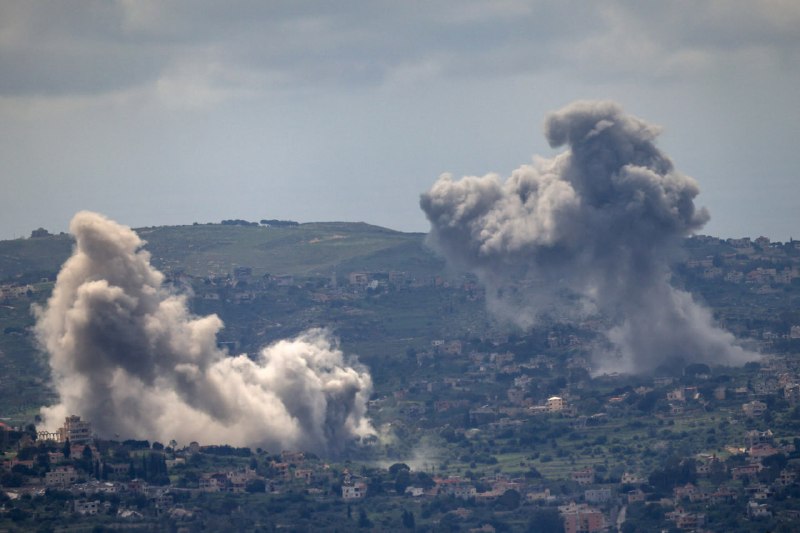
In the small hours of 20 June 2026, Israeli artillery lit the horizon above the southern Lebanese city of Tyre, and warplanes returned to the Nabatieh governorate for what Al-Mayadeen's correspondents on the ground described as a fourth consecutive night of heavy bombardment. By 00:18 UTC, the Hezbollah-aligned outlet's reporter in the south was counting more than 130 airstrikes on Nabatieh in the preceding 24 hours, with Kafr Jouz, Nabatieh al-Fouqa, Kafarman and the coastal city of Tire — Tyre — added to a list of targets hit before dawn [thread items 1, 3, 4]. The reporting from Al-Mayadeen, republished through Iranian state media channels Tasnim and Fars, sits uneasily with the public posture of the Israeli government, which has insisted a ceasefire arrangement remains in force. Whether the bombardment constitutes a tactical operation, a calibrated message, or a structural collapse of the truce now in place is the question the next 48 hours will answer.
Nut graf
The pattern reported in the early-morning hours of 20 June is not a one-off exchange. It is the latest iteration of a slow-motion argument over what "ceasefire" means on the Israel–Lebanon border — a contest fought as much in semantics and in the framing of daily casualty counts as it is in artillery and airstrikes. Israel's declared position is that operations against Hezbollah infrastructure continue; Lebanon's government, and the Iranian- and Hezbollah-aligned media ecosystem that relays the southern front's reporting, frame the same activity as ceasefire violations. Both narratives are in circulation simultaneously, and the credibility of the ceasefire itself now depends on which framing prevails with mediators, with the Lebanese public, and with the diplomatic back-channels in Washington, Doha and Beirut that nominally sustain it.
What the southern Lebanese reporting actually says
The four wire items that make up the present thread are tightly clustered, all from outlets that sit inside or adjacent to the Iranian state media ecosystem — Tasnim, Fars, and the Fars English service — and all of them relay a single underlying reporter: Al-Mayadeen's correspondent in southern Lebanon. Read in sequence, they describe a continuous operation, not isolated incidents. At 23:01 UTC on 19 June, the Fars newsroom reported an Israeli artillery strike on the town of Kafarman. Eight minutes later, the same outlet logged an Al-Mayadeen report of intense artillery fire across the southern Lebanese sky, explicitly framed as happening "in the middle of the 'ceasefire'". By 00:18 UTC on 20 June, a Tasnim channel cited Al-Mayadeen in describing 130-plus airstrikes on Nabatieh governorate in the previous 24 hours, with Tyre added to the target list. At 00:47 UTC, Tasnim reposted the same Al-Mayadeen artillery report, and at 01:24 UTC, Fars carried an update naming Kafr Jouz and Nabatieh al-Fouqa as further targets [thread items 1–5].
The number that matters most in that sequence is 130. It is a claim, not a count, and it comes from a Hezbollah-aligned outlet with a clear interest in documenting Israeli ceasefire violations. It should be treated as the upper bound of what the southern Lebanese reporting asserts, not as a verified independent total. The places named — Kafarman, Kafr Jouz, Nabatieh al-Fouqa, Nabatieh, Tyre — are, however, geographically specific and consistent across the four items, which gives the cluster of reports a coherence that single-source claims usually lack.
The Israeli framing, and the gap between the two
The Israeli government's public position, as reported in mainstream Israeli and Western wire coverage, has been that military operations against Hezbollah targets in southern Lebanon continue under an arrangement that the Israeli side characterises as a ceasefire with operational carve-outs — targets linked to Hezbollah's residual military infrastructure, including weapons storage, rocket launchers, and tunnels, can be hit when identified. That framing is not visible in the present thread, but it is the baseline against which the Al-Mayadeen reporting has to be read. Lebanese and Hezbollah-aligned media do not concede the existence of a legitimate target set inside Lebanese territory; from their vantage, every strike is a violation, every casualty a civilian.
The most consequential disagreement between the two framings is not over whether strikes are happening — they plainly are — but over what they mean. The Israeli framing treats the strikes as the enforcement arm of a ceasefire that is holding. The southern Lebanese framing treats them as evidence that the ceasefire is not, in any operational sense, in effect. International mediators, who have invested considerable political capital in keeping the arrangement nominally alive, are forced to choose which framing to validate, and the choice has consequences for what kinds of violations get reported, investigated, and condemned.
Why the Iranian-aligned channels are amplifying this now
Iranian state media's decision to relay the Al-Mayadeen reporting in close to real time is itself a piece of signal. Tasnim and Fars do not have a large southern-Lebanese newsgathering operation of their own; what they are doing is curating — selecting which Al-Mayadeen dispatches to lift into Persian-language feeds and which to leave on the cutting-room floor. The decision to lift four items in roughly two hours, all of them foregrounding the word "ceasefire" in scare-quotes, is a deliberate editorial choice. It tells a domestic Iranian audience that the arrangement Tel Aviv describes as a ceasefire is, in operational terms, a fiction, and that the cost of that fiction is being paid by Lebanese civilians in the towns named in the dispatches.
That this framing also serves Iranian strategic interests — undercutting the legitimacy of any arrangement that freezes Hezbollah's rearmament, keeping the diplomatic pressure on Israel, sustaining a narrative of victimhood in the Shia Arab street — does not make it false. It is the standard point at which the Global South–aligned framing and the pro-Hezbollah framing converge, and it is the reason a serious wire operation has to report both the claims and the interests behind them.
The structural question: what is a ceasefire that includes 130 strikes in 24 hours?
A ceasefire, in the international-law sense, is a suspension of hostilities agreed between parties, typically with monitoring and a defined scope of permitted activity. What is described in the thread does not easily fit that definition, but neither does it fit the description of an active ground campaign. It is closer to a third category: a low-intensity enforcement posture in which one party reserves the right to strike, exercises that right dozens of times a day, and describes the result as the holding of a ceasefire. The structural pattern is not unique to Israel–Lebanon — it is the lived experience of ceasefires from Idlib to the India–Pakistan line — but the scale reported here, if the 130-strike figure holds up under independent verification, would put the southern Lebanese arrangement in the more extreme end of the spectrum.
This is the question that mediators, journalists, and the Lebanese government will be forced to engage with over the coming days. A ceasefire that produces more than 130 strikes in 24 hours on a single governorate is, in the plain editorial sense, not a ceasefire — it is a war conducted at a calibrated tempo, with diplomatic language papering over the gap. Calling it something else, whether for domestic political reasons in Israel, for the strategic interests of Iran, or for the negotiating leverage of Western mediators, does not change what is being experienced on the ground in Kafarman, Kafr Jouz and Nabatieh al-Fouqa.
What the sources do not yet tell us
The present thread is one-sided by design. It contains reporting from Hezbollah-aligned Al-Mayadeen and from Iranian state outlets Tasnim and Fars; it does not contain an Israeli military spokesperson statement, a UNIFIL press release, a Lebanese Armed Forces communique, or an independent wire-service casualty count. The 130-strike figure is a single-source claim. The place names are specific and consistent, which is encouraging, but the number of casualties, the identity of the targets struck, and the proportion of strikes that hit military versus civilian sites are not in the present record. A serious report on the southern Lebanese front over the coming days will need to overlay this cluster of dispatches with Israeli military briefings, UNIFIL situation reports, and Lebanese Civil Defence casualty figures before any of the headline numbers can be treated as confirmed. The framing dispute over the meaning of "ceasefire" is unlikely to be settled in this news cycle; it is, however, the framing dispute that will define the next.
This Monexus long-read is built from a tightly clustered set of Iranian and Hezbollah-aligned dispatches. Where the wire service layer — Reuters, AP, BBC, AFP, the IDF Spokesperson — adds independent confirmation, that confirmation will be folded in on a separate file. The story as filed here is the southern Lebanese front's account of the night of 19–20 June 2026, presented alongside the editorial caveat that it is a single-side readout from a contested front.
Wire provenance
This editorial synthesis draws on the following public wire/social posts:
- https://t.me/farsna/0
- https://t.me/tasnimplus/0
- https://t.me/JahanTasnim/0
- https://t.me/FarsNewsInt/0
- https://t.me/farsna/0
Follow the event.
These dated source records provide context. They do not retrospectively verify this archive article.
Separate what the nuclear watchdog reported from what it could not determine after the June 2025 strikes.