Live Wire
10:28ZTHECRADLEMFamily of four killed in Israeli attack on Gaza, local sources report10:28ZTHECRADLEMIsraeli attack kills family of four in Gaza10:28ZTHECANARYUIsrael collapses Iran-US deal, Swiss meeting cancelled10:28ZOSINTLIVEReport: Secret Service funds redirected to Trump business project10:28ZOSINTLIVEFires break out at Simferopol thermal power plant, oil storage facility in Crimea10:27ZOSINTLIVEGermany considering acquiring Ukrainian Flamingo and BARS equipment, reports say10:27ZOSINTLIVEPakistan interior minister arrives in Iran after planned Iran-US talks in Switzerland10:27ZOSINTDEFENWitkoff travels to Switzerland to join Kushner for post-ceasefire Lebanon talks
Markets
S&P 500746.74 0.78%Nasdaq26,518 1.91%Nasdaq 10030,406 2.48%Dow515.52 0.15%Nikkei96.26 1.92%China 5033.3 1.04%Europe88.27 1.08%DAX41.52 0.39%BTC$63,609 1.94%ETH$1,726 2.23%BNB$586.51 2.63%XRP$1.15 2.34%SOL$71.51 4.90%TRX$0.3235 0.62%HYPE$70.81 6.07%DOGE$0.084 2.06%RAIN$0.0145 0.21%LEO$9.57 0.35%QQQ$740.62 2.51%VOO$688.11 0.98%VTI$369.99 1.16%IWM$295.59 1.97%ARKK$80.19 2.17%HYG$80.01 0.35%Gold$387.12 0.38%Silver$59.51 1.81%WTI Crude$114.87 0.56%Brent$43.88 0.90%Nat Gas$11.74 1.47%Copper$38.86 0.57%EUR/USD1.1467 0.00%GBP/USD1.3233 0.00%USD/JPY161.23 0.00%USD/CNY6.7693 0.00%
CLOSEDNYSEopens in 2d 2h 58m
The Monexus
Vol. I · No. 171
Saturday, 20 June 2026
Saturday Ed.
Updated 10:31 UTC
  • UTC10:31
  • EDT06:31
  • GMT11:31
  • CET12:31
  • JST19:31
  • HKT18:31
← The MonexusTech

Israeli drone strike hits Western Bekaa town as Lebanon front widens

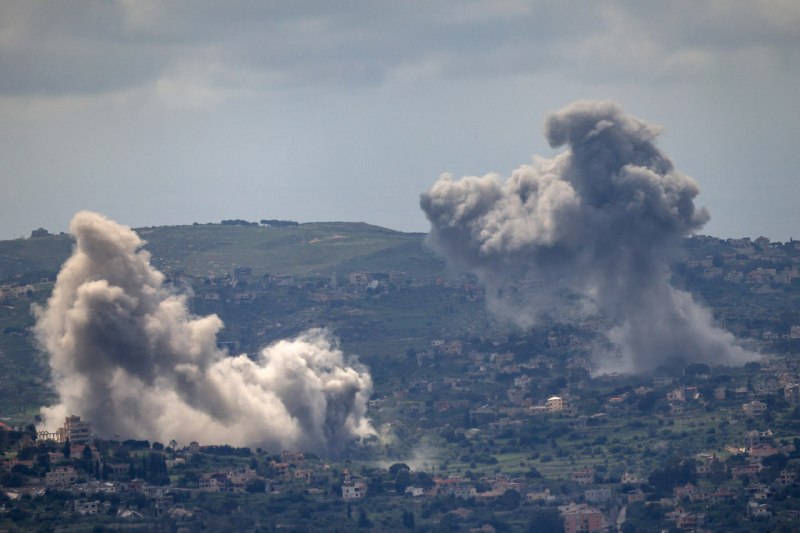
An Israeli drone strike on the eastern Lebanese town of Sahmar on 20 June 2026 marks a further eastward shift in Israel's aerial campaign, putting the Western Bekaa squarely inside the targeting picture.
Monexus News

An Israeli drone struck the eastern Lebanese town of Sahmar in the Western Bekaa before 07:30 UTC on 20 June 2026, according to Lebanon-based reporting carried by Iran's Tasnim News Agency and Al-Mayadeen. The attack, one of a sequence of Israeli air operations against targets deep in Lebanon's eastern interior, extends the geography of the current campaign well beyond the southern border districts that have borne the brunt of recent exchanges.

The strike is the latest data point in a pattern Israeli planners have pursued publicly for months: a layered air campaign that combines manned aircraft over south Lebanon with unmanned systems operating deeper into the country's central and eastern districts. The Western Bekaa, a Sunni and mixed-confessional area historically adjacent to Hezbollah's logistical heartland in the eastern Bekaa around Baalbek, sits at the seam between those two operating pictures. Striking Sahmar places Israeli drones visibly inside territory previously reached mainly by fixed-wing sorties, and it does so on a Friday morning when civilians would ordinarily be moving through the town.

A widening envelope

Reporting carried by Tasnim and Al-Mayadeen on the morning of 20 June described the Sahmar strike alongside earlier overnight air operations across the Western Bekaa. The first wave of reporting from Lebanese news sources surfaced at 06:12 UTC, with Tasnim's English and Persian-language channels distributing updates at 06:15 UTC and 07:30 UTC respectively. Telegram channels affiliated with Iran's state-aligned press — Tasnim News, Tasnim Plus, and Tasnim's JahanTasnim feed — republished the Al-Mayadeen wire in near-real time, all attributing the underlying reporting to Lebanese news sources and to the Beirut-based Al-Mayadeen network.

The pattern is consistent with the air campaign Israel has run since the resumption of major hostilities with Hezbollah in late 2023. Israeli officials have publicly stated that the target set includes not only combatants but the logistical and precision-missile infrastructure the group has rebuilt across south Lebanon and the Beqaa Valley. The Western Bekaa is part of that calculus: it borders the Roman-era road network that Hezbollah has historically used to move materiel toward the Litani, and it sits within range of the Israeli air bases at Ramat David and Hatzor without requiring the longer flight profiles needed to reach the Syrian border region.

Israeli military spokespeople have, in parallel, framed operations in eastern Lebanon as defensive — aimed at degrading capability arrays positioned to fire into northern Israel. That framing has held across Israeli press coverage even as casualty counts on the Lebanese side, tracked by the Lebanese Ministry of Public Health and wire services, have mounted into the high hundreds over the past quarter. On the morning of 20 June, the initial accounts did not specify a casualty figure for Sahmar; reporting carried by Tasnim and Al-Mayadeen focused on the location and the type of munition, not on immediate toll.

The information chain

How this story reached global readers is itself part of the picture. The initial sourcing chain on the morning of 20 June ran from local Lebanese news outlets, to Al-Mayadeen in Beirut, to Tasnim in Tehran, to Telegram channels distributing in English and Farsi. None of the Western wire services — Reuters, AFP, AP, BBC — had, as of the timestamps above, posted English-language confirmations of the Sahmar strike on the same rapid cycle.

This is not unusual for strikes deep in eastern Lebanon. Western wires have typically led with Israeli military spokesperson readouts and Israeli press accounts, while the Beirut-to-Tehran-to-Telegram axis has often been faster on the initial scene. The consequence is a temporary information asymmetry: regional audiences see the strike first via Al-Mayadeen and Tasnim, while Western newsroom customers wait for IDF confirmation or for their own correspondents in Beirut to file. That asymmetry narrows within hours, but it shapes the first frame the global conversation takes.

Al-Mayadeen is owned by Lebanese businessman Ghassan Ben Jeddou via a Beirut-registered holding company and has been sanctioned in past years by Arab League members for its editorial line; it is not a wire service in the Reuters or AFP sense. Its reporting is useful, but it is not neutral, and treating its dispatches as a stand-alone factual basis would be a sourcing error. The correct posture is to use Al-Mayadeen's scene-setting, then weight the claim against Israeli spokesperson readouts, Western wire confirmation, and on-the-ground Lebanese reporting — including civil defence accounts that do not pass through a political editor.

What the geography tells us

The Bekaa Valley is roughly 120 kilometres long and 16 kilometres wide, running northeast from the Litani river toward the Syrian border. Hezbollah's documented military footprint in the valley includes training areas around Baalbek and Hermel, rocket-assembly workshops in the eastern districts, and a road network — old and new — that connects Iranian-supplied materiel flows from Syria into the southern front. Israel's air force has struck all of those layers repeatedly since 2023.

What is notable about Sahmar is its location in the Western Bekaa, the part of the valley that abuts the Mount Lebanon range and the Aley district. That is a more populated, more religiously mixed area than the Baalbek-Hermel corridor to the east. It is also a stretch of highway closer to Beirut: Sahmar sits roughly 50 kilometres from the capital by road. Striking there places Israeli drones within routine reach of the metropolitan periphery, on a trajectory that does not require crossing Lebanese airspace already heavily covered by Israeli air defence.

A plain-language read of the operational pattern: Israel has moved from a posture in which the eastern Bekaa was reached mainly by fighter aircraft, to one in which loitering munitions can hit targets there on shorter timelines and with smaller footprints. That shift reflects an inventory story — Israel has, over the past three years, rapidly expanded its procurement of precision-guided drones and loitering munitions — and a doctrine story about willingness to operate drones in more populated areas. Both are worth watching over the next reporting cycle.

What remains contested

The open questions on the morning of 20 June were the usual ones in this kind of strike. Initial reporting did not specify the target's function: a Hezbollah operative, a weapons cache, a vehicle, or a structure used for a non-military purpose that nevertheless sat on a target list. The Israeli military had not, at the timestamps reflected in the Telegram thread, posted a confirmation or a target description; the Lebanese authorities had not yet filed a casualty count. Al-Mayadeen's English-language coverage and Tasnim's republication of it gave the location and the munition type but not the immediate human toll.

There is also the broader question of proportionality. Israeli officials have argued, in published briefings, that strikes on Hezbollah infrastructure in the Beqaa are lawful under the right of self-defence because the capability being degraded is in turn aimed at Israeli civilian population centres. Lebanese officials, including the government in Beirut and the country's negotiating team that has intermittently engaged in ceasefire diplomacy, have argued that the scale of damage relative to the military gain falls outside customary international humanitarian law. Both positions are coherent, and both rest on evidentiary claims that the public record only partly supports.

What Monexus can say with confidence on the morning of 20 June 2026 is narrower than either frame. An Israeli drone struck the town of Sahmar in the Western Bekaa before 07:30 UTC. The strike was reported by Al-Mayadeen and distributed in English and Farsi by Tasnim's channels, including Tasnim News English, Tasnim Plus, and JahanTasnim. Western wire confirmation of the specific strike had not, at the time of writing, appeared in the public thread. The deeper pattern — of Israeli aerial operations reaching deeper into Lebanese territory, and of the regional news chain moving faster than the Western one in the immediate aftermath — is consistent with the trajectory of the past several months and gives the Sahmar strike its operational meaning.


This article is the work of Monexus's newsroom. We have cited Telegram-channel republishing of Lebanese and Iranian state-adjacent reporting alongside the framework considerations raised by Israeli public sources; readers should weight each according to its institutional incentives and corroborate where independent reporting becomes available.

Wire provenance

This editorial synthesis draws on the following public wire/social posts:

  • https://t.me/tasnimnews_en
  • https://t.me/tasnimplus
  • https://t.me/JahanTasnim
  • https://t.me/tasnimnews_en
  • https://t.me/JahanTasnim
  • https://en.wikipedia.org/wiki/Beqaa_Valley
© 2026 Monexus Media · reported from the wire