Israeli strikes kill 16 in Nabatieh as southern Lebanon campaign widens
Lebanon's Civil Defense says 16 people were killed and 12 wounded in Israeli attacks on the Nabatieh district, hours after Israel signalled it would control bridges and the area south of the Litani.
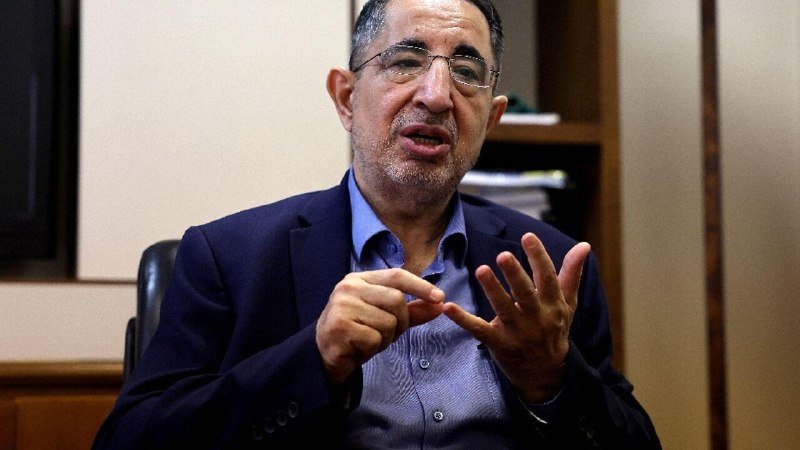
Lebanese Civil Defense reported on 20 June 2026 that Israeli airstrikes on the Nabatieh district in southern Lebanon killed 16 people and wounded 12 others, in what residents described as one of the heaviest single-day tolls in the area since fighting resumed earlier this year. The figures were carried simultaneously by Al-Alam Arabic and The Cradle Media at 09:46 UTC, with Middle East Eye confirming the strike at 09:48 UTC. Earlier in the morning, at 09:08 UTC, the same wire reported that a family of four had been killed in a separate strike in southern Lebanon. The Israeli military said it was targeting Hezbollah infrastructure in the area.
The strikes mark an escalation in a campaign that Israel has now publicly defined in geographic terms. The day's pattern — multiple air strikes across the Nabatieh district followed by a stated intent to control crossings and the strip south of the Litani river — fits a familiar Israeli template for southern Lebanon: degrade militant infrastructure, displace population south of the waterway, and hold the ground that the 2006 UN resolution left ambiguous. The question for the next 72 hours is whether the campaign stops at air power or crosses into a ground phase, as it did in late 2024.
What happened, in sequence
The morning began with a strike on a residential target in southern Lebanon at 09:08 UTC, killing four members of a single family, according to Middle East Eye's live blog. Forty minutes later, Lebanon's Civil Defense was reporting a much larger incident in Nabatieh: 16 dead and 12 wounded from what the agency described as a series of attacks on the area. By 09:46 UTC, both Al-Alam Arabic and The Cradle Media, which frequently carry first reads from Lebanese state-aligned outlets, had the same casualty figures on their wires. The Israeli military confirmed strikes against Hezbollah targets in southern Lebanon at roughly the same hour.
Nabatieh is the largest city in south Lebanon outside Tyre and the historical administrative capital of the governorate. Its civilian population has thinned dramatically since the start of the current round of hostilities, but it remains a hub for displaced families who have moved north from border villages and for the residual civilian administration of the south. A strike package that lands 16 casualties in a single district, on a single morning, is therefore not a routine exchange of fire with a weapons depot — it is an operation that has either hit populated targets, hit targets close to populated ones, or both.
The Israeli framing
Israel's public justification for the southern Lebanon campaign has been the need to push Hezbollah north of the Litani, dismantle the rocket and drone infrastructure that has threatened Israeli towns along the Galilee panhandle, and create a buffer. The framing is consistent with a long-standing Israeli security doctrine that treats the Litani line as the operative border in any conflict with Hezbollah, regardless of where the Blue Line sits on the map. Israeli spokespeople are expected to argue, as they have in previous rounds, that Hezbollah stores weapons in civilian-adjacent sites and that civilian harm is a function of that practice rather than of targeting choices. That argument is contested by every Lebanese and UN source that has documented the pattern of strikes in the south over the past 18 months.
The counter-claim from Beirut and from the broader Arab press is simpler: 16 civilians killed in a single district on a single morning is, on its face, a humanitarian event, regardless of what was underneath the buildings. Lebanese Civil Defense is a state agency and its figures carry the caveats that apply to any party to a conflict, but the body count has been corroborated across at least three independent wires, which is the threshold at which casualty figures in this conflict usually begin to be treated as reliable.
What we still do not know
The sources available for this article do not specify what was struck in Nabatieh, whether the 16 deaths came from a single strike or a package, or whether any of the dead were Hezbollah operatives. The Israeli military has said it was striking Hezbollah targets, which is the standard formula and does not, on its own, adjudicate the civilian-combatant ratio. Lebanese Civil Defense's count treats all 16 as civilian dead; Israeli military briefings typically dispute a portion of such tallies. The next 24 to 48 hours of reporting from UN observers, Reuters, AFP and the BBC will be what narrows that gap.
There is also no information in the current source set on whether the strikes triggered a Hezbollah rocket response into Israel. That response, when it comes, is the variable that most directly determines whether the day is read as a continuation of the air campaign or the opening of a new phase.
The structural frame
What is unfolding in southern Lebanon is not a new war but the same war reaching a new phase. The Israeli campaign in Gaza, the cross-border exchanges with Hezbollah, and the periodic strikes on Iranian-linked convoys in Syria have been treated, in Western wire reporting, as separate fronts. From the perspective of the regional balance sheet, they are a single front, and the Litani operation is the phase in which Israel is trying to convert the gains of the past two years into a durable geographic arrangement in the north.
The asymmetry of the moment is worth naming plainly. Israel has the air capability to strike any point in Lebanon at will and the political alignment of a US administration that has not used its leverage to slow the campaign. Hezbollah retains a rocket and drone inventory, a presence in Lebanese politics that no current government can simply declare illegal, and a patron in Tehran that has its own reasons to keep the front active. The 16 dead in Nabatieh on 20 June are not a number that either side can absorb politically, and the trajectory of the next week will be shaped as much by domestic mood on both sides of the border as by the operational logic of the campaign itself.
Monexus framed this as a single-day strike tally inside a wider southern Lebanon campaign, citing Lebanese Civil Defense as relayed by Al-Alam Arabic, The Cradle Media, and Middle East Eye's live blog. Western wire confirmation (Reuters, AFP, BBC) and Israeli military briefing language will be incorporated as they publish; the casualty figures here are those carried at 09:46–09:48 UTC on 20 June 2026.
Wire provenance
This editorial synthesis draws on the following public wire/social posts:
- https://t.me/thecradlemedia
- https://t.me/alalamarabic