A Kenyan county, a school bus, and a deputy governor's televised ultimatum
Kakamega's deputy governor names no one in particular and everyone in particular, demanding arrests over a school-bus attack that has turned a children's music festival into a county-political flashpoint.
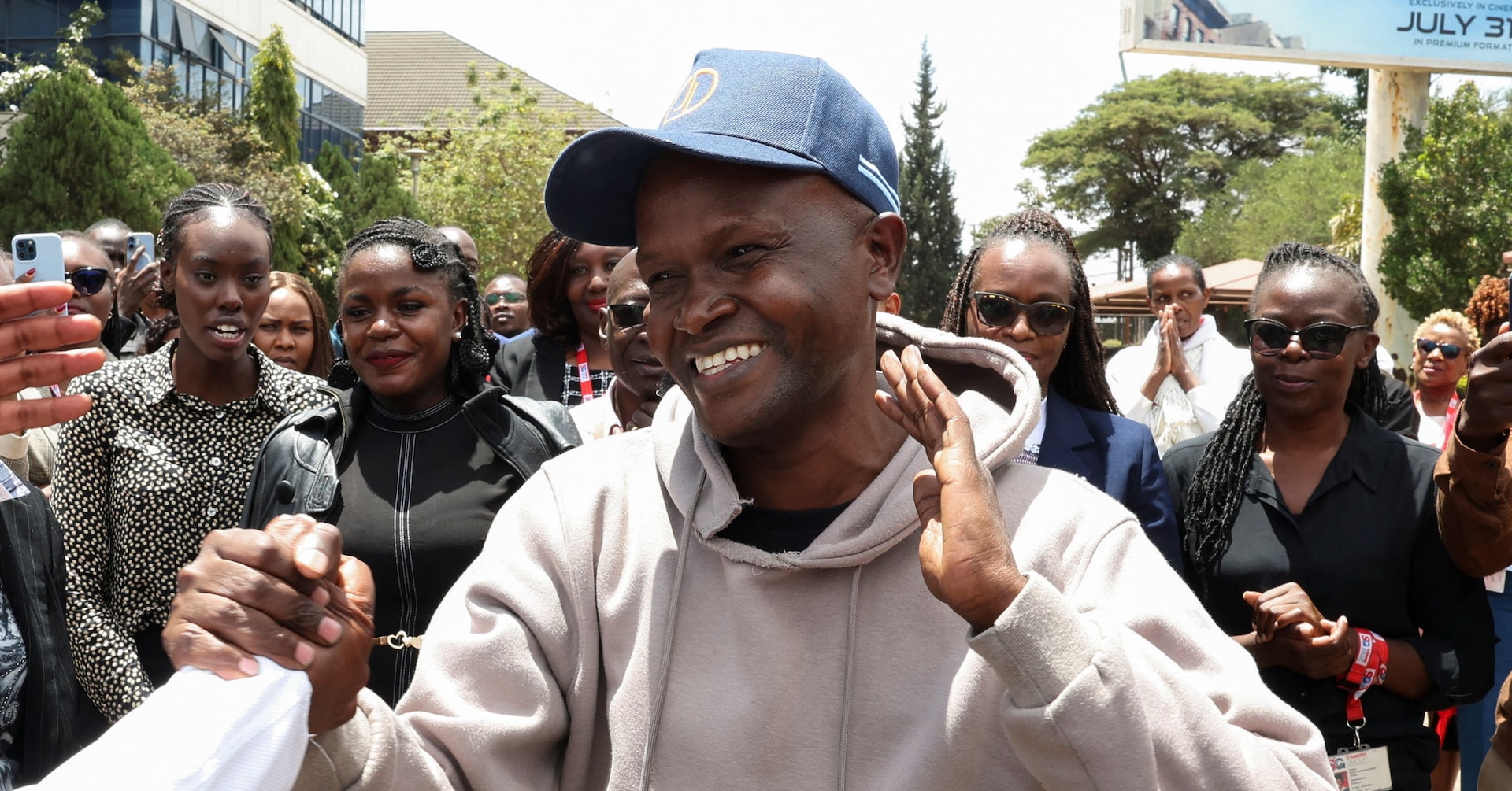
On the morning of 20 June 2026, Kakamega's deputy governor, Ayub Savula, took to a televised platform to demand the arrest of politicians he did not name — accusing them, in unsubtle terms, of orchestrating an attack on a school bus carrying pupils and parents in Matungu after a music festival. The bus attack itself was the kind of small-county incident that would normally fade from the news cycle within a day. The deputy governor's framing ensured it did not.
The episode distils, in miniature, a recurring pattern in Kenyan county politics: a routine act of violence or intimidation — road-blocked school transport, a disrupted public gathering, an altercation at a polling station — gets elevated, in real time, into an indictment of the political class as a whole. The accuser rarely loses. The accused, named or not, almost always does.
What the deputy governor actually said
According to Standard Kenya's Telegram wire, Savula called for the arrest of unnamed politicians he accuses of orchestrating the attack on the school bus ferrying pupils and parents in Matungu after a music festival. The phrasing — "unnamed politicians" — is doing a great deal of work. It allows the deputy governor to occupy the moral high ground without exposing himself to a defamation suit. It also primes the public to read any local politician with a known grudge against the county administration as a plausible suspect. In Western Kenya's compressed political geometry, where devolved units sit on top of overlapping national and constituency loyalties, that ambiguity is itself a weapon.
The bus itself, the pupils on board, and the parents who had accompanied them to the music festival are the human centre of the story. Standard Kenya's wire does not report casualties in the thread item available to this publication, and the framing in the available reporting centres on the political accusation rather than the medical or protective response to those on board.
Why Matungu, why now
Matungu is a constituency inside Kakamega County, in Kenya's former Western Province. It has produced and broken political careers in roughly equal measure over the last two electoral cycles, and the dust from those contests has rarely fully settled. A music festival is precisely the kind of soft-civil-society event — drawing pupils, parents, teachers and local notables — that offers a low-cost stage for a confrontation without the optics of a rally.
The deputy governor's choice to surface the incident on television rather than through the formal county security committee is itself a tell. Devolved security coordination in Kenya runs through the County Police Commander, the County Commissioner, and the county's intelligence apparatus; a deputy governor who bypasses those channels and goes straight to cameras is signalling that he either does not trust them, or that he intends the political effect of the accusation to outrun the procedural one. The accusation functions on both registers simultaneously.
The structural pattern, in plain language
Kenya's devolved system, written into the 2010 constitution and operationalised through the 47 counties, was supposed to push political contestation downward, closer to voters and away from the zero-sum ethnic arithmetic of the national scene. It has, in many counties, done exactly that. It has also produced a layer of executive competition — governor versus senator, governor versus deputy, deputy versus members of the county assembly — that has few of the restraining norms of national politics.
When a deputy governor accuses unnamed politicians of orchestrating an attack on a school bus, the structural question is not who literally ordered a stone thrown at a tyre. It is whether the office of the deputy governor is being used as a counter-punching instrument against rivals inside the county's ruling coalition or opposition. The bus is the pretext; the televised accusation is the event.
A more cautious reading is also available: that the deputy governor genuinely believes the attack was politically motivated, that naming the suspects prematurely could compromise an investigation, and that the public call for arrests is the most he can do to protect pupils and parents who may be attacked again. The available wire does not allow this publication to adjudicate between those readings. What it does allow is to note that the political effect of the accusation is, in either case, identical.
Stakes, and what the next 72 hours will tell
If the National Police Service responds to the demand for arrests through a formal investigation, the case will move into a phase where names have to be put on record, evidence tested, and the deputy governor's implied roster of suspects either substantiated or quietly walked back. If the response is rhetorical — a county security meeting, a press conference, a call for calm — then the episode will settle into the familiar Kenyan pattern of accusation-as-governance, where the point of the demand is the demand itself.
For parents and pupils in Matungu, the more immediate question is whether the route between the music festival and the schools that hosted it is, in fact, safe. The deputy governor has not, in the available reporting, said what protective measures the county will put in place while the political storm he has launched runs its course. That gap — between the accusation and the protective response — is the part of the story the wires have not yet caught up with.
This piece draws on a single Telegram dispatch from Standard Kenya and is read as desk analysis rather than as original reporting. Where the wire attributes motive to the deputy governor, this publication paraphrases rather than embellishes; the available source does not specify casualties, the identities of the alleged attackers, or the political affiliation of the accused.
Wire provenance
This editorial synthesis draws on the following public wire/social posts:
- https://t.me/StandardKenya