A Knife in Kharkiv, a Court Order in Washington, and the Geometry of American Power
On a single Thursday, a 22-year-old in Kharkiv wounded nine people, a federal court blocked vaccine-committee appointments, and the White House pressed the stock market into service as a referendum on itself — a convergence that says something about how American power is being exercised in 2026.
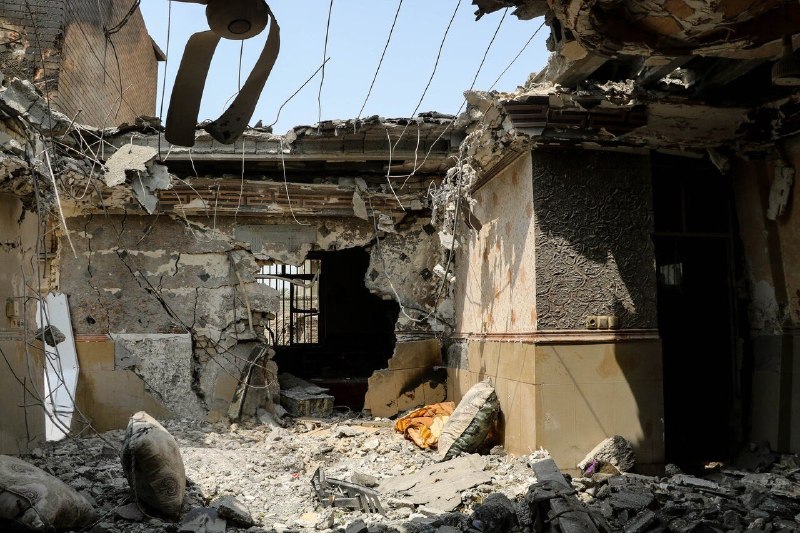
At roughly 20:00 UTC on 20 June 2026, a 22-year-old man ran through a street in Kharkiv and attacked people with a knife. By the time Ukrainian police detained him, nine people were injured. The war correspondent Andriy Tsaplienko posted the news to his Telegram channel within minutes; the Ukrainian outlet TSN carried video of the scene; the broader war in eastern Ukraine continued around the wounded, exactly as it had the day before. Seven thousand kilometres west of Kharkiv, in federal court in Washington, government lawyers were asking a judge to dissolve an order that had blocked the appointment of new members to a federal vaccine advisory committee, on the grounds that the order had left the panel unable to assemble a quorum. At the New York Stock Exchange, traders closed a session that the White House had spent part of the day framing as a verdict on the presidency itself. None of these three events are connected in any ordinary sense. Read together, they describe the geometry of American power in mid-2026: a federal executive that tests the outer edges of judicial authority on domestic health policy, a parallel executive that has fused its legitimacy claims to the daily movement of equity indices, and a wider world in which Ukrainian cities absorb shocks that the headlines register for an afternoon and then forget.
What follows is not an argument that these stories cause one another. It is an argument that they share a political grammar — one in which the institutions of the American state are asked, increasingly, to ratify decisions that have already been made, while the justifications for those decisions migrate from constitutional language to market language to the simpler authority of the executive's own voice. To see the grammar clearly, it helps to walk through each of Thursday's three scenes in turn, then ask what they have in common.
A city that does not get to be shocked
Kharkiv has been a target since the Russian full-scale invasion began in February 2022. By the time of the knife attack on 20 June, the city's residents had endured four years of shelling, displacement, and a grinding normalisation of mass casualty. The 22-year-old attacker was detained at the scene, according to Tsaplienko's Telegram channel, and TSN's video report carried witness accounts of the panic. Initial accounts do not specify a motive. Russian state-aligned channels, which in earlier phases of the war sometimes amplified atrocity footage to suit their own narrative, did not need to amplify this one; a man with a knife in a Ukrainian city is not, on the face of it, a strategic event. What makes the incident worth pausing on is what it is not. It is not a Russian strike. It is not a missile. It is the kind of episode that, in any other capital on a Thursday in June, would dominate a news cycle. In Kharkiv, it competed with everything else for column-inches, and lost. The Ukrainian public sphere has, by necessity, learned to triage horror into categories — the kinetic and the civic, the imported and the endogenous — and to respond to each with the appropriate scale of attention. The knife attack warranted a response; it did not warrant a reordering of priorities. That, more than any individual figure, is what four years of full-scale war on a city produces: not numbness, but a hierarchy of emergencies held in place by exhausted professionals.
The court, the panel, and the question of quorum
In Washington the same afternoon, the Department of Justice was asking a federal court to overturn an order that had prevented the appointment of new members to the Advisory Committee on Immunization Practices (ACIP), the expert panel that recommends which vaccines American insurers and providers must cover. According to the reporting carried by The Epoch Times's Telegram feed on 20 June, government lawyers argued that the blocking order had prevented the panel from achieving a quorum, leaving the country's vaccine-recommendation machinery in operational limbo. The underlying dispute, which has played out across several months, concerns the slate of appointees placed on the committee by the administration of President Donald Trump after the dismissal of the prior membership. Critics, including a number of public-health figures and at least one federal judge, have argued that the new slate lacks the technical credentials its predecessor possessed. The administration's position, as reported, is that the panel must be allowed to meet in order to function at all, and that a court order preventing the new members from serving is functionally an order dissolving the committee.
Two things are worth saying about this. First, the legal posture is genuinely difficult. A court order that has the practical effect of preventing a statutorily required body from operating is an unusual instrument; the administration has a fair point that indefinite paralysis is itself a policy choice, and one that the order's drafters may not have intended. Second, the framing — "the panel cannot achieve a quorum without our appointees" — implicitly redefines the committee. A quorum is a procedural minimum; it is not, by itself, an argument that the committee as constituted is the committee the statute requires. The administration is asking the court to treat the inability of the current configuration to function as evidence that the court's own intervention is the problem. It is a clever framing. It is also, structurally, the kind of move in which an executive branch asks a judiciary to choose between two bad options: ratify a contested slate, or accept a public-health vacuum. Either way, the executive's preferred outcome survives.
The market as daily plebiscite
A third thread, carried on 20 June by the market-data account Unusual Whales, observed that the Trump administration has increasingly treated the stock market as a real-time referendum on its own legitimacy, citing market gains as a justification for consequential decisions. The framing is not new — American presidents of both parties have claimed credit for bull markets since at least the 1980s — but the public articulation of it has, in the current term, become more explicit. At the G7 summit in France, the president characterised a memorandum of understanding on Iran as a document he could set aside at will: "It's a memorandum of understanding," he said, according to Unusual Whales's reporting from the summit. "And if I don't like it, we'll go back to shooting at them." The remark, read alongside the market-as-referendum framing, suggests a model of executive authority in which foreign-policy commitments are provisional instruments and domestic legitimacy is read off the ticker tape.
The Iran observation deserves a moment's weight. A memorandum of understanding between the United States and another state is, in international legal terms, not a treaty and not a binding commitment. It is, however, the kind of instrument on which sanctions architecture, regional deterrence calculations, and the commercial planning of allied governments routinely rest. To describe such an instrument as one the United States will discard on personal preference is to signal — to allies, adversaries, and markets alike — that the cost of doing business with Washington now includes a discretionary exit option exercised by one person. That signal does not need to be carried out to do its work. The utterance itself reshapes the pricing of risk around any future negotiation with the United States.
The grammar the three scenes share
Read separately, the three stories of 20 June are domestic American governance, an afternoon atrocity in a Ukrainian city, and a market observation. Read together, they sit inside a single pattern. In each, the institutions that would ordinarily be expected to ratify, constrain, or contextualise a decision have been asked, instead, to accommodate one. In Kharkiv, the institutions of Ukrainian municipal and emergency response absorb the attack and continue functioning as the wider war continues; the city does not get to reorder its priorities around a knife attack, because its priorities are already set by larger forces. In Washington, a court order that was supposed to constrain an executive decision has produced a paralysis that the executive now treats as evidence that the order is the problem. At the G7 and on Wall Street, the institutions of allied diplomacy and capital markets are asked to treat provisional commitments as durable ones and daily price moves as political verdicts. The pattern is not a conspiracy. It is the steady migration of authority from institutions that deliberate to individuals that declare, and from declarations that bind to declarations that perform.
This is not a uniquely American phenomenon, and it would be dishonest to pretend otherwise. Other states — including, most visibly, the Russian Federation in its conduct of the war now grinding through eastern Ukraine — have pushed their own institutions in similar directions, with worse consequences and fewer constraints. But the American case is the one the world is currently pricing, because the dollar, the dollar-clearing system, and the dollar's underlying reserve currency still rest on a US institutional architecture whose credibility is the actual product being sold. When that architecture is described, even obliquely, as subordinate to the personal preferences of one office-holder, the price of the product shifts, even if the architecture has not yet been formally altered.
What remains contested
Three things in this picture are genuinely uncertain. The first is the ACIP litigation itself. Reporting to date describes the administration's legal arguments; it does not yet describe how the court will resolve the underlying question of whether the slate of appointees can be reinstated, modified, or is required to be rebuilt. The second is the Kharkiv knife attack. Initial accounts name the attacker as a 22-year-old man and report nine injuries, but motive, mental-health history, and any connection to the broader information environment of the war have not been established in public reporting available at the time of writing. The third is the relationship between market movements and executive legitimacy. The Unusual Whales observation that the administration has increasingly treated the market as a referendum is well-evidenced; the deeper question — whether market participants are themselves repricing the durability of US commitments in response — is one that the public data does not yet resolve cleanly. Each of these uncertainties is a place where this publication's reading of the day's events may be revised by tomorrow's evidence. That is as it should be.
Desk note: Monexus frames this convergence around a single thesis — the migration of authority from institutions to individuals — rather than running three separate stories. Wire services covered each item in isolation; this article argues they share a grammar.
Wire provenance
This editorial synthesis draws on the following public wire/social posts:
- https://t.me/Tsaplienko
- https://t.me/TSN_ua
- https://t.me/epochtimes
Follow the event.
These dated source records provide context. They do not retrospectively verify this archive article.
A dated voting record is evidence of one decision. Use the original UN record before turning it into an alignment label.
Visual explainer · historical vote of 2022-03-02 →