Lapid's post-mortem is the Israeli debate Netanyahu cannot avoid
Israel's opposition leader has turned the post-war argument into a granular indictment of strategic mismanagement — Gulf diplomacy, the Kurdish gambit, Hormuz and the American political base. The government now owns the rebuttal.
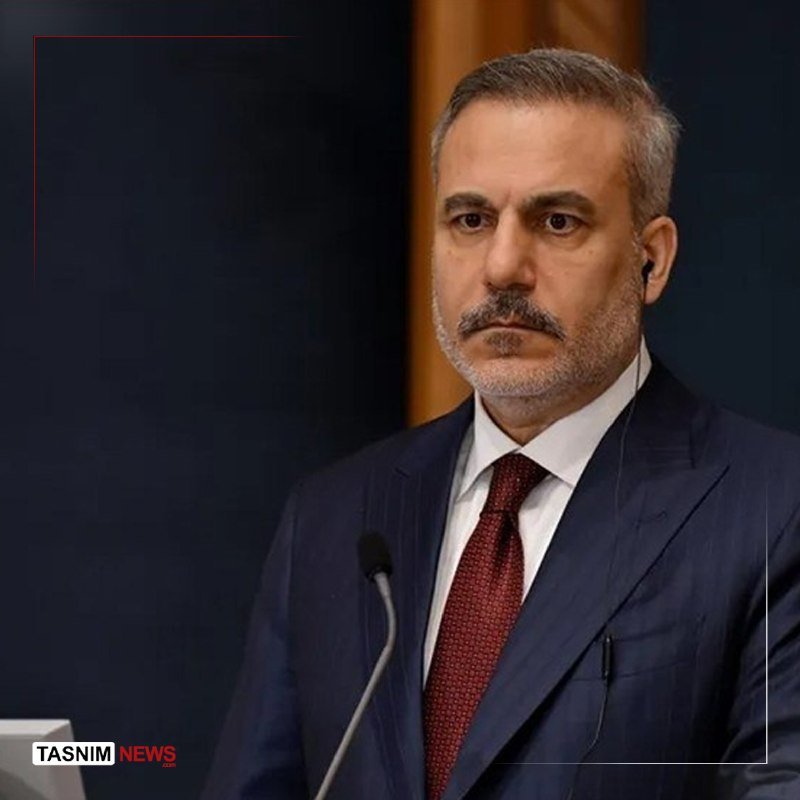
Yair Lapid did not pick the easiest fight available to an Israeli opposition leader on the morning of 20 June 2026. He picked the one with the most moving parts. In a sequence of statements circulated by the Clash Report channel between 09:27 and 11:41 UTC, the head of the Yesh Atid party and former prime minister laid out a granular, point-by-point indictment of how Benjamin Netanyahu ran the war against Iran — accusing him of failing to bring the Gulf monarchies into the diplomatic front, of botching the Kurdish opening by ignoring Turkey, of treating the Strait of Hormuz as a footnote rather than the central economic theatre, and of selling Washington a regime-change fantasy without ever naming the energy, isolationist or Kurdish consequences. The package is, in effect, an opposition's post-mortem dressed up as a forward brief.
The political argument is sharper than the operational one. Lapid opens with the line Israeli voters already half-believe: that he supported the war itself, but cannot defend its management. "Netanyahu promised us a historic victory," he said. "Instead, we got something else." That rhetorical move is deliberate — it pre-empts the Likud counter that criticism of conduct is disloyalty to the troops, and repositions the entire argument inside the governing coalition's own claim to have delivered results.
The Gulf front that wasn't
Lapid's first substantive charge is diplomatic. Netanyahu, he says, "failed to turn the Gulf states into Israel's strategic partners in this war." The implication is that Saudi Arabia, the United Arab Emirates, Bahrain and Qatar — states that spent the past three years being slowly drawn into a tacit anti-Iran alignment through the Abraham Accords architecture and follow-on security normalisation — were not absorbed into the wartime coalition. They were not, Lapid argues, even part of the diplomatic front. For an Israeli opposition that watched the previous decade's normalisation track as a national project, that is a serious allegation: it suggests the war was waged without the regional buy-in the peace process was supposed to underwrite. The structural cost, in Lapid's telling, is that Israel absorbed the political and energy-market fallout of striking Iran while the monarchies watched from the gallery.
The Kurdish gambit and the Erdogan variable
The second charge is the most dangerous because it names a third country. Lapid argues that "Netanyahu pushed the Kurdish plan without taking into account the predictable Turkish reaction and the influence Erdogan has in Washington." Ankara, in this reading, was treated as scenery rather than as a veto-wielding NATO member with its own Iraqi and Syrian Kurdish file. The reference point is not abstract: Turkey's objections have killed or delayed previous Israeli and Western operations against Iranian-aligned assets in Syrian Kurdish territory, and Erdogan's standing inside the Trump administration has been, at minimum, non-trivial. By tying the Kurdish track to the war's diplomatic failure in Washington, Lapid turns a tactical question into a strategic one: did Israel misread its most important regional partner?
Hormuz as the centre of gravity
The third charge goes to economic statecraft. "Netanyahu did not understand that the Strait of Hormuz is not a footnote — it is the heart of the story," Lapid says, before spelling out the obvious: the moment fuel prices in the United States started to rise, the political weather in Washington changed. Approximately a fifth of global oil passes through the strait; a war that disrupts that traffic does not stay a regional story for long. Lapid is making the case that the war's management treated energy markets as an externality rather than as the battlefield on which American domestic support would actually be won or lost. The Israeli opposition leader is, in effect, telling his audience that Israel fought a Middle Eastern war while losing an American political war — and that the two were always the same war.
The American political base that wasn't built
The fourth charge is the one that lands in Washington. Lapid argues that Netanyahu "did not build political support inside the United States in advance of the war — not among the isolationists within the administration, and not among" the wider pro-Israel coalition that has historically underwritten American backing. The corollary, made explicit elsewhere in the package, is that Netanyahu "sold the Americans a scenario in which the regime would fall" without presenting the risks: not the impact on energy markets, not the Kurdish gambit's blowback, not the diplomatic exposure. The framing is that Washington was given a sales pitch rather than a sober strategic estimate, and that the bill is now arriving in the form of American fatigue and Israeli isolation.
What the government will say in reply
The Likud counter, when it comes, will run on three tracks. First, that operational details of an active war are not the appropriate material for an opposition leader to litigate in public. Second, that the diplomatic shortcomings Lapid names — Gulf alignment, the Kurdish opening, Hormuz messaging — were being managed in real time, not in absentia, and that the opposition is conflating the cost of war with the cost of mismanagement. Third, and most pointedly, that an opposition that "supported the war" cannot now disclaim the strategy that delivered it, particularly when that strategy's success conditions — the regime-change scenario — were shared across the security establishment and not invented in the prime minister's office. The structural question Lapid cannot fully answer is whether any Israeli prime minister, in 2026, could have simultaneously courted the Gulf monarchies, neutralised Erdogan's veto, cushioned Hormuz, and held the American isolationist coalition behind the war effort. The reasonable counter is that no one could. The Lapid counter is that the job of a prime minister is precisely to design a war that does not require the impossible.
Stakes
The next seventy-two hours will tell whether Lapid's package is absorbed as the opening shot of a domestic political campaign or as the framework inside which the war's conduct will be evaluated for the next year. Either way, the Israeli debate has moved. The question is no longer whether the war was necessary — that consensus, such as it is, holds. The question is whether its management squandered the regional alignment of the past decade, the Turkish relationship, the American political base, and the energy-market envelope inside which Western publics tolerate a Middle Eastern war. Lapid has, for now, claimed that question. The government owns the rebuttal.
This publication framed Lapid's package as an opposition's strategic post-mortem rather than a partisan broadside — the distinction turns on whether the criticism targets the war's necessity, which Lapid accepts, or its conduct, which he says is indefensible.
Wire provenance
This editorial synthesis draws on the following public wire/social posts:
- https://t.me/ClashReport
- https://t.me/ClashReport
- https://t.me/ClashReport
- https://t.me/ClashReport
- https://t.me/ClashReport
- https://t.me/ClashReport
Follow the event.
These dated source records provide context. They do not retrospectively verify this archive article.
Separate what the nuclear watchdog reported from what it could not determine after the June 2025 strikes.