The day the ceasefire wasn't: how 36 hours of strikes across southern Lebanon reset the Iran–US track
Within a day of a deal brokered to end the latest round of fighting, Israeli warplanes killed dozens across southern Lebanon. Mediators pulled the plug on a parallel US–Iran meeting in Switzerland. What was meant to be a holding pattern is starting to look like a hinge.
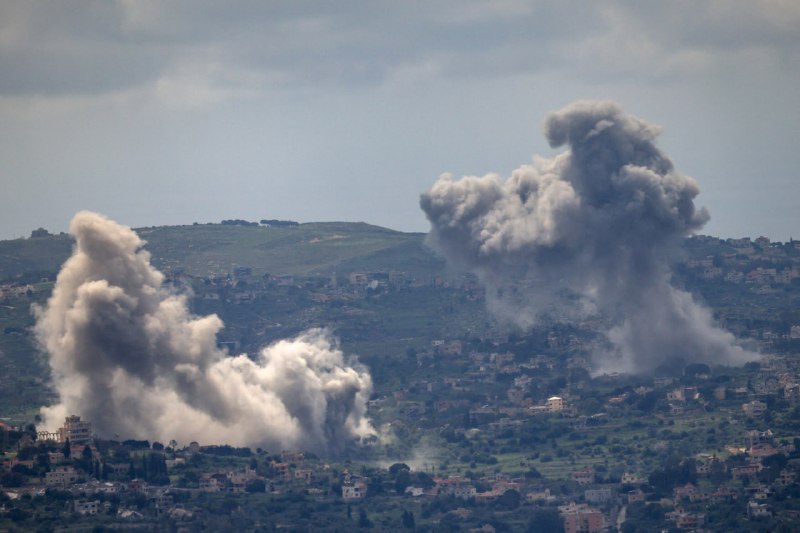
Within roughly thirty-six hours, two entirely different Middle Easts were on offer. One was the version announced on 19 June 2026, in which Israel and Hezbollah stood down, mediators in Geneva began sketching a US–Iran meeting, and the war-weary assumed they could exhale. The other was the version delivered by Israeli warplanes over southern Lebanon at dawn on 20 June: at least 29 people killed in a single wave of strikes, according to Middle East Eye's running count, after at least 16 had already been reported dead the night before, with mediators forced to cancel the parallel US–Iran talks in Switzerland because the ground had shifted under them.
The collapse is not a mystery. It is a sequence. A ceasefire was announced. Within hours it was tested, and the test was met, by both sides, with force. The question now is whether what remains is a ceasefire that has merely wobbled, or the scaffolding of a wider diplomatic channel that has snapped — and whether Tehran and Washington can rebuild it before the next round of bodies forces their hand.
The announced deal, and the air it did not survive
Reports on 19 June described an arrangement to halt the latest exchange of fire between Israel and Hezbollah, mediated through the same back-channels that have handled previous de-escalations. The deal's text, like its predecessors, has not been made public in full, but the operating logic is familiar: quiet southern Lebanon in exchange for quiet on the northern Israeli frontier, with the implicit promise that the US–Iran track running in parallel would continue to absorb Iran's regional pressure.
By the morning of 20 June, Israeli Ambassador to the United States Yechiel Leiter was arguing the opposite interpretation publicly. Hezbollah, not Israel, was responsible for any violation of the arrangement, Leiter said, and Iran was using the group to extract concessions through continued pressure. The framing matters because it pre-positions blame on a specific party before investigators have publicly catalogued the night-time exchanges that broke the pause.
Hezbollah, in a statement circulated through Lebanese channels and relayed on 20 June, rejected that account. The group said it had not violated the ceasefire and described the previous night's clashes as a response to Israeli movements that the framework did not authorise. As with the Israeli position, the rebuttal is a counter-claim; the underlying events — who fired first, at what coordinates, in response to which provocation — are still being assembled by reporters on the ground.
A death toll that climbs in public
Middle East Eye reported at least 29 people killed in Lebanon on 20 June, in strikes that began the day after the ceasefire deal. The earlier figure, from late 19 June, was at least 16 dead from Israeli strikes in southern Lebanon. Taken together, the two numbers describe a single arc: a pause announced, then a strike campaign that produced what is, by any reasonable read of the casualty count, the deadliest Lebanese day of the year.
The reporting does not yet separate civilians from combatants, nor name every locality struck. That work is now being done in real time by Lebanese health authorities and stringers on the ground; the first consolidated wire figures typically follow within 48 hours. What is already in the public record is enough to mark the day: dozens of dead in a country the mediators had just promised to shield.
The accompanying diplomatic move — the cancellation of US–Iran peace talks in Switzerland, with the cancellation attributed to the renewed outbreak of fighting — is what converts a military escalation into a strategic one. Without the Geneva meeting, Tehran loses its principal lever for converting quiet on its northern front into sanctions relief or nuclear concessions, and Washington loses its quiet channel for managing Hezbollah and the wider Iranian alignment without further escalation. The two governments can in principle rebuild the channel, but the diplomatic cost of having walked out on 20 June is not zero, and the calendar is unforgiving.
Whose ceasefire? A structural question
The collapse exposes an asymmetry that has been present since the ceasefire framework was first assembled, but rarely stated so bluntly. Israel, which retains air superiority over Lebanon and the operational freedom to strike at will, retains the ability to define what counts as a violation in practice — by acting first and explaining later. Hezbollah retains the ability to deny and to retaliate, but not to compel an Israeli halt on its own timeline. When the framework's text is opaque, the side with the aircraft wins the interpretation contest by default.
Leiter's public framing, blaming Hezbollah and pointing to Iranian direction, fits a familiar pattern: the violation is always attributed to the other side's agency, never to the structural conditions in which the framework operates. That is not to assert bad faith on either side — both the Israeli and Hezbollah statements are self-interested by definition — but to note that an arrangement whose compliance is unilaterally interpretable is an arrangement that can be tested indefinitely.
The wider context matters here. Iran has publicly linked any durable US understanding to security guarantees for Lebanon — a framing that, if accurate, means Tehran's stake in the ceasefire is conditional on outcomes it does not directly control. That places the mediator — Washington — in the position of having to deliver a Lebanese ceasefire that neither Israel nor Hezbollah fully owns, in a country where the party that strikes first also wins the news cycle.
The Geneva track, and what its suspension signals
The cancellation of the Switzerland meeting is the most concrete piece of evidence about where the parties actually stood. Diplomatic calendars are not lightly torn up. Talks that are merely wobbling are rescheduled; talks that have lost their working assumption are postponed indefinitely, often with both sides blaming the other in their readouts.
For Tehran, the cancellation means that the political capital invested in keeping Hezbollah restrained — an investment that is domestic, regional, and reputational — has not produced the corresponding American deliverable. The next round of decisions inside Iran will turn on whether quiet on the Lebanese border is still worth purchasing at a price that the United States is not currently paying. The Iranian system has historically been willing to absorb long periods of tension; the open question is whether the Lebanese civilian cost, now measured in dozens, will alter that calculus inside the room where those decisions are made.
For Washington, the suspension narrows the toolkit. Coercion through sanctions and force posture has produced neither deniable nor verifiable Iranian restraint; the diplomatic track was supposed to substitute for the absence of either. With Geneva on ice, the administration has to choose between escalation and patience, both of which have constituencies at home that will react.
For Beirut, the suspension is, in practical terms, an answer to a question that did not need to be asked. Lebanon's central government has been the recipient, not the author, of every ceasefire in the last decade. Its capacity to enforce quiet on its own southern border is real but partial, and depends on arrangements negotiated in capitals that are not its own. The country's position in the diplomatic geometry has not changed; what has changed is the inventory of leverage available to the principals.
What remains contested, and what comes next
Three things are still genuinely uncertain. The first is the sequencing of the night-time events that broke the ceasefire — which side moved first, and whether the moves were authorised by central command or were local actions that one party or the other is now owning or disowning. The second is the durability of the Hezbollah statement: denial in the immediate aftermath is normal; the question is whether the group continues to operate within the framework for the next 48 to 72 hours, which would suggest the structure has absorbed the shock, or breaks from it, which would suggest it has not. The third is the resumption, if any, of the Geneva track, and on whose terms.
The reporting published on 20 June does not yet settle any of these. What it does settle is the cost of the day: at least 45 people killed across two reporting cycles in southern Lebanon, a US–Iran meeting suspended, and a framework that was meant to hold the line revealed, in public, to be running on assumptions its principal parties are no longer willing to underwrite. Whether the next round produces a repaired arrangement, a wider war, or a longer pause depends on decisions that, as of this writing, have not been made — and on whether anyone in the capitals still trusts the others to enforce what they have already signed.
This publication treats the Israeli and Hezbollah positions as competing claims by parties with first-hand and second-order stakes, and the Middle East Eye reporting as a running tally subject to revision by Lebanese health authorities. The structural argument — that the framework's opacity and the side that strikes first's ability to define the violation — is editorial inference from the public record, not a claim attributed to any single source.
Wire provenance
This editorial synthesis draws on the following public wire/social posts:
- https://t.me/s/wfwitness
- https://t.me/s/wfwitness
- https://en.wikipedia.org/wiki/2024_Israel%E2%80%93Hezbollah_conflict
- https://en.wikipedia.org/wiki/South_Lebanon
- https://en.wikipedia.org/wiki/Yechiel_Leiter
- https://en.wikipedia.org/wiki/Hezbollah
Follow the event.
These dated source records provide context. They do not retrospectively verify this archive article.
Separate what the nuclear watchdog reported from what it could not determine after the June 2025 strikes.