A third of Nabatieh told to stay away: what one Lebanese municipality's evacuation order says about the southern front on 20 June 2026
On 20 June 2026 an Israeli strike killed a soldier in southern Lebanon, and the Lebanese municipality of Nabatieh told its residents not to come home. The two messages, posted within an hour of each other, capture the shape of a quiet, grinding front.
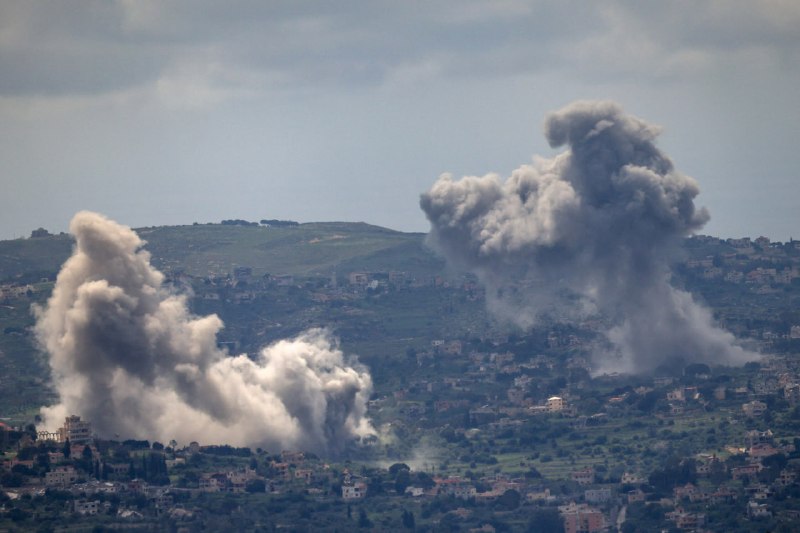
At 16:47 UTC on 20 June 2026, the municipality of Nabatieh, in southern Lebanon, issued a public call to its residents: do not return to the city. Remain, the message said, in the places to which they had earlier evacuated. The notice, carried on Telegram by the local outlet @englishabuali, is the kind of bulletin that has become routine on the southern front over the past months — the procedural voice of a city that has learned to live in chapters of leaving and not yet coming back. Within an hour, the channel @amitsegal reported a different, more intimate fact: a soldier named Nir had been killed in Lebanon by an explosive drone strike. By 17:45 UTC, the IDF had confirmed two soldiers killed in action in southern Lebanon, per a release picked up by @ClashReport.
The two bulletins — one municipal, one military; one public, one intimate — belong to the same front. Read together on 20 June 2026, they describe a war that is no longer headline news in the way it was in late 2023 and the spring of 2024, but that is still extracting a price in the currency the front always pays: lives on one side, displacement on the other. This dispatch reads those two notices as a single document.
The municipal layer: Nabatieh, told to stay away
Nabatieh is one of the larger cities of south Lebanon, the capital of the Nabatieh Governorate and a town whose history of destruction in earlier conflicts has made it a familiar byline for any correspondent covering the border. The municipality's instruction on 20 June was unambiguous: residents who had evacuated during earlier rounds of fighting should not return. Stay where you are, the message effectively said; the city is not yet safe.
For a reader unfamiliar with the rhythms of the southern front, the significance of that line is easy to miss. An evacuation order issued at the start of a flare-up is one thing; an evacuation order issued months into a grinding exchange of fire is another. The latter is a document about expectation — specifically, the expectation that another bad night is still likelier than a quiet one. It is also a document about housing, school years, businesses, and the slow social costs of a population kept in suspension.
The fact that the notice travelled through a Telegram channel rather than through a wire service is itself a point worth pausing on. The Lebanese state's communications capacity in the south is partial; municipalities often communicate directly with residents through social channels, and diaspora networks relay them. The result is that the public record of this war, on the Lebanese side, lives partly in a format the international press is not always set up to cite. The @englishabuali post is the kind of source that, in an earlier era, would have been a faxed statement to a Beirut newsroom; today it is a screenshot in a channel with several thousand followers.
The military layer: two soldiers, an explosive drone, and the asymmetry of names
An hour before the Nabatieh notice, and again roughly an hour after it, Israeli military channels reported the loss of two soldiers in southern Lebanon. The IDF announcement, as relayed by @ClashReport, names no further detail. The @amitsegal post supplies one of those details in the form of a first name and a cause of death: Nir, killed by an explosive drone strike.
The asymmetry of naming — one municipality without a name, one soldier with one — is the asymmetry of the war's information architecture. On the Israeli side, individual casualties are typically identified by name within hours, with unit, age, and hometown carried by the IDF Spokesperson's office and relayed through mainstream outlets. On the Lebanese side, the inverse pattern tends to apply: events are reported in aggregate or in the impersonal grammar of municipal notices. This is not because one side values its dead more than the other; it is the product of different press cultures, different institutional capacities, and different relationships between state and press. But the effect, on any given day, is that the war's human weight is distributed unevenly across the page.
An explosive drone strike is also worth a sentence. Drone warfare in the south is not new — it has been a feature of the front since at least the early 2020s — but the use of loitering or explosive drones against individual soldiers inside Lebanon reflects a tactical choice that is distinct from the larger guided-munition exchanges. It is the kind of weapon that requires patience, identification, and a permissive airspace; its presence on the southern front signals that the air picture above south Lebanon remains contested at low and medium altitudes, not only at the higher bands where manned aircraft operate.
The structural frame: a quiet front, still very loud
What does a day like 20 June 2026 represent in the larger arc of the war? The honest answer, on the evidence available, is that the southern front has settled into a pattern that does not produce the volume of international coverage that its earlier phases did, but that produces a steady drumbeat of small-scale attrition on both sides. Municipalities in the south remain under evacuation guidance. Israeli ground and air forces continue to operate across the border. Casualties on both sides are reported in ones and twos rather than in dozens.
This is the part of the conflict that is hardest to report and easiest to ignore. A single soldier's name, a single municipal notice, do not, on their own, constitute a "story" in the way that a major escalation or a ceasefire does. But they constitute the bulk of the war as it is actually lived. A useful way to think about the southern front on 20 June is as a labour market for violence: a steady draw on the population of southern Lebanese towns and of Israeli infantry units, neither sufficient to break the pattern by itself, nor light enough to dismiss.
In broader terms, this kind of grinding front is the predictable late-stage shape of a conflict that has outlasted several rounds of diplomatic attention. It does not require, and is not produced by, a single decision; it is the cumulative product of thousands of small decisions, made on both sides of the border, to keep operating in a given posture for one more day. The Nabatieh notice and the IDF casualty report are two entries in that ledger.
Counter-reads and what the sources do not say
There are at least two plausible alternative readings of the bulletins of 20 June, and they should be named. The first is that the Nabatieh notice is precautionary and the casualties on the Israeli side are a tail risk; the war in the south is winding down, and the routine of evacuation notices and named soldiers is the tail of that descent rather than a continuation. The second is that the southern front is in fact heating up — that the cumulative tempo of notices and casualties is rising even if no single day looks dramatic — and that what we are watching is the slow ramp of a new phase.
The sources available for this dispatch do not let this publication adjudicate between those readings. They establish that, on 20 June 2026, the municipality of Nabatieh asked its residents to remain evacuated, and that the IDF announced the loss of two soldiers in southern Lebanon, at least one of them to an explosive drone. They do not establish the weekly trend, the rate of evacuation compliance, the operational context of the drone strike, or the political posture of either government. A correspondent with access to Israeli and Lebanese field reporting could draw those lines; this publication cannot, and prefers to say so plainly rather than to invent the line.
A further nuance. The Israeli casualty report and the Lebanese municipal notice were both carried on Telegram channels that have a partisan character — Israeli military affairs channels and Lebanon-focused local outlets respectively. Neither is a neutral broker, and a careful reader will treat them as windows onto what each side is willing to make public, not as final statements of fact about the underlying events. The honest reading is that both bulletins are likely accurate in their own terms: the IDF does, in fact, name its dead; the municipality of Nabatieh does, in fact, communicate with its residents. The interpretive frame around them is where caution is required.
Stakes: the cost of a war that is still being lived
The stakes of a day like 20 June 2026 are not, in the short term, geopolitical. They are local, human, and accruing. For a Nabatieh family that has been in displacement for months, a municipal notice that says "do not return" is a renewal of a rent contract, a school term in a host city, and a deferral of a return that has been promised and postponed before. For an Israeli family, a name released by the IDF Spokesperson is the beginning of a shiva, and the end of a deployment that the country had, perhaps, learned not to think about every day.
The larger structural risk is the one that attaches to any front that is neither escalating nor de-escalating visibly: that the political energy required to wind it down accumulates slowly, while the human cost does not. A southern Lebanese city that has been told not to take its residents back is a city whose post-war reconstruction has not yet meaningfully begun. A border with regular explosive-drone incidents is a border whose quietude cannot be assumed. These are facts that no single day's bulletin can capture, but that any honest reading of 20 June's two messages ought to leave the reader holding.
What this dispatch can verify, on the sources available, is narrow and worth stating as a ledger. It can verify that at 16:47 UTC on 20 June 2026, the municipality of Nabatieh asked residents not to return. It can verify that at 17:44 UTC, a soldier named Nir was reported killed in Lebanon by an explosive drone strike. It can verify that at 17:45 UTC, the IDF announced two soldiers killed in action in southern Lebanon. It cannot verify, from these sources alone, the broader trajectory of the front, the political posture of either government, the operational details of the strike, or the fate of the families in Nabatieh who received the municipal notice. Those are the open items. The rest is restraint.
This dispatch treats a single afternoon's wire traffic as the primary source. Monexus prefers to publish a short, accurate diary of a day on the southern front to a longer piece that overreaches its sources.
Wire provenance
This editorial synthesis draws on the following public wire/social posts:
- https://t.me/ClashReport
- https://t.me/amitsegal
- https://t.me/englishabuali