A medal by post: how a Polish revocation turned into a Ukrainian gesture of state
A decoration revoked by Warsaw, repackaged and forwarded by Kyiv: a small piece of postal theatre is now carrying the weight of an entire bilateral relationship.
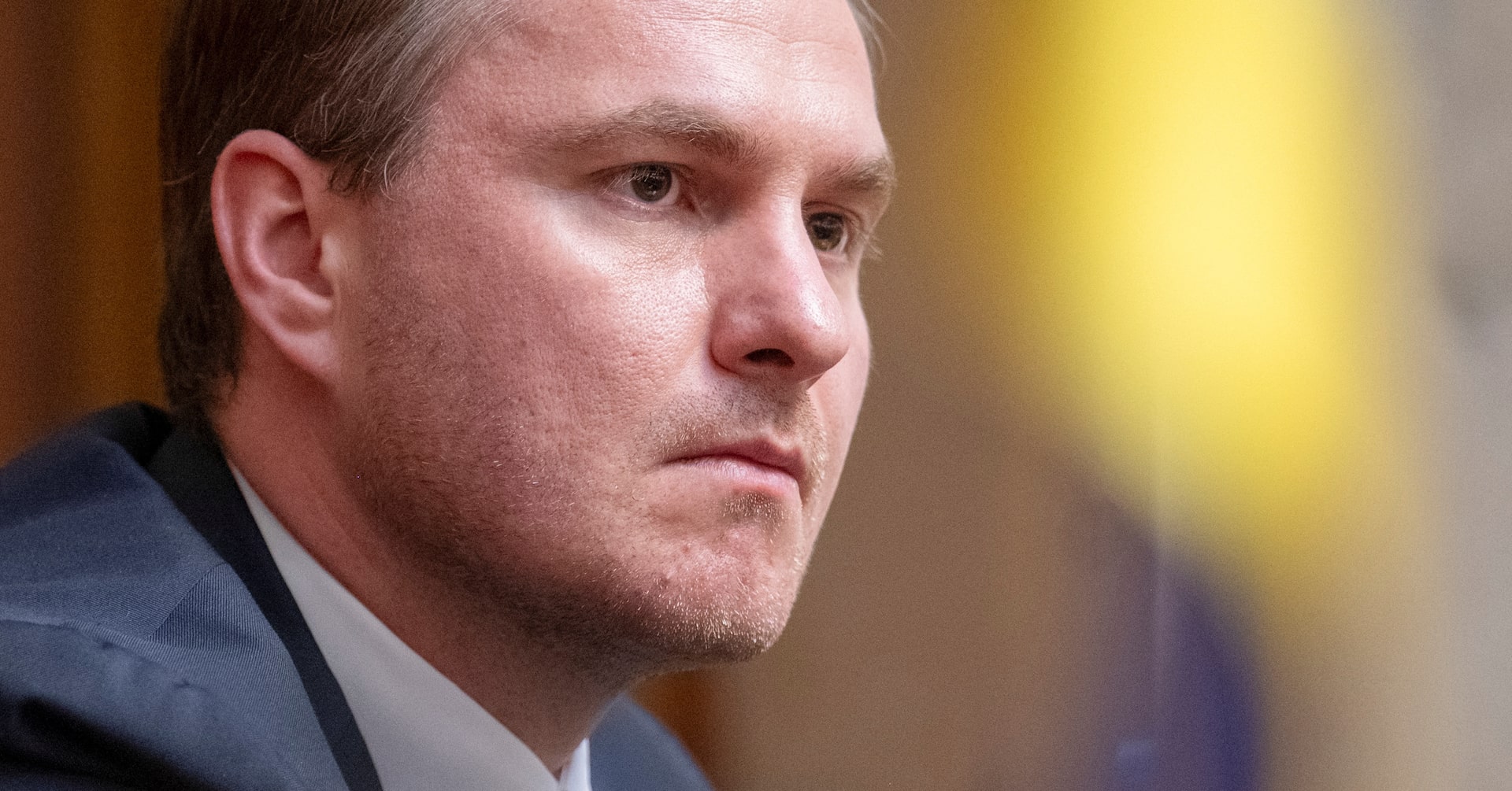
On 20 June 2026, the chanceries in Kyiv and Warsaw spent the afternoon exchanging what diplomats politely call a "symbolic gesture" and what the press has, with some justification, started calling a piece of postal theatre. Volodymyr Zelensky, the president of Ukraine, sent the Polish head of state Karol Nawrocki the Order of the White Eagle — Poland's highest state decoration — by ordinary post. The order had been revoked. Nawrocki had signed the revocation on 19 June, according to a Telegram post by the Polish outlet @ekonomat_pl at 18:47 UTC, citing the Chancellery of the President of the Republic of Poland. The following morning, the same decoration arrived back in Warsaw, this time under cover of a Ukrainian diplomatic envelope, as confirmed by the Ruptly and Euronews wires within an hour of each other. The Ukrainian message, in substance and in the choice of channel, was the same: nothing has been offended on our side; the symbol is being returned, but the relationship is not.
The instinct in Western commentary will be to read this as a row — a Polish president humiliating a Ukrainian one, a Ukrainian president snubbing back, a bilateral relationship fraying. The evidence on the table does not support any of those readings. What the evidence supports is something stranger and, in its way, more interesting: a careful, stage-managed exchange in which both governments get to communicate with their domestic audiences at the same time as they keep the substantive channel between them intact. The postal route is the point. It is the most undiplomatic way to deliver a decoration short of throwing it in a river, and it is also the most public. That combination is the story.
What Nawrocki did, and why he did it on 19 June
The Order of the White Eagle is not a routine honour. Established in 1705, it is the oldest and highest decoration of the Republic of Poland. Presidents have used it sparingly, and revocations even more sparingly; the latter is a signal of moral or political rupture, not a procedural housekeeping act. By issuing the revocation on 19 June, Nawrocki's chancellery converted a piece of state jewellery into an instrument of public messaging. The official Polish account frames the move as a response to Zelensky's behaviour in an unrelated domestic context — the thread of @ekonomat_pl records the chancellery's published justification without specifying the precipitating incident in the materials the pipeline could read. What the chancellery did not do is break with Kyiv: no ambassador was recalled, no treaty was suspended, no joint statement was repudiated. The action was calibrated to be loud enough to land in a domestic news cycle and quiet enough not to require a Ukrainian ministerial response.
Nawrocki, elected in the spring of 2025, has spent his first year in office threading a needle that several of his predecessors have also tried, with mixed results, to thread: a fluent, public-facing solidarity with Ukraine that does not, at the margins, alienate a Polish electorate in which war-weariness is no longer a marginal sentiment. A revocation of a foreign decoration is the kind of gesture that lets a head of state demonstrate toughness on Ukraine-adjacent questions without touching the substantive architecture of the bilateral relationship. It is, in plain terms, free signalling — high volume, low cost, easily reversed by the other side's decision to do nothing dramatic in return.
What Zelensky did, and why he did it on 20 June
Zelensky's response, as reported by the Euronews wire at 14:20 UTC on 20 June and elaborated by the Ruptly alert fourteen minutes later, was to repackage the revoked honour and send it back to Warsaw by post. The semantic content of this act is precise. By returning the physical insignia through the mail, the Office of the President of Ukraine is doing three things at once. First, it is registering receipt of the revocation without contesting the legal fact of it. Second, it is signalling that the honour itself — as an object, as a token of one state's recognition of another state's leadership — is being returned rather than kept or destroyed, which keeps open a future Polish bestowal by a different chancellery or a different president. Third, and most importantly, it is removing the pretext for escalation. There is nothing left to revoke. There is nothing to receive. The matter, in the language of protocol, is closed on Kyiv's terms.
The choice of post rather than diplomatic courier is, again, the detail that does the work. A couriered return would have been a serious reply to a serious act. A posted return is a deliberate downgrading: the kind of delivery that says, in the universal bureaucratic grammar of capitals, that this is being treated as administrative housekeeping, not as a matter of state. The Ukrainian message to a domestic and an international audience is that Warsaw is being allowed its gesture, but that the gesture will not be allowed to set the tone of the relationship.
The structural frame: small-state sovereignty in a patron–client corridor
A reader who only watched the visual clip would miss the architecture. Ukraine and Poland are not symmetrical actors. Poland is a NATO and EU member of 38 million people, hosting several million Ukrainian refugees, supplying a substantial share of Ukraine's heavy weaponry, and acting as the western logistical hub for the defence of the country. Ukraine is the invaded party, dependent on that logistical spine for its capacity to continue fighting. A serious rupture in Warsaw–Kyiv relations would be felt first in Lviv, not in Brussels. The fact that both governments have chosen, in the space of thirty-six hours, to exchange symbolic gestures through the least efficient channel available — the revocation by decree, the return by post — is the diplomatic equivalent of two people shouting at each other across a table while neither gets up to leave.
In plainer terms: when a smaller power wants to push back against the symbolic demands of a larger patron, the lever is not confrontation but theatre. The aim is to occupy the news cycle with a quarrel that is also clearly a non-quarrel, in order to discipline the patron's domestic politics while leaving the underlying material relationship intact. This is a well-trodden pattern in patron–client corridors, and it almost never produces the rupture that headline writers expect. The substantive relationship between Warsaw and Kyiv — military transit, refugee policy, EU accession advocacy — has not moved a millimetre in either direction as a result of the past forty-eight hours, and the public signalling from both chanceries is consistent with that stability rather than inconsistent with it.
The other structural point worth making concerns the role of media. The chancellery's announcement of the revocation, Zelensky's repost of the returned parcel, and the wires' coverage of the same fact from three angles inside an hour are, together, the story. The underlying event is a piece of paperwork. The story is the framing. That is the operating environment in which the diplomatic corps of the two countries now has to work, and it is the operating environment that produced the postal route as a rational choice in the first place.
What the counter-narrative might look like, and why it doesn't hold
The most plausible counter-narrative is that this is the first stage of a genuine deterioration — that the revocation is a Polish signal to Kyiv that the cost of certain Ukrainian decisions is now rising, and that Zelensky's postal return is a way of buying time before a more substantive response becomes necessary. The materials currently in the public record do not support that read. There has been no Polish movement on refugee policy, no suspension of military transit, no public dissent from the prime minister's coalition on the substance of bilateral cooperation. The chancellery's published justification, as captured in the @ekonomat_pl thread, does not gesture at any of those instruments. The Ukrainian response, equally, has not withdrawn from any joint working group and has not, in the wire coverage, escalated the language beyond a single, easily-quoted line: not offended.
A second, more cynical counter-narrative reads the episode as a coordinated piece of optics between two chanceries that have agreed, behind the scenes, to convert a sensitive bilateral moment into a public row that neither side is invested in actually winning. That is structurally possible. It is not, on the available evidence, provable. The two governments are run by political actors with overlapping but not identical interests; the cleaner read is that they have arrived at the same tactical conclusion independently, which is what a well-functioning diplomatic system in a corridor of mutual dependence tends to produce.
The stakes: not this decoration, the next one
The short-term stakes of the episode are low. The Order of the White Eagle will, in all likelihood, be bestowed on a future Ukrainian head of state in a future decade, by a Polish president who is not Nawrocki, in a Warsaw that is several news cycles past the present one. The medium-term stakes are more interesting. The episode sets a precedent for how a NATO-frontline patron manages its Ukraine policy in a domestic political environment in which the war has stopped being a nine-day story. The pattern that emerges from the past forty-eight hours — revocation, return, public message to two electorates, no substantive rupture — is the pattern that will be available the next time a Polish government wants to demonstrate toughness without paying the cost of actually being tough. The pattern works as long as both sides keep using the same understated register. The moment one side misreads the other, and treats a piece of postal theatre as the start of a row rather than the closing of a chapter, the structural risk of the corridor reasserts itself quickly.
What remains genuinely uncertain is the precipitating event that provoked the chancellery's 19 June decision. The materials this publication has been able to read do not specify the conduct on the Ukrainian side that triggered the revocation; the chancellery's published justification, as relayed by @ekonomat_pl, leaves that gap. Until that gap is filled by a more detailed read-out from either Warsaw or Kyiv, the episode will continue to be reported as a piece of state symbolism in search of a fully-stated cause. That, too, may be the point.
This publication treated the episode as a bilateral signalling event, not as a rupture. The dominant Western wire framing risks reading a piece of postal theatre as the opening of a row; the available evidence is consistent with both governments using the same gesture to close a chapter, not to open one.
Wire provenance
This editorial synthesis draws on the following public wire/social posts:
- https://t.me/ruptlyalert
- https://t.me/euronews
- https://en.wikipedia.org/wiki/Order_of_the_White_Eagle_(Poland)
- https://en.wikipedia.org/wiki/Karol_Nawrocki
- https://en.wikipedia.org/wiki/Volodymyr_Zelenskyy
Follow the event.
These dated source records provide context. They do not retrospectively verify this archive article.
A dated voting record is evidence of one decision. Use the original UN record before turning it into an alignment label.
Visual explainer · historical vote of 2022-03-02 →