Warsaw's Wounded Honour: The Polish Decision to Strip Zelensky of the White Eagle
A Polish head of state's decision to revoke Ukraine's wartime president's highest decoration has exposed a fault line inside the alliance that has held Kyiv upright — and handed Moscow's surrogates a propaganda gift they did not have to manufacture.
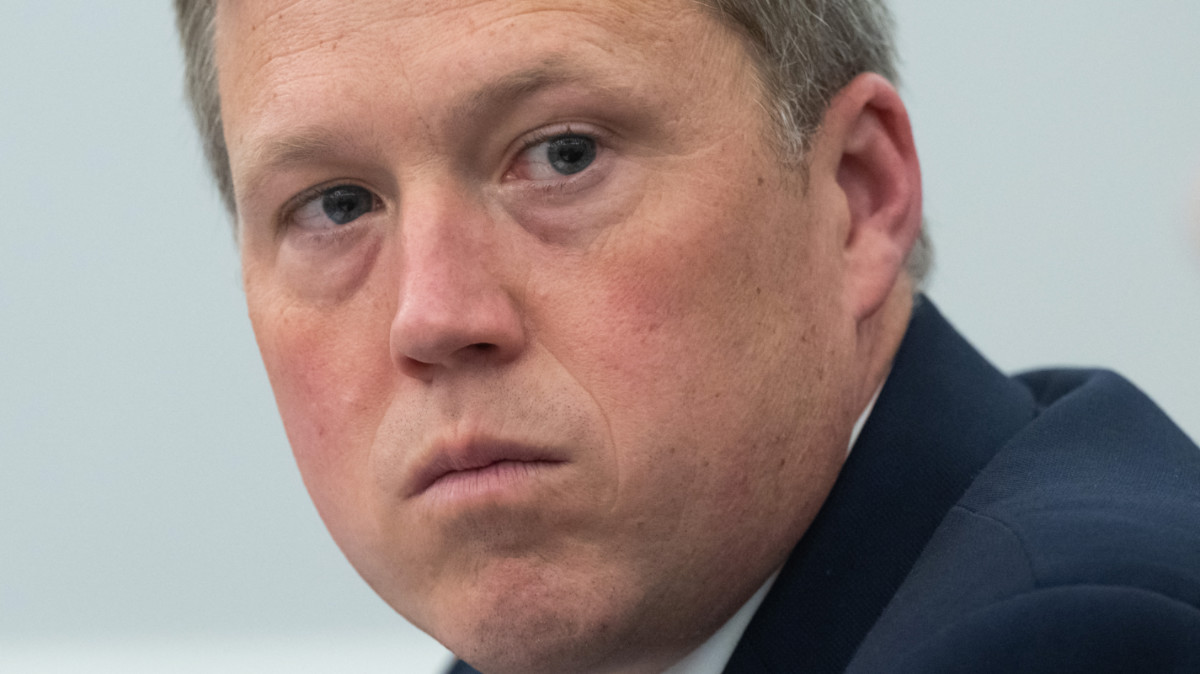
On the evening of 19 June 2026, the Telegram channel of the Ukrainian television network TSN carried a single line that read like a diagnosis: "Stripping Zelensky of the Order of the White Eagle: Portnikov explained why Poland struck at itself." Within forty minutes, the English-language war-translation account @wartranslated had posted that Dmitry Medvedev, the former Russian president and current deputy chair of Moscow's Security Council, had welcomed the Polish move. By 22:14 UTC the framing was already hardening on both sides of the front: a NATO frontline state had moved against the leader of an invaded neighbour, and the Kremlin's messaging apparatus — which has spent four years trying to argue that Kyiv's Western partners are exhausted, distracted and dishonest — had been handed a piece of evidence it did not have to invent.
What the Polish head of state actually did, on the record available at the time of writing, was move to revoke the Order of the White Eagle — Poland's highest state decoration, conferred only for the most exceptional service to the republic — from Volodymyr Zelensky, the Ukrainian president. The decision, reported by TSN and by the @osintlive and @wartranslated channels, was framed in Ukrainian commentary as a self-inflicted Polish wound and, in Russian-aligned commentary, as a long-overdue recognition that the wartime Ukrainian leadership is politically unreliable. Each reading flatters its narrator. Neither, on the public evidence so far, sits comfortably with the four-year record of Polish-Ukrainian cooperation under wartime conditions.
What Poland has actually done
The Order of the White Eagle is not awarded casually. Restored in 1992 after the fall of communism and reserved since then for heads of state, foreign leaders and the rare domestic figure whose service to Poland is judged to be of the highest order, it sits at the apex of a national honours system that Poles treat with deliberate seriousness. Zelensky received the order in 2023, at a moment when Warsaw was already the most militarily and politically committed member of the European Union to Kyiv's defence: hosting refugee flows, supplying tanks and artillery, signing bilateral security commitments and pressing for Kyiv's accession trajectory inside the EU.
Revoking the award is therefore not a routine diplomatic signal. It is a public statement by the Polish head of state — in the current constitutional arrangement, a decision signed by President Karol Nawrocki, who took office after the 2025 presidential election — that the recipient's service to Poland no longer merits the decoration. The Ukrainian commentary collected by TSN, and paraphrased by the journalist Vitaly Portnikov, reads the move as Poland striking at itself: punishing the leader of a country that Polish soldiers, Polish armour and Polish logistics have helped keep in the field, and at a moment when Russian long-range strikes on Ukrainian cities have continued through the summer of 2026.
The official rationale, as summarised in the Telegram threads, centres on a political dispute that has run through 2026 between Kyiv and Warsaw over historical reconciliation, the treatment of the Volhynia question in joint Polish-Ukrainian memory work, and what Polish conservatives describe as the Ukrainian leadership's instrumentalisation of wartime solidarity for domestic political ends. The threads do not cite a single primary statement from the Polish presidency; the framing is necessarily reconstructed from secondary commentary and from the speed with which the news propagated through Ukrainian-language and English-language Telegram channels between approximately 21:30 and 22:15 UTC on 19 June.
How the news travelled
The chronology matters. TSN Ukraine filed its first aggregation shortly before 22:14 UTC on 19 June, citing Portnikov's reading of the Polish decision. @osintlive, an English-language account that translates Ukrainian and Russian frontline and political reporting, followed at roughly 21:53 UTC, attaching a screenshot of a post by @wartranslated describing Medvedev's reaction. @wartranslated itself carried the Medvedev "welcome" at approximately 21:32 UTC. Within forty minutes, a Polish act of state had been reframed, in three different language ecosystems, as a vindication of the Russian argument that the European coalition behind Ukraine is fracturing under its own internal pressures.
This is the structural point that the immediate commentary has so far missed. A Polish-Ukrainian dispute, even a sharp one, was always going to exist inside the alliance. Polish conservative politics contains a current that is genuinely uneasy with parts of the Ukrainian historical canon, and a parallel current that is genuinely committed to a maximalist Polish role in Eastern European security. The presence of both currents inside the same governing coalition is not, in itself, news. What is news is that a dispute of this kind has been allowed to surface as a revocation of a head-of-state decoration — the most visible possible instrument of Polish honour — at a moment when Russian information operations are tuned to detect and amplify exactly this category of signal.
What Russian commentary made of it
Medvedev's reaction, distributed via @wartranslated's translation, is best read not as analysis but as confirmation bias in real time. The former president's English-language output has, since 2022, consisted almost entirely of social-media posts that translate Russian state talking points into a register calibrated for Western consumption. That a Polish internal dispute is being greeted by Moscow as evidence of Western collapse is, by itself, uninformative; it is what Moscow says about every Polish-Ukrainian disagreement. The informative content is that the Polish decision generated, within the same news cycle, the precise artefact the Kremlin's English-language messaging needed: a senior allied head of state visibly distancing himself from the Ukrainian leadership in the middle of an active war.
Russian milblogger commentary, sampled in the Telegram translations, has predictably framed the move as proof that Poland has been "deceived" by Ukraine and is now awakening. This is the standard frame. What is slightly less standard is the readiness with which senior Russian political figures have been willing to comment on the record on a Polish internal honour decision — a category of act that, in any other year of the war, Moscow would have treated as beneath the dignity of a Security Council deputy chair. The decision to engage at this level tells the reader something about Moscow's perception of the European political weather in mid-2026, and about its assessment that the Polish-Ukrainian relationship is now legible as a wedge.
The Ukrainian counter-reading
The Ukrainian reading, as represented by Portnikov's commentary on TSN, runs in the opposite direction: the Polish decision is not a sober rebalancing of an allied relationship but an act of national self-harm, inflicted at a moment when the Ukrainian armed forces are absorbing the brunt of a Russian summer offensive and the European coalition supporting them can least afford internal theatrics. Portnikov's framing — paraphrased in the TSN thread — is that Poland has chosen to weaponise its own highest honour against an ally, and that the cost of this choice will be paid not in Warsaw but in Kyiv and in the Polish eastern borderlands that depend on Ukrainian resistance for their own security.
This counter-reading has a coherent structural argument behind it. Polish security since 2022 has rested on a clear premise: that a sovereign Ukraine, capable of defending its own territory, is the single most cost-effective Polish defence asset available. Polish military planning, Polish defence procurement, and Polish diplomatic engagement with Washington and Berlin have all proceeded from that premise. A Polish head of state who publicly humiliates the Ukrainian president is, on this reading, not neutralising a problematic ally but advertising to Moscow that the price of holding the line is now higher inside Poland's own political system than it has been at any point since the full-scale invasion began.
What the available sources do — and do not — establish
Three caveats are in order. First, the Telegram threads cited here are translation and aggregation layers, not primary documents. They report that the Polish head of state moved to revoke the Order of the White Eagle from Zelensky; they do not, in the materials available at the time of writing, reproduce the text of a presidential decree, a Chancellery communiqué or a parliamentary resolution. A reader seeking the legal mechanism — whether the revocation requires a counter-signature, what statutory grounds are invoked, whether the Ukrainian government has been informed through diplomatic channels — cannot, on the present evidence, answer those questions from the thread alone.
Second, the political context inside Warsaw is itself unresolved. Poland in 2026 is governed by a coalition in which the conservative and centrist strands have publicly disagreed on the tempo and the framing of Polish support for Ukraine. The 2025 presidential election returned a head of state whose electoral coalition included voices sceptical of unconditional engagement with Kyiv; the governing parliamentary coalition rests on different assumptions. Whether the revocation represents a coherent Polish state position or a presidential move that the rest of the Polish constitutional apparatus has not yet endorsed is, on the threads, ambiguous.
Third, the Russian reaction — Medvedev's welcome — is being treated in this piece as a data point about Moscow's information environment, not as evidence about the Polish decision itself. The reader should resist the reflexive reading that anything Moscow welcomes is therefore wrong. The substantive question is whether the Polish decision advances Polish interests and the broader European interest in Ukrainian sovereignty, and that question has to be answered on the merits, not on the basis of who is celebrating it in the Kremlin.
The structural frame
The Polish-Ukrainian relationship has, since 2022, been the densest bilateral security partnership in continental Europe. It has rested on three pillars: a shared reading of the Russian threat, a sustained matériel flow from Polish stockpiles into Ukrainian service, and a political consensus inside both societies that held even as economic costs mounted. Each of those pillars is now under a different kind of stress. The shared threat reading is intact. The matériel flow has been complicated by Polish domestic defence procurement pressures and by the slow grind of replacing what has been donated. And the political consensus is, in mid-2026, visibly fraying — not because Polish society has changed its mind about Russia, but because the wartime coalition that produced the consensus in 2022 has been replaced, through the ordinary operation of Polish democracy, by coalitions with different internal balances.
Revoking a head-of-state honour is the kind of act that converts a fraying consensus into a public rupture. The Order of the White Eagle is not a footnote; it is the most legible single symbol of Polish state esteem. Once that symbol has been deployed against the Ukrainian president, the cost of restoring it — should the Polish political system decide, in a calmer moment, that the cost-benefit has shifted — is measured not in diplomatic currency but in domestic political capital. This is the structural point: the Polish decision has raised the price of future Polish-Ukrainian reconciliation, regardless of which side eventually wants it.
Stakes and a forward view
The immediate stakes are bilateral. The Ukrainian government must decide whether to treat the revocation as a Polish state act — and respond accordingly, through diplomatic protest or through a quiet decision to downgrade the public symbolism of the relationship — or as a Polish presidential act that does not bind the rest of the Polish constitutional order. The Polish government must decide whether to endorse, qualify or publicly distance itself from the head of state's decision. The European Commission and the German government, both of whom have a direct interest in the cohesion of the European coalition behind Kyiv, must decide how loudly to comment.
The wider stakes are about the durability of the European political consensus behind Ukrainian sovereignty at exactly the moment when Russian long-range strikes on Ukrainian cities are continuing through the summer of 2026. A NATO frontline state's decision to publicly wound the Ukrainian president is, on the evidence, a piece of internal European politics that Moscow did not have to provoke. Whether it also becomes a turning point — the moment when the European coalition behind Kyiv is seen, in retrospect, to have begun to fray — will depend on the diplomatic moves of the next ten days more than on the act itself.
The sources disagree on almost everything except the bare fact that the order has been revoked. They agree least on what comes next, and on whether the Polish political system will, in the end, treat this as a presidential prerogative exercised at an ill-chosen moment or as the opening move of a longer reorientation of Polish policy toward Kyiv. On that question, at the time of writing, the public record is thin and the Telegram threads are already running ahead of it.
This publication treats the Polish decision as reported through the cited channels rather than as confirmed by primary documentation; the desk will update the source ledger as the official Polish record becomes available.
Wire provenance
This editorial synthesis draws on the following public wire/social posts:
- https://t.me/TSN_ua
- https://t.me/osintlive
- https://t.me/wartranslated
- https://twitter.com/wartranslated/status/2068084657942327738/photo/1
Follow the event.
These dated source records provide context. They do not retrospectively verify this archive article.
A dated voting record is evidence of one decision. Use the original UN record before turning it into an alignment label.
Visual explainer · historical vote of 2022-03-02 →