A Polish Eagle, a Ukrainian Rift: How Nawrocki's Revocation Exposed a Fault Line in the Alliance
Within hours of Karol Nawrocki stripping Volodymyr Zelensky of Poland's highest civilian honour, two former Ukrainian presidents publicly turned the gesture back on Warsaw — exposing the first serious bilateral crack of the wartime alliance.
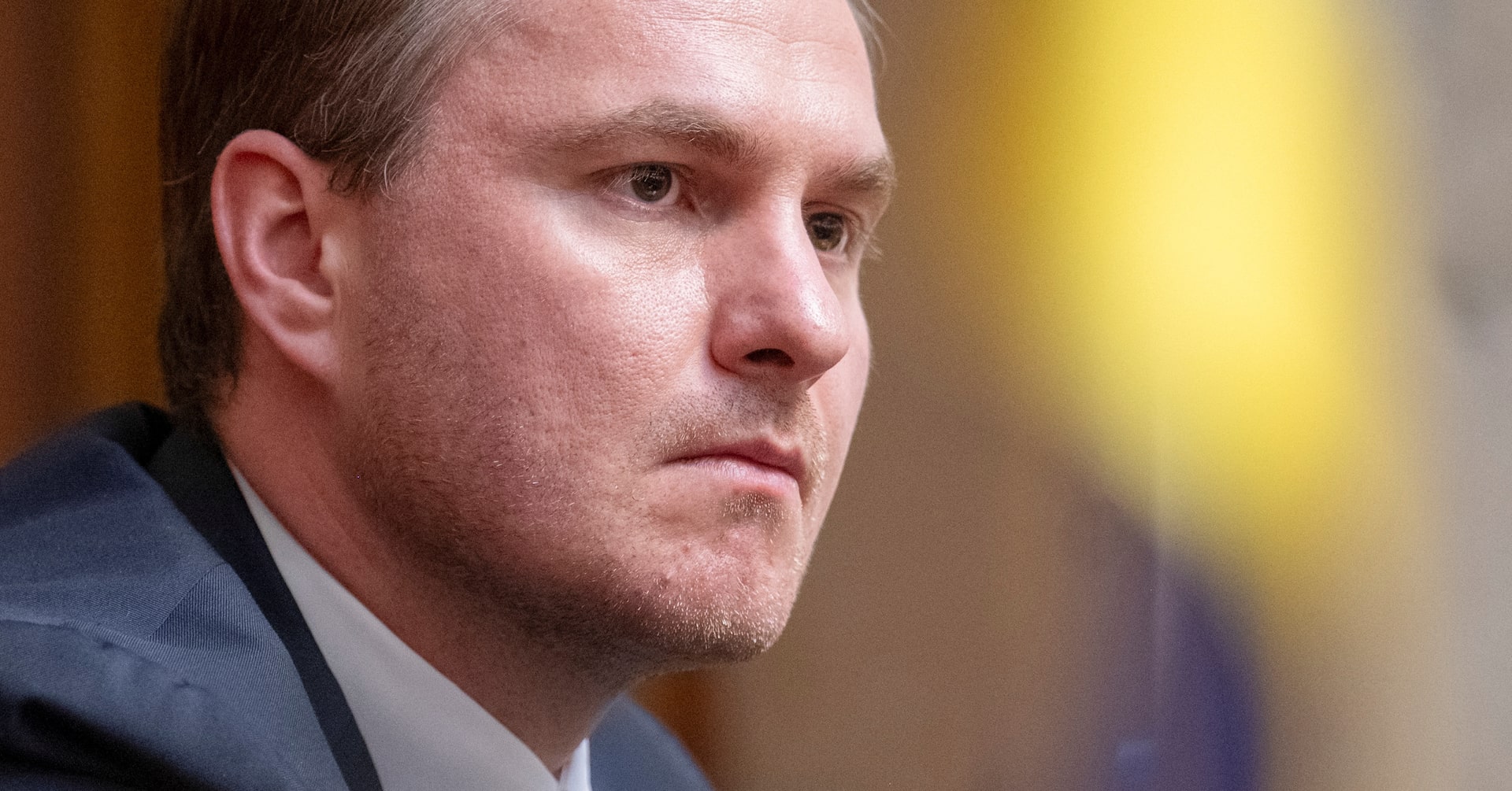
At 19:08 UTC on 20 June 2026, Polish President Karol Nawrocki used a ceremony in Silesia — the commemoration of the Silesian Uprisings, one of Poland's most charged patriotic holidays — to explain why he had stripped his Ukrainian counterpart of the Order of the White Eagle, the republic's highest civilian decoration. Within forty-four minutes, former Ukrainian president Petro Poroshenko had publicly refused the same honour in solidarity with the sitting leadership in Kyiv. By 19:52 UTC, second president Leonid Kuchma had followed suit, framing his refusal as a refusal to break Ukrainian unity in public. What had begun as a presidential rebuke of one man ended, before midnight, as an act of collective Ukrainian displeasure directed at Warsaw — and as the first openly visible fault line inside what had been, since February 2022, the most politically reliable bilateral relationship in the wartime European architecture.
The sequence matters because the alliance between Poland and Ukraine is not merely rhetorical. Poland hosts the logistical spine of Western military aid into Ukraine; it has absorbed more Ukrainian refugees per capita than any other EU member; its border crossings are the principal road-and-rail conduit for the bulk of Ukrainian grain exports. A serious rupture between Warsaw and Kyiv would not merely embarrass two chancelleries. It would alter the operational geometry of the war itself. That is the threshold the events of 20 June 2026 are now testing.
The revocation, and the reasoning
Nawrocki's intervention was not delivered in a press release or a foreign ministry note. He chose the stage of the Silesian Uprisings anniversary — an occasion loaded with Polish historical memory, including the inter-war contests with Germany over Upper Silesia and the post-1945 incorporation of the region — to set out his reasoning in domestic political register. According to a Telegram channel affiliated with the Euronews wire, he framed the decision as a matter of the honoured recipient's conduct toward Poland and toward Polish historical memory, and criticised what he characterised as Zelenskyy's posture toward Poles and Polish victims of wartime atrocity. [Euronews, 2026-06-20T19:08]
The Polish presidential palace did not, in the materials available to this publication, publish a fuller English-language rationale; the Silesian stage setting and the explicit invocation of Polish victims suggest that the grievance runs through the long-running dispute over the public status in Ukraine of figures from the wartime nationalist underground, including Stepan Bandera, whose legacy Warsaw reads very differently than parts of the Ukrainian political mainstream do. The optics are delicate: a new Polish president, in office only weeks, using a quintessentially Polish commemorative occasion to discipline Kyiv publicly. That Nawrocki did so on a national holiday, rather than in quiet diplomatic format, signals that the move was meant to be visible at home first.
The Ukrainian counter-wave
Poroshenko's response was the first to land. In a Telegram post relayed by Euronews at 19:23 UTC, the former president — still the most consequential opposition figure to Zelenskyy inside Ukraine — described Nawrocki's decision to strip the sitting president as "wrong and unfair" and announced that he was himself returning the honour. [Euronews, 2026-06-20T19:23] Poroshenko's intervention is significant precisely because he has no obvious incentive to defend the current Ukrainian leadership on a foreign-policy stage. He is, in domestic terms, Zelenskyy's principal rival. That he chose this moment to side publicly with the office of the presidency against Warsaw tells the reader something about the depth of the offence taken in Kyiv.
Kuchma's refusal followed at 19:52 UTC. The second president of Ukraine — who held office from 1994 to 2005 and who has, in his post-presidential years, occupied a particular elder-statesman role — framed his refusal as an act of solidarity with the current Ukrainian leadership, and added, in the formulation carried by the Telegram channel of journalist Andriy Tsaplienko, that the step should not be permitted to destroy the long-standing relationship between the two countries. [Tsaplienko, 2026-06-20T19:52] That formulation is itself revealing: Kuchma is signalling both that the Polish decision is a wound and that closing the wound is a Ukrainian interest. He is, in effect, trying to leave Warsaw an off-ramp.
A third note, this one from Irish-Ukrainian commentator Chay Bowes on X at 19:10 UTC, captures the more combative register the dispute has also taken on the English-language side of the information war. Bowes characterised Zelenskyy's act of "posting" the stripped award back online as "a final insult to the Polish people, and the memory of those massacred by his 'Heroes'", and reproduced the Polish presidential revocation announcement. [Bowes, X, 2026-06-20T19:10] Bowes is not a neutral actor — he has long been associated with the Ukrainian opposition's English-language commentary ecosystem — but his post is useful as a temperature reading of how the dispute is metabolised in corners of the diaspora and on social media.
Taken together, the three Ukrainian reactions describe a remarkable pattern: the wartime political class, including the leader, the principal opposition figure, and a former president of centrist-nationalist orientation, all closing ranks against the Polish move. That breadth of agreement is itself the news.
What is actually being disputed
The Order of the White Eagle is Poland's most prestigious civilian decoration, restored in 1992 and awarded sparingly to foreign heads of state and other senior figures. Zelenskyy received it in 2023, in the early phase of the full-scale invasion, as a Polish signal that Kyiv's cause was Poland's cause. The award was, in symbolic terms, the ribbon that tied the alliance in public.
Stripping an order is a stronger signal than withholding one. It says, in the codified language of republican honours, that the recipient's conduct has fallen below the standard the awarding head of state originally judged him to meet. Nawrocki's choice to act in this direction — and to do so with public reasoning at a Silesian commemoration — therefore amounts to a deliberate downgrade of the bilateral relationship, at least in its ceremonial register.
The substantive disagreement, as the materials available to this publication allow it to be reconstructed, runs along two tracks. The first is the historical-memory track: the contested status in Ukrainian public life of figures from the wartime nationalist movement whom Warsaw regards as implicated in the ethnic cleansing of Polish civilians in Volhynia and Eastern Galicia in 1943–44. The second is a more contemporary political track: the Polish government's reading of Zelenskyy's posture toward Polish domestic concerns, including — though this is implicit in Nawrocki's Silesian remarks rather than spelled out in the available sources — the question of Ukrainian agricultural imports, the rights of Polish-speakers in western Ukraine, and the handling of burials and memorial sites.
These tracks are not new. They have surfaced in Polish-Ukrainian diplomacy for years. What is new is the instrument chosen: a presidential revocation, on national holiday stage, in the middle of a war in which Poland is Kyiv's most important European backer.
The structural frame
The Polish-Ukrainian relationship sits at the intersection of three pressures that have been building, in plain view, for at least a year.
The first is the political cycle in Warsaw. Nawrocki's election represented a shift in the Polish presidency — from the more centrist, EU-procedural style of his predecessor to a more national-populist register in which historical grievance and the dignity of Polish victims are foregrounded. A new Polish president is entitled to set the tone of his foreign-policy engagements; what 20 June reveals is that the new tone is less accommodating to Kyiv than the old one.
The second is the wear-and-tear of any wartime alliance that runs at high operational intensity for years without formal treaty architecture. Poland has been the indispensable neighbour — but indispensable neighbours are also the neighbours a host government can least afford to alienate, and the neighbour most exposed to the friction of every refugee, every border incident, every customs dispute.
The third is the structural shape of European security in 2026. The wartime emergency in Ukraine has compressed what would normally be a decade of alliance-building into a few intense years. That compression produces fast intimacy; it also produces fast fracture when the underlying political equilibria shift. The revocation is a fracture that became visible.
What is striking is the asymmetry of cost. For Kyiv, the loss of Polish political cover at a moment of continued military need is genuinely serious. For Warsaw, the diplomatic cost is real but more diffuse — a damaged relationship with a neighbour that is, in material terms, increasingly integrated into the Polish grain economy and the Polish refugee labour market. Both sides have reasons to de-escalate. The fact that they have not yet done so publicly, on the day of the revocation itself, is the warning signal.
Stakes and forward view
The narrow stakes are about the Order of the White Eagle. The wider stakes are about whether the Polish-Ukrainian bilateral can survive a change of Polish presidency and a fourth year of full-scale war without a formal rupture. The materials available to this publication do not establish that a rupture is imminent; Kuchma's formulation, in particular, reads as an attempt to keep the door open. But they do establish that the relationship has entered a phase in which public rebukes travel in both directions.
Three observations follow for the reader. First, the wartime architecture of bilateral solidarity does not run on autopilot. Polish-Ukrainian coordination requires active management at every level, and the room for misunderstanding has narrowed. Second, the historical-memory file — Volhynia, Bandera, the wartime underground — is not a peripheral irritant. It is the load-bearing wall of a great deal of Polish public opinion on Ukraine, and Nawrocki's choice of stage made clear that his presidency intends to make it more central, not less. Third, the response inside Ukraine was unusually unified. Poroshenko and Kuchma have no domestic incentive to defend Zelenskyy on a foreign stage. That both did so suggests that the Ukrainian political mainstream, including its opposition, reads the Polish move as something more serious than a routine diplomatic protest.
What remains uncertain is whether Nawrocki intends the revocation as the opening move of a sustained pressure campaign, or as a one-off gesture calibrated for a Polish domestic audience that he intends to leave un-repeated. The Silesian stage and the public reasoning suggest the former; the absence, in the materials available, of any further Polish institutional follow-through within the same day suggests the latter. The next seventy-two hours will tell.
Monexus framed this as a bilateral-relations story, not a Kyiv-versus-Moscow one. The wire coverage of 20 June foregrounded the revocation; this publication foregrounded the unified Ukrainian response and the structural pressures on the wartime Polish-Ukrainian relationship.
Wire provenance
This editorial synthesis draws on the following public wire/social posts:
- https://t.me/Tsaplienko/
- https://t.me/euronews/
- https://t.me/euronews/
- https://x.com/BowesChay/status/