A tombstone in the Qajar desert: the afterlife of a monument built on slave labour
A Fars news thread surfaces a nineteenth-century artefact that links one of Iran's most consequential rulers to a system of unpaid, conscripted construction — and the stone still stands in Fars province today.
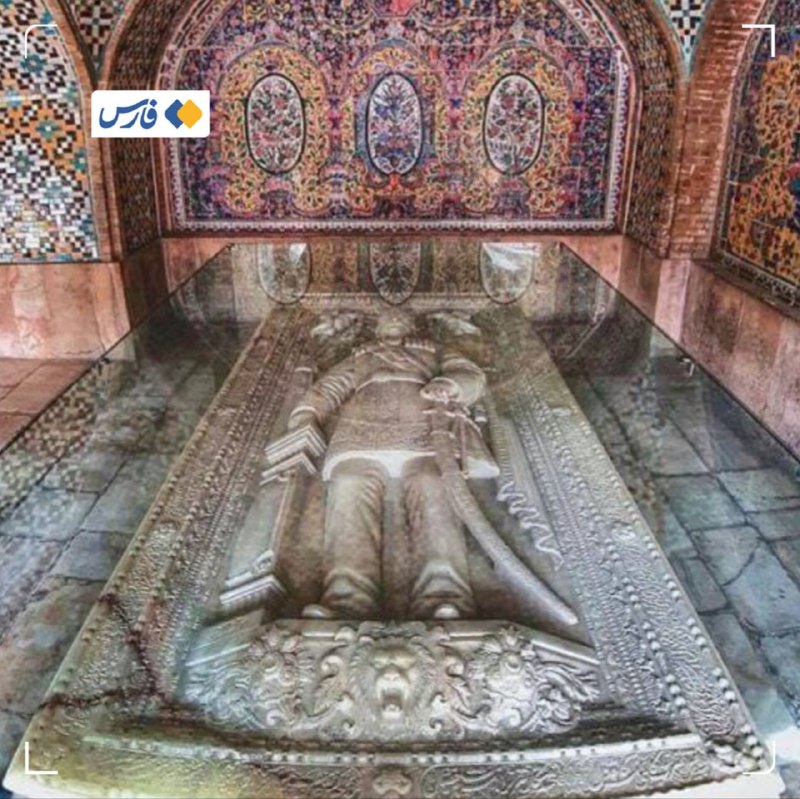
A plain stele in the Fars province of southern Iran is, on the surface, a piece of provincial stonework. According to a thread published by Fars News Agency on 20 June 2026 at 01:10 UTC, the monument is something more consequential: a physical trace of a system of unpaid, conscripted construction under Naser al-Din Shah Qajar, the fourth monarch of the Qajar dynasty, who ruled Iran from 1848 until his assassination in 1896. The thread, a brief historical vignette, claims that the tombstone "took the lives of dozens of people and the lifetime of its maker," and that its inscription credits the work to a single carver rather than to the regiment of builders who actually hauled, shaped and finished it.
The story is small in geographic scope and large in what it asks readers to take seriously. It is a reminder that nineteenth-century Iran — like its Qajar neighbours in the Ottoman and Russian empires — ran a state-building apparatus that depended on forced or unpaid labour, and that the resulting monuments carry those origins in their stones whether or not later inscriptions acknowledge them.
A stele, an inscription, an absence
The Fars thread, which runs to a few sentences, names Naser al-Din Shah directly and frames him as a ruler who "brought many problems to the people during his reign." It then anchors that judgement in a single artefact: a tombstone said to have cost the lives of "dozens of people" and the working life of the carver whose name is on it. The post does not name the carver, locate the monument with coordinates, or specify the year of construction. It also does not advance a theory of forced labour in the Qajar period so much as it presents one monument as exemplary.
That narrowness is itself worth noting. The thread is a piece of social-media history, not a monograph, and it leans on a familiar moral pattern: the visible craftsperson receives credit; the un-named builders receive the cost. What is unusual is the medium. Fars, a news agency founded in 2003 and aligned with the Iranian Revolutionary Guard Corps, is not a heritage publication. Its decision to circulate a vignette about a Qajar-era stele, in 2026, is a small editorial choice that signals how the Qajar period is being framed in official-adjacent Iranian media more than a century after the dynasty's fall.
What the Qajar period actually looked like
To read the thread on its own terms is to read it inside a longer Iranian conversation about the Qajar centuries, which stretch from 1789 to 1925. The dynasty presided over territorial losses — to Russia in the north and to the British in the south — and over a series of fiscal and administrative reforms that did not, in their time, dislodge the labour arrangements on which the state still depended. Public-works projects in the nineteenth century were routinely staffed by bīgāna-s, conscripted workers drawn from rural populations and from the country's religious and ethnic minorities, paid in token amounts or not at all. The most-read scholarly account of this system in English remains the work of the late Russian-orientalist Willem Floor, who documented the practice of corvée and forced labour in Qajar Iran across a series of studies in the 2000s. His findings have not been seriously contested.
Fars's framing — that the stele cost lives — is therefore consistent with a documented history, even if the specific monument is not locatable from the post itself. What is not in the post is a comparative claim: forced construction was not a Qajar peculiarity. The Suez Canal, completed in 1869 under a different regime, is estimated to have cost tens of thousands of lives; the Trans-Siberian Railway, finished in 1916, ran on convict and migrant labour. The Qajar record sits inside that nineteenth-century pattern, not outside it. The thread's moral economy, which treats a Qajar stele as a discrete scandal rather than a representative one, is part of what makes it editorially interesting.
Reading the framing
There is a particular kind of Iranian public-memory work that takes the Qajar period as a negative mirror: weak against foreign powers, corrupt at court, and indifferent to the people who built the state's infrastructure. The thread sits comfortably inside that frame. Naser al-Din Shah is named; the carver is implicit; the workers are a count ("dozens"). The dynastic reputation is lowered; the stele's maker, in the inscription, is preserved as a single named figure rather than a category.
What the framing leaves out, in turn, is the question of who reads the inscription today and for what purpose. Fars is not a tourism portal, and a provincial stele is not a national monument on the scale of Persepolis. A reader of the thread who had never seen the object would have no way of placing it geographically, no way of knowing how many similar objects exist in Fars, and no way of judging whether the monument's death toll is the sort of claim a heritage scholar would sign. The post is doing memory work, not fieldwork. That is a fair use of a Telegram channel; it is not a fair substitute for a survey.
Stakes, and what remains unknown
The stakes of the thread are modest but worth naming. Iran's heritage sector is a significant employer and a significant source of tourist revenue, and the way nineteenth-century monuments are framed shapes both the visitor economy and the country's reading of its own past. A narrative that treats Qajar monuments as products of unpaid labour and dynastic indifference is in tension with the heritage sector's commercial interest in marketing the same monuments as aesthetic and civilisational assets. The thread resolves the tension by using the object as moral evidence rather than as a product.
What remains unknown is the rest. The post does not name the stele's location in Fars, the date of its carving, the documented population of the labour force, or any prior scholarly treatment. It does not specify whether the monument has been formally surveyed, whether it sits on registered land, or whether it has been the subject of an academic paper in Persian, English, or any other language. It is a small piece of public-memory journalism, and it should be read as one — a claim about a stone, circulated as an example, with the supporting record held elsewhere.
What the thread does do, fairly read, is remind readers that the labour arrangements of nineteenth-century state-building in Iran were extractive in a way the surviving monuments do not, on their face, advertise. That is a reasonable thing to say, and a reasonable thing to attach to a specific object — provided the object can, in fact, be found. The post leaves that as an exercise for the reader.
How Monexus framed this: a single Telegram thread from a state-aligned news agency, treated as a primary input, was read against the documented history of Qajar forced-labour practices and the editorial habit of using specific objects to carry general moral claims.
Wire provenance
This editorial synthesis draws on the following public wire/social posts:
- https://t.me/farsna
- https://en.wikipedia.org/wiki/Naser_al-Din_Shah_Qajar
- https://en.wikipedia.org/wiki/Qajar_dynasty
- https://en.wikipedia.org/wiki/Fars_News_Agency