The southern Lebanon front tightens: a single Israeli brigade bears the cost of an expanding ground war
Four Israeli soldiers killed in southern Lebanon on 20 June 2026, two of them from the 401st Armored Brigade and one from the elite Maglan unit, according to Israeli army statements carried by regional outlets — a single day that crystallises how a war of attrition is now being absorbed unit by unit.
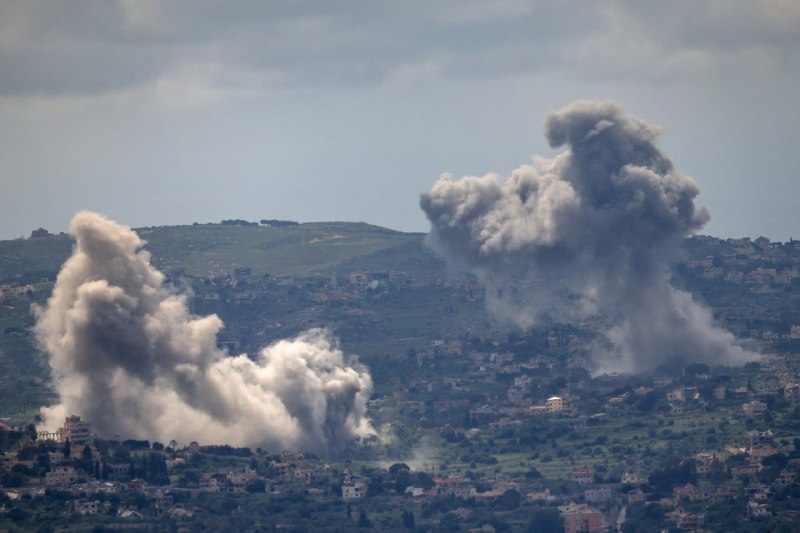
At 17:49 UTC on 20 June 2026, the Israeli army spokesman confirmed what two earlier notices that afternoon had already hinted at: an Israeli soldier had been killed, two more seriously wounded, and an officer moderately wounded during combat in southern Lebanon. The announcement, carried by the Hezbollah-aligned Lebanese outlet Al-Alam and relayed through regional Telegram channels, added to a tally the army itself had formally disclosed roughly three minutes earlier — the death of an armoured corps soldier from the 401st Brigade and a fighter from the Maglan unit, an elite reconnaissance formation inside the army's operational branch.
By the time English-language aggregators reported the operational pause in the same sector, at 16:38 UTC, four Israeli soldiers had died in a single afternoon on a roughly 30-kilometre stretch of borderland that, for nearly two years, has been the principal ground theatre of a war that is no longer being fought for the cameras but for the map.
The day's casualty list is small in absolute terms. Its composition is the story. The 401st Armored Brigade is one of the regular army's primary manoeuvre formations, the kind of unit Israel commits when an objective is to be held, not merely raided. Maglan, by contrast, is a small, surgically deployed reconnaissance unit that is rarely surfaced in public casualty notices; its appearance in a same-day loss announcement signals that the ground operation has moved into the kind of close, built-up fighting that justifies sending the army's most capable infantry to clear it.
What the army actually said, and what it implied
The Israeli army's public statements, as relayed by Al-Alam's Arabic-language channel and the Gaza-focused outlet al-Anpa, were spare in their detail. They identified the casualties by unit — the 401st and Maglan — and by the broad theatre, southern Lebanon. They did not name the villages or the operational phase, the kind of operational detail that, in earlier phases of the war, the IDF Spokesperson's Unit has sometimes chosen to release and sometimes withheld.
What the statements implied is more telling. The 401st Brigade has been associated in past reporting with operations along the eastern sector of the border, the stretch of southern Lebanon that runs from the vicinity of Metula and Avivim south-east toward the foothills of Mount Hermon. Maglan, by training, operates ahead of and to the flanks of heavier formations. A same-day loss in both units, in the same sector, points to a coordinated engagement — the heavy brigade taking a position, the reconnaissance unit probing or screening around it — that ran into a prepared defender.
Hezbollah, whose media arm has, since late 2024, been the dominant Arabic-language narrator of the southern Lebanon front, had not, as of the late-UTC afternoon of 20 June, been publicly named in the Israeli army's notice. The absence is significant only because in the preceding two years of cross-border fire, Israeli casualty announcements have often been paired, within hours, with a corresponding claim from the group's military media of an ambush, an anti-tank hit, or a roadside device. The lag suggests either that the combat is ongoing, that the Israeli army is racing to recover materiel and personnel before the battlefield is filmed, or that the operational layer of the southern command is still determining what, exactly, the day's losses will be officially attributed to.
A theatre that does not announce itself
The southern Lebanon ground operation is the least-televised major front of Israel's current wars. The Israeli press, when it covers the border at all, does so through the language of "targeted operations," "precision strikes," and "activity by the Northern Command." The wire services translate that language into copy that, in the absence of embedded reporting, defaults to a thin paraphrase of IDF communiqués. The result is a public record in which the daily shape of the war — which units are in which villages, how often they rotate, what the casualty tempo is, what the Hezbollah side is putting into the fight — is largely reconstructed by the army's own spokespeople.
This publication has previously noted the same dynamic at work in Gaza, where the absence of independent reporting from inside the strip has made Israeli military communiqués the de facto daily ledger of the war. In southern Lebanon, the dynamic is more acute: there is no equivalent of the limited access that a small number of foreign reporters have negotiated in Gaza. The only daily text of the front is written by the IDF Spokesperson's Unit, in Hebrew, and translated by Al-Alam, al-Anpa, and the wider Hezbollah-aligned media ecosystem into Arabic, often with a different emphasis and sometimes a different casualty framing.
The Al-Alam and al-Anpa notices of 20 June are a near-textbook case. The army announced four Israeli dead; the regional outlets, in the same hour, added unit identifications — 401st and Maglan — that Israeli-language coverage has, in past days, often omitted on day-of-loss reporting for operational-security reasons. That asymmetry, over months, builds a record in which Arabic-language readers of regional media know more about the Israeli unit placement on the southern border than the average Hebrew-language reader does.
The structural read
Two structural facts sit underneath the day's notices. The first is that the war on the northern border has been, since late 2024, a sustained ground operation rather than a campaign of aerial denial. The Israeli army's deployment of the 401st Brigade — a heavy, regular-army formation rather than a reservist territorial unit — is itself the most reliable signal that the political leadership has accepted a multi-year, attritional commitment in southern Lebanon rather than a punitive campaign that closes with a ceasefire declaration.
The second is that the same operation is being conducted in a media environment that has been thinned, by design or by circumstance, of independent access. The wire services that once supplied the daily verified record from this strip — Reuters, AFP, the BBC, the Associated Press — have, since the widening of the ground operation in 2024, produced little original reporting from inside the southern Lebanese border area. The result is that the public ledger of the war is, in practice, a relay: an Israeli communique, translated into Arabic by a regional outlet, repackaged into English by an aggregator.
A reader who follows the war through this relay will see Israeli losses on the day they occur, but will have no comparable, same-day accounting of Lebanese civilian or combatant losses; will have detailed unit identification of Israeli casualties, but no equivalent unit-level disclosure from the Hezbollah side; and will see the operational tempo described almost entirely in the past tense, with the day's own clashes surfacing only in the brief windows when the army's spokesperson chooses to release a number.
What the day does not settle
The 20 June notices do not, by themselves, answer the questions a reader needs answered. The army has not, as of the time of the late-UTC afternoon statements, named the location of the engagement, identified the type of contact, or disclosed whether any materiel was lost alongside the personnel. Al-Alam and al-Anpa, for their part, have not yet published a Hezbollah-side claim of responsibility or a battlefield description, the kind of claim-with-spoils the group's media arm has historically released within hours of a successful operation. The English-language aggregator that flagged the operational lull in the sector — noting "no reports of Israeli strikes in southern Lebanon in the past hour" at 16:38 UTC — is a reminder that the rhythm of the front is not steady: the day's fighting clusters, and between clusters the wire goes quiet.
What remains genuinely uncertain is whether the day represents a routine attrition event, of the kind that has produced, in earlier months, comparable single-day Israeli losses absorbed without a strategic re-set, or whether it is the visible edge of a more significant operation — the kind of operation whose later disclosures will reposition the 401st Brigade's commitment on the border in the public's mind, and the Northern Command's, as the beginning of a phase rather than a continuation of the last one.
What is certain is that, in the public record of the war, a day on which four Israeli soldiers from a heavy brigade and an elite reconnaissance unit die in the same sector will be remembered, if at all, as the day the army told us it happened, and as the day the regional outlets told us who it happened to. The shape of what actually happened on the ground in the villages of southern Lebanon on the afternoon of 20 June 2026 will, in all likelihood, only emerge in operational after-action reporting — a register that is written by the army, for itself, in Hebrew, and that the public is permitted to see only when the army chooses to release it.
The stakes, in plain terms
The cost of a war of this kind is paid twice. It is paid, first, in the personnel and the families of the 401st and Maglan soldiers killed and wounded on 20 June, and in the corresponding, mostly uncounted, losses on the Lebanese side. It is paid, second, in the slow compression of the public information environment around the front: as the ground operation continues, the verified daily record narrows, the relay between IDF spokesperson and regional outlet deepens, and the capacity of a reader anywhere to independently establish what has happened in a given village on a given afternoon degrades further.
The trajectory, if it continues, ends in a southern Lebanon front whose public record is written almost entirely by one side, in one language, and at one remove from the battlefield. The 20 June notices, taken together, are an early marker of that trajectory rather than a deviation from it.
This article was framed to surface the asymmetry of access on the southern Lebanon front — wire services default to IDF communiqués in the absence of independent reporting, while regional outlets fill the gap with Arabic-language coverage that often carries more unit detail than the originating army notice. Monexus treats both layers as part of the public record.
Wire provenance
This editorial synthesis draws on the following public wire/social posts:
- https://t.me/alalamarabic
- https://t.me/gazaalanpa
- https://t.me/englishabuali
- https://en.wikipedia.org/wiki/401st_Brigade_(Israel)
- https://en.wikipedia.org/wiki/Maglan
- https://en.wikipedia.org/wiki/South_Lebanon_conflict_(2023%E2%80%93present)
- https://en.wikipedia.org/wiki/Israel_Defense_Forces
- https://en.wikipedia.org/wiki/Hezbollah
- https://t.me/alalamarabic
- https://t.me/gazaalanpa
- https://t.me/englishabuali
- https://en.wikipedia.org/wiki/401st_Brigade_(Israel
- https://en.wikipedia.org/wiki/Maglan
- https://en.wikipedia.org/wiki/South_Lebanon_conflict_(2023%E2%80%93present
- https://en.wikipedia.org/wiki/Israel_Defense_Forces
- https://en.wikipedia.org/wiki/Hezbollah