Starmer's Monday test: a Labour crown that may already be slipping
Six prime ministers in seven years is not a rotation; it is a failure mode. Burnham inherits the residue, not the programme, and the clock does not pause for coronations.
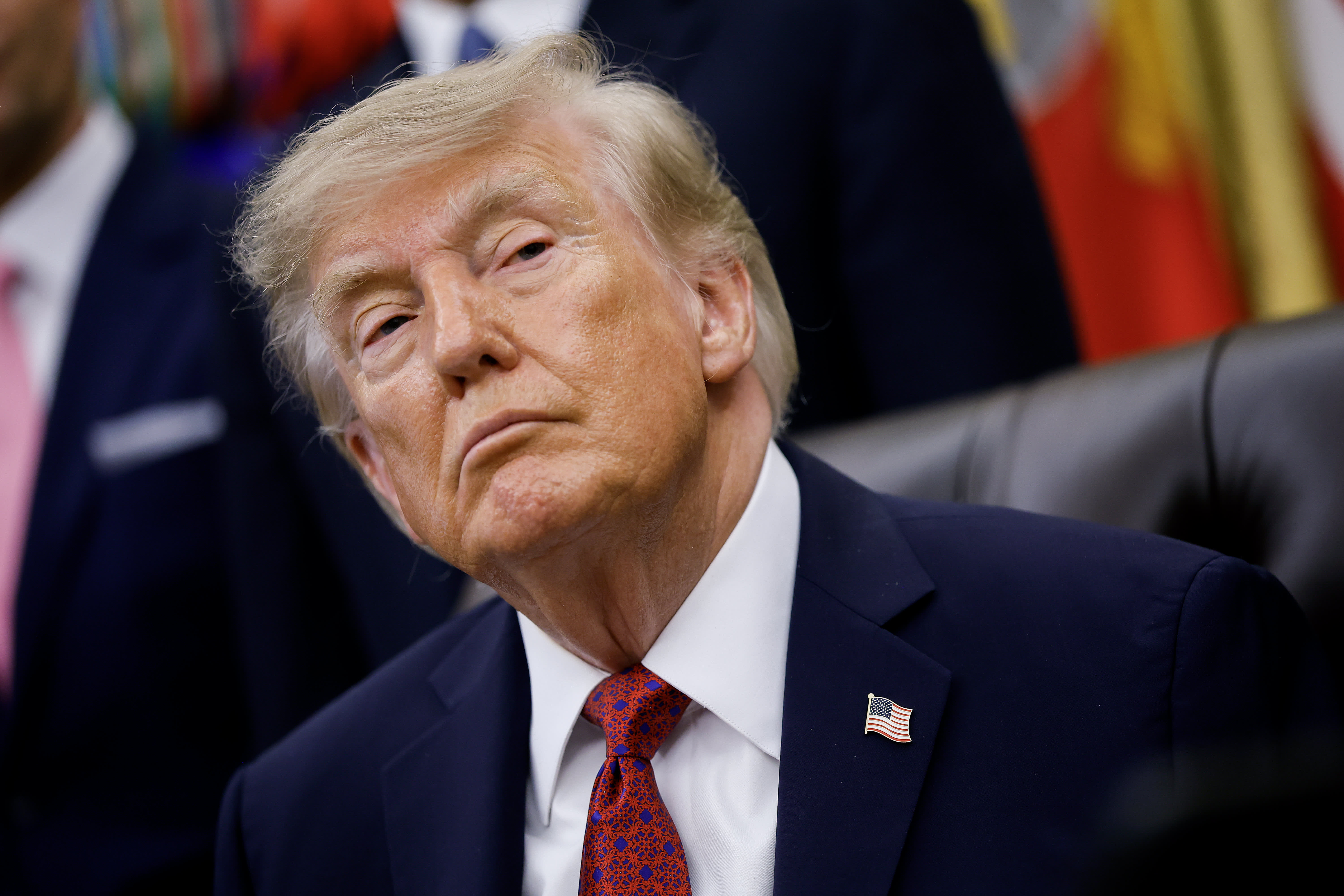
The resignation arrived on a Monday, the way British political resignations so often do. By the evening of 22 June 2026, Keir Starmer had quit as leader of the Labour Party, clearing the path for Greater Manchester mayor Andy Burnham to enter Downing Street without a contest, according to New Makerfield reporting cited in the wire record. A second source, Middle East Eye, told its readers that Starmer had stepped down as "the most unpopular prime minister the UK has had in decades," citing civil servants, former legal colleagues and Labour Party insiders. Within hours, a third feed summarised the arithmetic in blunt terms: Britain would have its sixth prime minister in seven years, a tempo that no Western European democracy approaches.
The personality story is the one the wires have spent the past 48 hours telling, and there is a version of it that is genuinely human. Starmer came into office in July 2024 on a quiet, forensic pitch: lawyer's discipline, Crown Prosecution Service résumé, a deliberate scrubbing of the Corbyn-era brand. Two years later, his own party had stopped believing that the scrubbing had worked. Burnham, by contrast, arrives with the only thing Labour currently trusts from its own bench: a mayoralty he has held since 2017, a profile that polls well outside the Westminster bubble, and the capacity to win back the voters who drifted to Reform UK on the right and to the Greens on the left. New Makerfield's report frames him as the "man of the people" likely to inherit No 10.
But the personalities are not the headline. The arithmetic is.
The tempo problem
Six prime ministers in seven years is not a rotation; it is a failure mode. To put a benchmark on it: France has had three presidents in the same window. Germany has had two chancellors. Italy, the usual European shorthand for governmental instability, has had four. Britain's number is not an outlier in the Italian sense, where cabinets collapse over fiscal disputes, but in the British sense, where parties keep changing the holder of the office because they keep misreading the country.
The tempo itself tells you where the pressure points sit. Two of the six were Conservative: Boris Johnson, felled by a combination of ethics scandals and a parliamentary party that lost patience with him; Liz Truss, whose 49-day market experiment with unfunded tax cuts produced a gilt-yield spike the Bank of England had to intervene in. Labour's contribution to the tally began with Starmer; the question his resignation leaves open is whether Burnham stabilises the clock or merely restarts it.
The poll tax, again, without the poll tax
Read the Middle East Eye reporting carefully, because it is the one source that goes beyond the horse-race frame and names the substantive failures. Civil servants and former legal colleagues, speaking on the record to a publication that has been sceptical of Starmer's posture on international law, characterise him as a leader who "failed" on Gaza policy. The word is theirs, not the wire's. Coming from people who once worked alongside him at the Director of Public Prosecutions and in human-rights practice, the charge is not that he was callous; it is that he was invisible.
For a prime minister whose domestic political brand was built on the moral seriousness of being a former human-rights lawyer, invisibility on the file most likely to animate British Muslim voters, British progressive voters, and a sizeable chunk of the British public under 35 was a specific, avoidable choice. The arithmetic here is not abstract: those voters, plus the post-industrial northern voters who went to Burnham in 2017 and again in 2021, are the coalition a Labour Party needs to win a general election. They are also the coalition that delivered Starmer's 2024 majority. Whether they come home for Burnham is the open question his leadership will answer.
Burnham's problem, written by Starmer's record
Burnham does not inherit a programme; he inherits a residue. The cost-of-living squeeze that defined the 2024 campaign has not eased in the public's mind. The planning reforms Labour passed in its first year have begun to deliver numbers on housing starts, but the political payoff is slow because the homes are not yet occupied. NHS waiting lists are shorter on the official measure than they were in 2024, longer on the lived-experience measure that determines how voters answer pollsters. None of these is a scandal; all of them are why Starmer ran out of road.
What Burnham does inherit, uniquely, is a political base that is not in Westminster. Greater Manchester gives him a regional mandate that no incoming prime minister since devolution has held. That mandate is what allows him to do something Starmer could not: speak about England outside London without sounding like a London politician performing England. Whether the parliamentary party tolerates that voice, or fears it, is the unresolved internal question of the next month.
What happens before Burnham takes the keys
The wire record points to a contest that, as of Monday evening, is shaping up as no contest at all. New Makerfield's report describes Burnham as likely to receive the keys "unopposed." That is not the same as coronation. A Labour leadership election under the party's current rules requires nominations from a threshold of the parliamentary party; if no other serious contender clears that bar, Burnham is leader by default. If one does, he is leader by a margin that defines his mandate.
Either outcome leaves the same question on the table for British voters: whether the party that lost faith in its lawyer can rebuild it on its mayor. The tempo problem does not pause for coronations. Six prime ministers in seven years is a number the next one inherits on day one.