Strait of Hormuz, Closed Again: What Iran Is Actually Signaling With the 20 June Reopening Reversal
On 20 June 2026, Tehran shut the world's most important oil chokepoint for the second time in days — this time explicitly tied to Israeli strikes on Lebanon. The move is less about crude flows than about who gets to set the global energy tempo.
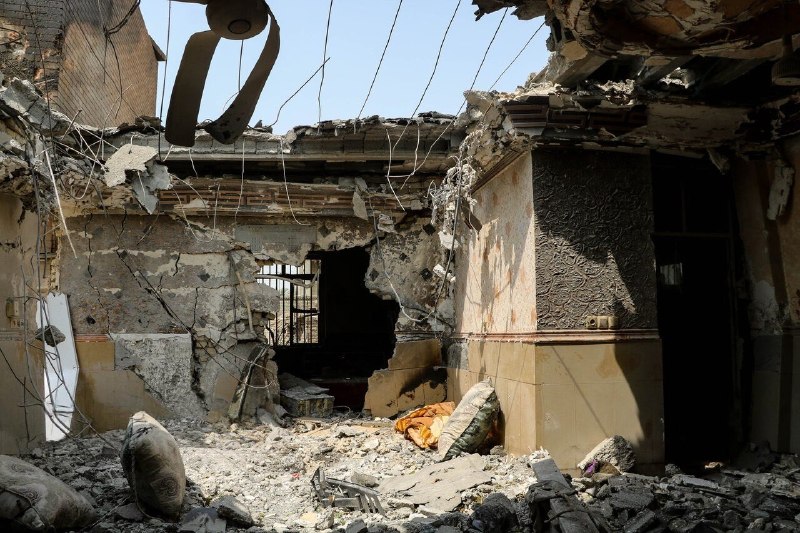
On 20 June 2026, with traffic already thinned by a week of Israeli strikes on Lebanese border towns and an unresolved US-Iran nuclear track, Tehran ordered the Strait of Hormuz closed for the second time in days. The Indian Express carried the move in its 15:52 UTC wire; an Axios scoop, flagged on X at 15:06 UTC by the unusual_whales account, named the trigger — fresh Israeli strikes on Lebanon that the United States had, in Iran's telling, failed to press Prime Minister Netanyahu to halt. The closure is not principally about barrels of crude. It is about tempo: who gets to decide, on any given afternoon, whether the global energy system accelerates, stalls, or reverses.
Read narrowly, the Strait of Hormuz reclosure is a tactical Iranian response to an Israeli escalation in Lebanon — the same logic Tehran used on 13 June when it closed the waterway, then reopened it under US-mediated pressure after a few hours. Read in plain structural terms, the pattern is harder to dismiss as theatrics. A country that can flip the world's most consequential energy chokepoint on, off, and on again — and have the move front-pagied in New Delhi, Tel Aviv, and Washington inside an hour — is exercising a kind of authority that does not show up in any balance-of-payments table. That authority is the subject of this article.
The sequence, hour by hour
The 20 June closure arrived in three distinct pulses. At 15:06 UTC, an X post by unusual_whales carried a single line attributed to Axios: Iran was closing the Strait of Hormuz over Israeli attacks on Lebanon. At 15:42 UTC, a Telegram channel with a large Iran-watcher following, megatron_ron, amplified an Iranian state framing of the decision — namely, that the closure followed America's "blatant breach of promise" to restrain Netanyahu's war on Lebanon. At 15:52 UTC, the Indian Express moved a wire item confirming the closure and reporting that 16 people had been killed in the latest Israeli strikes on Lebanese territory that triggered it.
The order of the three messages matters. Axios broke the news in English to a global markets audience. The Iranian-aligned Telegram post supplied the political why — the diplomatic pretext, the moral framing, the implicit accusation against Washington. The Indian Express wire gave the human cost in Lebanon that anchored both. Within 46 minutes, the global public had a complete picture of action, motive, and consequence — a tempo of disclosure that no Western foreign ministry can match on its own.
What "closing" the Strait actually means
The Strait of Hormuz is roughly 21 miles wide at its narrowest, with two-mile-wide shipping lanes in each direction. Roughly a fifth of globally traded oil, and almost a third of seaborne LNG, normally transits it. Iran has never physically blockaded the waterway in the modern era; what it has done, repeatedly since 2019 and acutely since 2024, is harass commercial shipping, seize tankers, and announce closures that operators price in even when they are not fully enforced.
The 20 June closure follows that template. Iran's Islamic Revolutionary Guard Corps Navy announced that transit was suspended; commercial shippers responded by either diverting around the Arabian Peninsula — adding roughly 3,500 nautical miles and ten days to Gulf-to-Europe voyages — or pausing sailings entirely. Insurance war-risk premiums for Hormuz transit, already elevated since the 13 June episode, jumped on the news. Oil prices on Asian benchmarks reacted within minutes.
The strategic point is not whether the strait is physically closed. It is that the announcement itself functions as a lever. Each closure, whether fully enforced or partially observed, is an option that costs Iran relatively little to hold and exercises enormous pressure on Gulf producers, on Asian importers, and on the United States as the security guarantor of Gulf shipping.
The Lebanese trigger, and the diplomacy that failed
The Iranian framing, transmitted by megatron_ron's Telegram post, is explicit: the closure is punishment for America's failure to press Netanyahu to stop the war on Lebanon. The Indian Express wire reports 16 killed in fresh Israeli strikes inside Lebanon that same day. Whether one accepts the Iranian framing or not, the factual pairing is hard to dispute — the closure followed Israeli escalation, not the other way around, and Iran's decision to publicly link the two is itself a diplomatic message.
This is also where the sequence becomes harder to read. The 13 June closure was followed within hours by a US-mediated reopening, on terms that were not made public but appeared to include some US-Iran de-escalation on the nuclear track. If Washington has now lost leverage — or chosen not to use it — over Israeli operations in Lebanon, then Iran's recourse to the strait becomes not theatrical but structural. The lever is being used because the previous use of it worked.
The nuance: the sources do not specify what concrete assurances, if any, the US provided to Iran in the wake of the 13 June episode. It is therefore not possible from the available reporting to say whether the current closure represents a collapse of a US-Iran understanding or merely Iranian testing of whether one still exists.
The structural frame — chokepoint politics in a fragmented order
Set the 20 June closure against the broader picture and a pattern emerges. Over the past decade, the United States' capacity to keep Gulf shipping open has depended on a security architecture that assumed three things: Iranian isolation, Saudi acquiescence, and Israeli alignment with US regional priorities. None of those assumptions is reliably true in mid-2026.
Iran is more diplomatically connected than at any point since 2015, with active back-channels to Saudi Arabia, the UAE, and Qatar, and a working — if tortured — relationship with Oman as a nuclear-track intermediary. Saudi Arabia is pursuing its own regional realignment under Vision 2030 and is no longer prepared to subordinate energy policy to US preference. Israel's government is publicly committed to operations against Hezbollah infrastructure in Lebanon that Washington has, at most, partially managed.
What this means in plain terms is that the lever Iran is pulling sits inside a system the United States no longer fully controls. The strait is the visible end of a longer chain: a fragmented Middle East security architecture, a Gulf wary of US reliability, an Israel whose operational tempo the US can slow but not stop, and an Iran that has concluded — not without reason — that its capacity to disrupt energy flows is the most reliable source of leverage it possesses.
That is the structural fact behind the 20 June headlines. It is not a theory about hegemonic transition. It is the observation that a single ministry decision in Tehran, transmitted at 15:42 UTC, now sets the agenda for energy ministries in New Delhi, Tokyo, and Brussels, and for the US Treasury, within the same hour.
The stakes — who wins, who loses, on what horizon
If the closure pattern persists through the summer of 2026, the costs fall asymmetrically. Asian importers — China, India, Japan, South Korea — absorb higher landed crude and LNG prices and longer voyages. European importers, already weaning off Russian supply, face an additional squeeze. US shale producers and Gulf monarchies capture the upside on price, but at the cost of accelerating the very transition away from Gulf-sourced hydrocarbons that long-run Saudi planning is built to defer.
Iran wins something less tangible but more durable: confirmation, delivered in front of a global audience, that its decisions on the strait remain the single most consequential unilateral variable in the global energy system. The cost of that confirmation, in foregone shipping revenue and in the diplomatic price of repeated escalations, is real but, by Tehran's calculation, worth paying.
The honest uncertainty is whether the lever will continue to work as it has. Each closure prices in slightly more. Each reopening under US pressure slightly discounts the next one. The 13 June reopening established that Washington can extract reversals; the 20 June reclosure establishes that the reversals are not durable. What the next cycle looks like — and whether the US-Iran nuclear track that has run in parallel with all of this produces anything more than the temporary de-escalations it has so far delivered — is the question the available reporting cannot yet answer.
What the framing choices in this article foreground
Monexus has chosen to lead this piece on the operational sequence and the structural fact of chokepoint leverage rather than on the Israeli strikes or the US-Iran nuclear track, both of which would have produced a different story. The reasoning is straightforward: the closure is the news, the Lebanese strikes and the nuclear track are the context. Western wires will tend to foreground either the Lebanese human cost (legitimate but not what is new today) or the US diplomatic failure (a frame that fits a Washington audience but not an Asian energy audience). This publication treats the closure itself as the primary event and treats Iran as a sovereign actor exercising a coherent strategy, not as a regional disruptor whose behaviour requires Western explanation.
Desk note: Monexus framed this story around chokepoint leverage and the Asian and European energy stakes; Western wires are likely to lead on the US-Iran diplomatic angle, which is a real but secondary story. The available reporting does not permit definitive claims about whether the 13 June US-mediated reopening was paired with concrete assurances that have now lapsed.
Wire provenance
This editorial synthesis draws on the following public wire/social posts:
- https://t.me/megatron_ron
- https://x.com/unusual_whales/status/
Follow the event.
These dated source records provide context. They do not retrospectively verify this archive article.
Separate what the nuclear watchdog reported from what it could not determine after the June 2025 strikes.