When the Tape Becomes the Mandate: Trump's Market-First Doctrine Faces a Stock-Check
The White House reads the tape before it reads the briefing file. Tehran just priced that doctrine in reverse.
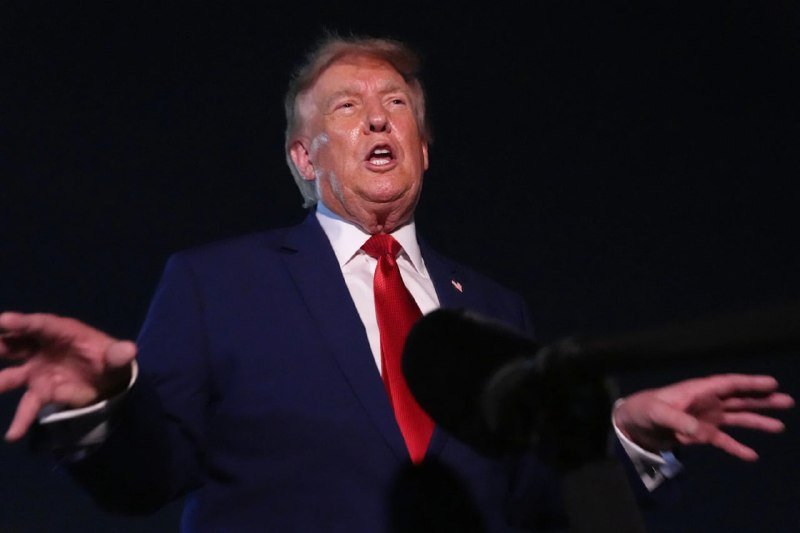
The market has become the message. Inside the gilded shell of the Group of Seven gathering in France this week, the United States arrived with a doctrine no host could ignore: that equity indices, oil futures and currency prints now set the boundaries of permissible geopolitics. By 20 June 2026, that doctrine was running into the kind of friction markets cannot finesse. Stocks checked. Yields twinged. And on the other side of a phone call, Mohammad Bagher Ghalibaf, the Speaker of Iran's parliament and a former IRGC commander, was spelling out what Tehran thinks the new operating code actually is.
Wire coverage of the G7 remark treated the line as colour. The more durable story is the operating logic it exposes: an administration that reads the tape before it reads the briefing file, and that believes the path of least resistance through any confrontation runs through asset prices. For nine months that has bought time, leverage and the occasional concession. It also means that whenever prices move against Washington, the doctrine is tested in real time, by adversaries who are watching the same screens.
What Ghalibaf actually said
The line that landed on 22 June was not a leak. It was a flourish. "Military achieved the victories," Ghalibaf told Iranian state-linked outlets on the margins of a negotiating round. "Now negotiation advances them. If problems arise: we can respond with missiles or solve through negotiation." A second transmission, carried by the DDGeopolitics channel, sharpened the point: "When implementing a ceasefire and ending the war becomes difficult, we can resolve it either through missiles or through negotiations." An open-source channel later carried Ghalibaf's account of a call with Vice President JD Vance, in which the Speaker said he had been informed that Trump had made "threatening remarks regarding our president, the negotiating team, and possible attacks on our territory" mid-discussion. The Iranian side is now publicising, in its own voice, that the negotiating track sits on top of a kinetic track, not beside it.
That is not a confession. It is a deliberate re-pricing. Tehran wants the other side of the table to internalise that any market-friendly settlement is reversible by a missile that is also scheduled, financed and visible. The doctrine the White House runs on, the one in which the tape sets the ceiling, runs into a counter-doctrine in which the tape is a hostage, not a constraint.
The doctrine under stress
For most of the post-election stretch, the operating logic has been generous to Washington. Tariff salvos moved without proportionate retaliation from trading partners, who read the S&P as the canary. Bond vigilantes never really arrived. The administration's belief that presidents who own the cycle own the negotiation has been, on the evidence, partly vindicated. It has also produced a specific kind of adversary behaviour: opponents who watch the screens too, and who time their provocations for the moments when American equities are least able to absorb the news.
What the past week demonstrates is that the doctrine has a soft underbelly, and that soft underbelly is the gap between the market's tolerance and the adversary's. Iran is the cleanest example. Tehran has a memory of the cycle as a pressure instrument, from the 2019 tanker episode through the sanctions architecture of the early 2020s. It is not improvising when it pairs "missiles or negotiation" in the same sentence. It is reminding Washington that the negotiating track can be unmade at a cost the tape cannot.
What Ankara, Beijing and the Gulf are watching
The audience for the doctrine is larger than Iran. Turkey's markets are thinner than the United States's, but the lira prints are read in the same terminals in Lower Manhattan. China's policymakers read the VIX the way Cold War hands read the Doomsday Clock. The Gulf sovereign funds, flush with the petrodollar recycling that the doctrine's premise depends on, are recalibrating in real time how much of their dollar exposure is a financial position and how much of it is a political endorsement.
That is the subtext of the French stage. The G7 communiqué language on Iran, on critical minerals, on the architecture of sanctions enforcement, will be parsed as much for what it implies about the United States's willingness to absorb market pain as for what it actually commits. Adversaries have learned that the cost-benefit ledger the administration runs has a column marked "the tape." Anything that does not move the tape can be absorbed; anything that does move the tape can be reversed.
The market as both weapon and vulnerability
There is an irony here that does not need a theorist to name it. A doctrine that treats asset prices as the binding constraint of geopolitics gives adversaries an asymmetric lever. The United States has the deepest, most liquid, most reactive capital markets in the world. That is a structural advantage in any contest of attrition. It is also a structural vulnerability, because the same liquidity and reactivity that translate political pressure into economic pain also translate economic news into political pressure, very fast.
The stock-check of the past session is not a verdict on the doctrine. It is the doctrine, working as designed, in both directions. Washington wanted markets to be the message. Tehran has now demonstrated, in its own voice, that the message can be sent back.
The week ahead
What to watch is whether the negotiating track holds through the next volatility window. The Iranian file moves on two clocks: the political clock in Tehran, and the market clock in New York. The American side, by design, runs almost exclusively on the second. The interesting question, starting 23 June, is what the White House does when those clocks stop aligning: whether the doctrine bends, breaks, or simply buys more time at a higher premium.
Desk note: Wire coverage of the G7 stage treated the line as colour. Monexus is following the Iranian file through Axios reporting on the memorandum itself, Unusual Whales' market-politics analysis, and wire confirmation of the France-stage remarks.
Sources:
- Intelslava (Telegram, 2026-06-22): Head of the Iranian negotiating delegation Mohammad Bagher Ghalibaf on ceasefire implementation. https://t.me/intelslava
- DDGeopolitics (Telegram, 2026-06-22): Ghalibaf remarks on military victories and the choice between missiles and negotiation. https://t.me/DDGeopolitics
- Open Source Intel (Telegram, 2026-06-22): Ghalibaf account of Vance call and Trump threatening remarks during talks. https://t.me/osintlive
- The Guardian (2026-06-22): Plan to auction over 100 Titanic artifacts faces US government opposition. https://www.theguardian.com
- The Guardian (2026-06-22): Reflecting pool to be drained again as Trump claims five vandalism arrests. https://www.theguardian.com