Ceasefire Holds by a Thread: US–Iran Talks Open in Muscat While Israeli Strikes Continue in Beirut
Envoys landed in Muscat on 20 June 2026 for a fresh round of US–Iran talks, even as Israeli drones circled low over Beirut and Iran's supreme leader publicly disowned his own negotiators' signature.
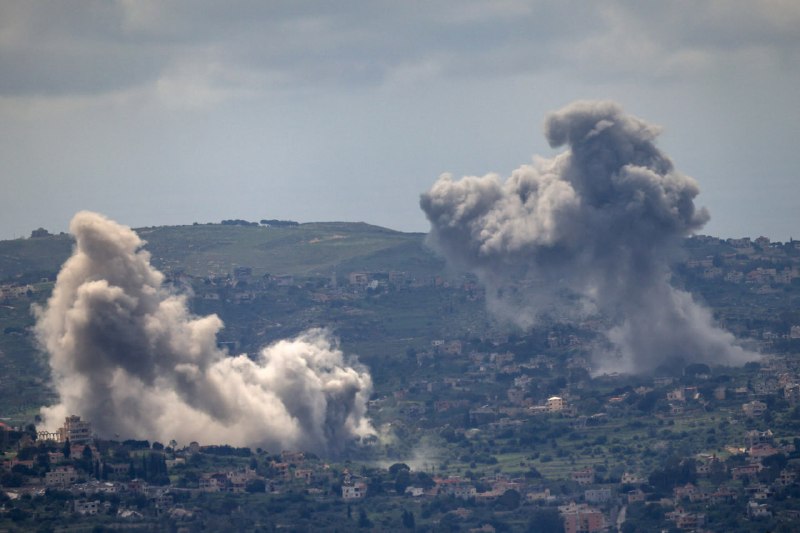
At 09:35 UTC on 20 June 2026, Reuters reported that United States and Iranian envoys had departed for a new round of talks, the first sustained diplomatic track since the most recent round of hostilities. By mid-morning the same day, witnesses in Beirut were posting fresh footage of Israeli drones circling the city's southern suburbs at low altitude — a routine that residents say has become a feature, not a glitch, of the post-ceasefire environment.
Three facts, none of them new, are now being asked to fit inside one frame. The United States wants a deal. Israel says it is still fighting. Iran's supreme leader, in remarks surfaced by the prediction-market account @polymarket at 03:16 UTC on 20 June, says he allowed the deal to proceed but opposed signing it "as a matter of principle." Each of those positions is internally coherent. Together they describe a negotiation whose very existence is being disowned by one of the principals.
What the wires are saying
Reuters framed the moment plainly: envoys are heading for talks, while Israeli strikes continue. That is the closest thing to an establishment read available. It carries two assumptions — first, that diplomacy and bombing can coexist for some interval without one cancelling the other, and second, that the diplomatic track has not collapsed even if its political cover at home is thinning.
The Beirut footage, relayed by the Lebanese witness channel @wfwitness on Telegram at 11:05 UTC on 20 June, is a second-order data point. It does not by itself prove a strike has happened. It documents presence, and presence is the argument: a low, audible drone over a residential suburb is not surveillance in the technical sense, it is signalling. It tells a population that the airspace is being administered by someone other than the state beneath it. The Lebanese government has periodically complained about this practice through formal channels; the practice continues.
A third input cuts across the other two. @polymarket's 03:16 UTC post quotes Iran's supreme leader as saying he permitted the United States arrangement to go forward, but refused to sign it on principle. If that framing is accurate, Iran's negotiating posture is now an artifact produced by officials operating in a political space the leader himself has publicly narrowed. The deal, in that reading, exists as a diplomatic object whose author disclaims authorship of it.
The counter-narrative: a deal no one owns
The Western wire line treats the Muscat talks as a hopeful sign — diplomacy still alive, channels still open. That framing has its merits: a non-talking war is harder to de-escalate than a talking one.
The structural objection is simpler. A deal signed by an envoy whose principal publicly says he opposed signing it is, at minimum, fragile. If the supreme leader's framing is taken at face value, Iran's team is negotiating without domestic cover. The Iranian political system has, in past rounds, responded to that asymmetry by hardening its demands late — or by walking back commitments that the principal had already described as excessive.
There is also the Israeli variable. Israeli strikes are reportedly continuing even as US and Iranian envoys are in transit. Whether those strikes are coordinated with the talks, tolerated by them, or indifferent to them is the question that no wire has yet answered cleanly. Each interpretation produces a different forecast: a deal that Israel is being asked to absorb; a deal that Israel is being asked to ignore; or a deal that Israel has concluded is irrelevant to its immediate operational tempo.
The Lebanese framing is the third axis, and the one most often omitted in the Washington–Tel Aviv–Tehran triangle. For Beirut, low-altitude drones are not atmospheric background. They are a daily fact with material consequences: panic episodes in schools, hospital generators running hot, livestock disturbed, real-estate values compressed along known flight paths. A "ceasefire" under which one party continues to operate manned combat aircraft overhead is not a ceasefire in any meaningful operational sense; it is a contested term.
The structural frame: plural sovereignty over one piece of sky
What the morning's inputs describe, when laid alongside one another, is a region in which no single state exercises uncontested administrative authority over the territory it claims. The United States projects diplomatic authority. Iran projects negotiating authority. Israel projects kinetic authority. Lebanon projects legal authority over its own airspace, in theory. Hezbollah, when its leadership is functional, projects authority over specific neighbourhoods. Each of these is a partial claim. None of them is the whole picture.
That arrangement is what the policy world has taken to calling, without naming any theorist, a multipolar order at the sub-regional level. The diplomatic track is the part of the picture that looks orderly. The drone over Beirut is the part that looks like sovereignty in action. Iran's supreme leader's disavowal is the part that exposes the diplomatic track as an event whose political meaning is still being negotiated inside Iran itself.
None of this requires a grand framework to understand. It requires attention to the specific geometry of who can do what, to whom, on any given morning in June 2026. That geometry has changed shape several times this year already, and the changes have not been signposted in advance.
Stakes and forward view
If the Muscat talks produce a signed arrangement, three things will follow. The United States will be able to point to a deliverable on a long-running file. Iran will be able to point to sanctions relief, in whatever calibrated form the package takes. Israel will continue to insist, plausibly, that its operational tempo in Lebanon is unaffected by what its principal ally negotiates with its principal adversary. The Lebanese state, again, will absorb whatever the three above it decide.
If the talks collapse, the most likely immediate consequence is not a fresh war but a fresh round of strikes calibrated to fall below the threshold that would force Washington to publicly dissociate. That pattern has already been visible in earlier rounds of this cycle. The diplomatic track functions, in that case, as a ceiling on Israeli action rather than a floor.
The harder question is what happens inside Iran if a deal is signed by an envoy whose principal has publicly disowned the signature. Iranian negotiators have, in earlier episodes, delivered agreements that their domestic audience later refused to ratify in practice. The diplomatic literature has names for this pattern. The street-level description is simpler: a deal that the country never made, signed by people who are no longer in the room.
What remains genuinely uncertain, as of 20 June 2026, is whether the Muscat track is itself operating on a similar logic. The wire reporting frames the talks as live. The supreme leader's framing, as relayed on 20 June, treats the diplomatic object as something he allowed and declined to author. Between those two characterizations is the gap where the next round of this story will be written.
One last observation. The witnesses posting drone footage from Beirut at 11:05 UTC are not editorialising. They are documenting. The diplomatic track is being conducted, on the same morning, in a different time zone, between officials who describe their work in formal language. Both records are real. A reader trying to understand what 20 June 2026 actually means for the region will need to hold both at once — the envoys in the air, the drones in the air, and the supreme leader's public refusal to put his name to the document his team is flying to sign.
What the wires do not yet say
Three things are missing from the public record as of this article's filing. The first is the composition of the US and Iranian delegations in Muscat — Reuters reported movement but not personnel in the thread inputs available here. The second is any official Israeli comment on the talks, as distinct from continued operational reporting on strikes. The third is a substantive read-out from Tehran on the supreme leader's "as a matter of principle" framing — whether it is a tactical distancing move, a factional signal, or a position from which the negotiating team will be recalled. Until at least one of those three becomes clearer, the morning's three facts will continue to sit beside one another without resolving into a single picture.
Desk note: Monexus framed this as a structural moment — three actors with non-overlapping claims over the same airspace and the same diplomatic object on the same morning — rather than as either a hopeful breakthrough or a collapse. The wire's frame is closer to "talks continue despite tensions"; the counter-frame, drawn from the supreme leader's remarks and the Beirut footage, is that the diplomatic track and the kinetic track are running in parallel rather than as alternatives.
Wire provenance
This editorial synthesis draws on the following public wire/social posts:
- http://reut.rs/4oJNBjU
- https://t.me/wfwitness
- https://en.wikipedia.org/wiki/2025%E2%80%93present_ceasefire_between_Israel_and_Hezbollah
- https://en.wikipedia.org/wiki/2025%E2%80%932026_United_States%E2%80%93Iran_negotiations
- https://en.wikipedia.org/wiki/Beirut_Southern_Suburbs
- https://en.wikipedia.org/wiki/Muscat
- https://en.wikipedia.org/wiki/Supreme_Leader_of_Iran
Follow the event.
These dated source records provide context. They do not retrospectively verify this archive article.
Separate what the nuclear watchdog reported from what it could not determine after the June 2025 strikes.
- http://reut.rs/4oJNBjU
- https://t.me/wfwitness
- https://en.wikipedia.org/wiki/2025%E2%80%93present_ceasefire_between_Israel_and_Hezbollah
- https://en.wikipedia.org/wiki/2025%E2%80%932026_United_States%E2%80%93Iran_negotiations
- https://en.wikipedia.org/wiki/Beirut_Southern_Suburbs
- https://en.wikipedia.org/wiki/Muscat
- https://en.wikipedia.org/wiki/Supreme_Leader_of_Iran