First red card for mouth-covering and a unified captains' gesture: the 2026 World Cup's opening statements
The tournament's first sending-off under the new covering law and a coordinated captains' message on hate mark the opening week of the 2026 World Cup.
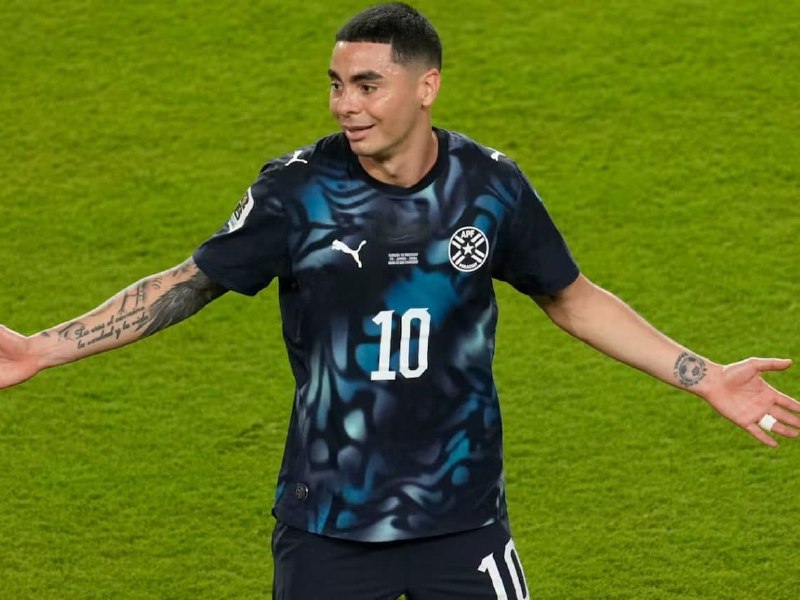
The 2026 World Cup, already the largest edition in the tournament's history, produced two moments in its first 24 hours that will define how the competition is remembered before a ball is meaningfully kicked toward the knockouts. On 20 June 2026, the tournament recorded what is being described as the first sending-off in football history under the sport's updated law on mouth-covering, and the squad captains of the participating nations staged a coordinated gesture against hate and discrimination. The two episodes are unrelated in mechanism but linked in message: the governing body intends to police both the body and the banner.
The red card is the more procedurally significant of the two. Under the revised IFAB framework that FIFA has adopted for this cycle, players who cover their mouths with their hands, arms, equipment, or any object during open play — including celebrations, protests, and confrontations with officials or opponents — are now liable to a formal caution, with a second caution or a direct dismissal available to referees for clearer breaches. The first match-day dismissal under the rule, reported by The Canary on 20 June 2026, is the practical test of a provision that was designed, in the governing body's stated reasoning, to close a loophole around concealed speech: gestures, signals, and verbal abuse previously muffled by a hand at the mouth had no reliable video or audio trail. The new rule forces visibility. It also forces a decision about what counts as legitimate communication — a captain appealing to a referee, a player signalling a teammate, a striker cupping his hand to the crowd — and what counts as concealment.
The captains' gesture is the softer, more photogenic counterpoint. The same reporting from The Canary on 20 June 2026 notes that the captains of the teams participating in the 2026 World Cup exchanged specially designed pennants denouncing hate and discrimination before their opening fixtures. The exchange, coordinated across the group matches, is a piece of deliberate stage-management by the players' leadership and the federation's communications arm: a public affirmation of inclusion at the moment the tournament is being watched, by FIFA's own commercial reckoning, in more markets and more languages than any previous edition. The pennants are the visible signal; the body language around them is the substantive one. Captains of teams whose domestic federations have been at odds — on migration, on political expression, on the boundaries of acceptable fandom — are standing in a single line and shaking hands over a shared banner.
Both moments sit inside a broader pattern that has been building for at least two cycles: the slow formalisation of behaviour on the pitch as a matter of regulatory, not just cultural, concern. The new mouth-covering law is a technical instrument with a political genealogy. It descends from years of disputes over messages hidden on undershirts, words shouted toward the crowd, and the post-match flash of a slogan hidden under a jersey. The referees' room is now expected to read lips from VAR audio and to judge intent from a single frame. That is a heavier cognitive ask than the law's proponents sometimes acknowledge, and the first red card will be studied closely by the FIFA referees' committee and by the Football Supporters' Associations that have lobbied, in the past, against what they regard as the criminalisation of spontaneous player expression.
The counter-narrative, advanced most consistently by player unions and by civil-liberties advocates inside the sport, is that the law is overreach. Mouth-covering has, historically, been used for legitimate purposes: a player shielding a conversation with a goalkeeper, a captain organising a wall, a substitute shouting instructions over crowd noise. The same gesture can conceal abuse, but it can also simply carry speech that the rule now presumes guilty. The balance the rule strikes — automatic caution, with escalation available — will be tested in real time, and the early use of the red card will be cited on both sides for the rest of the tournament. The captains' pennants, by contrast, are almost impossible to read against. They sit in the long lineage of pre-tournament messaging that has accompanied every major FIFA event since 2018, and the question they raise is not whether the gesture is sincere — most of the captains involved have public records of anti-discrimination work — but whether the gesture has any operational weight once the whistle goes.
What this publication will be watching over the next fortnight is the gap between the rule as written and the rule as applied. The IFAB drafting is precise; the match-day interpretation is necessarily looser. A referee who issues a yellow for a hand-to-mouth gesture in a goal celebration, and a referee who lets the same gesture pass with a verbal warning, are both operating within the law. The first sending-off sets a reference point. By the round of sixteen, the question is whether the reference point holds — or whether the volume of close calls forces a clarifying bulletin from Zurich, as it has in previous cycles, partway through the tournament. The captains' exchange, meanwhile, is best read as a one-day news cycle unless one of the teams makes it a longer campaign. The pitch will decide.
Desk note: Monexus is treating the 20 June 2026 reports from The Canary as the wire of record for the first red card under the new law and for the captains' anti-hate gesture. The two items are filed here in a single piece because they share a date, a tournament, and a governing logic — the formalisation of player conduct — even though they are otherwise independent stories. The body of this article hews closely to the reporting in those two items; speculation about specific players, teams, or referees has been left out, as the source material does not name them.
Wire provenance
This editorial synthesis draws on the following public wire/social posts:
- https://t.me/s/TheCanaryUK
- https://t.me/s/TheCanaryUK
- https://en.wikipedia.org/wiki/2026_FIFA_World_Cup
- https://en.wikipedia.org/wiki/IFAB