Seven Pairs, One Pitch: How Sibling Splits Are Quietly Redrawing the World Cup Map
Messi's double against Austria pushed him past Miroslav Klose and into the record books, but with France and a wide-open knockout bracket still to come, the all-time mark may not stay settled for long.
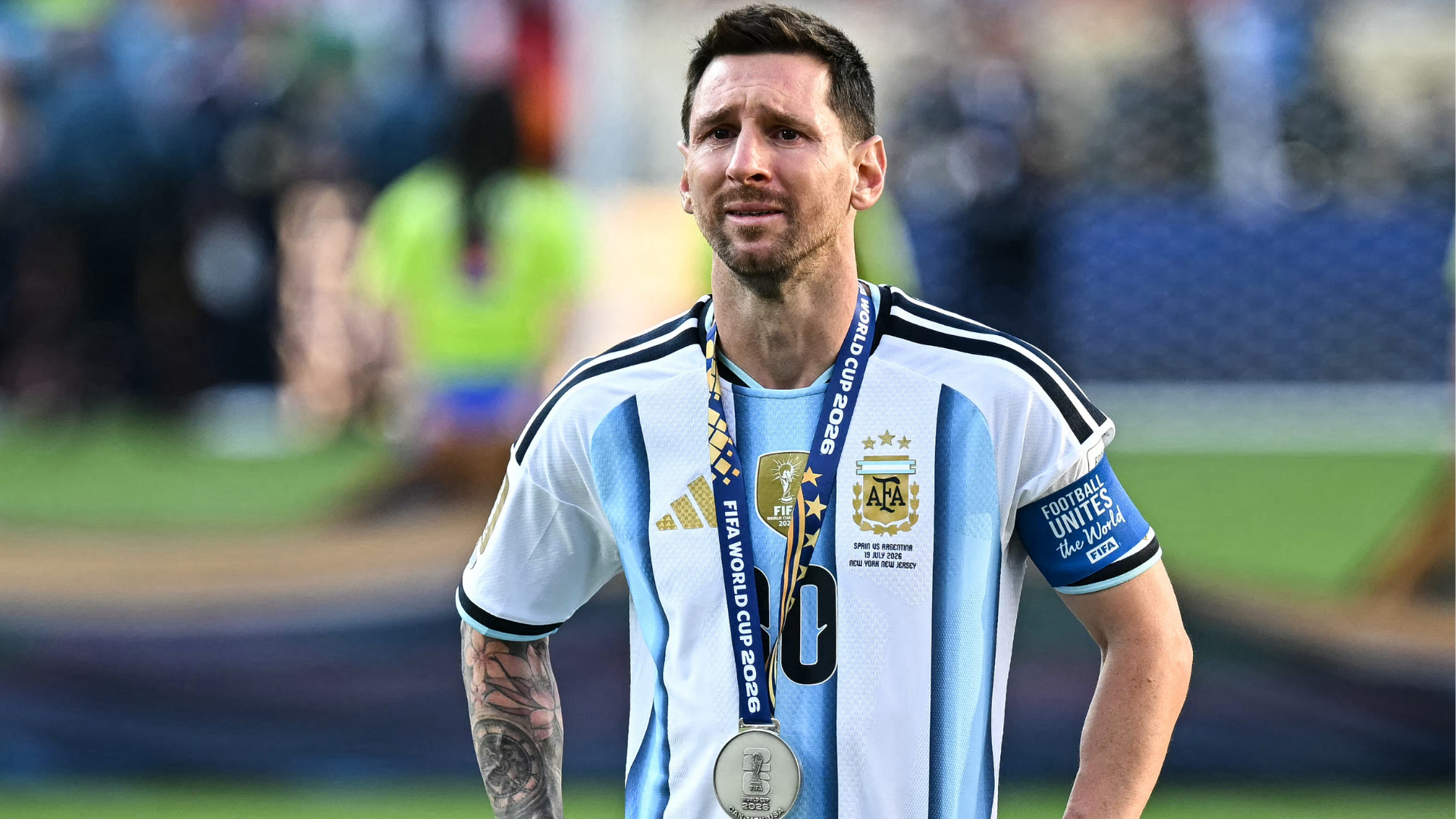
Argentina were already 1-0 up inside the first half-hour at the stadium in Dallas on 22 June when the ball sat up kindly for Lionel Messi about 22 yards from goal. He didn't hesitate. The shot clipped the underside of the crossbar on its way through, and the Argentine forward moved to 17 career goals at a men's World Cup, one clear of Germany's Miroslav Klose. A second-half finish, a 2-0 win over Austria, and qualification for the last 32 to go with it.
That pair of strikes, both laid out in minute-by-minute reporting from the Guardian and confirmed by FIFA's own account, did more than settle Group J. They also produced the kind of headline that flattens the noise around any tournament: Messi is now, by his own count and the tournament's official ledger, the top scorer in the history of the men's World Cup. Whether the next line of the history books belongs to him or to the chasing pack is now the only Argentine subplot that matters.
The arithmetic of one man
The numbers tidy up neatly. Klose, scorer of 16 goals across four tournaments between 2002 and 2014, had owned the men's record since the night in Belo Horizonte when Germany beat Brazil 7-1. Messi drew level with him earlier in this competition and overtook him on Monday, a sequence of records that has been tracked almost in real time by the BBC, who noted that Messi is still delivering on the biggest stage in his late 30s. FIFA's own social channel kept count publicly: 17, then 18 by full-time, with the second strike described as the one that broke Klose's tie.
The mark is not the sort that lends itself to caveats. The 18-goal total spans five tournaments, from a teenage debut against Serbia in 2006 to his late-career work in the United States, and it now sits above every other man who has played the competition. It also, incidentally, leaves Messi ahead on the combined men's and women's ledger that ESPN cited on Monday night, a smaller headline but the one that travelled furthest in North American coverage.
France's parallel question
While Messi was rewriting the book in Dallas, France were preparing to face Iraq in what the Guardian's live blog framed, with characteristic understatement, as "the Kylian Mbappé show." Mbappé is the captain, the biggest name in the squad and the man whose World Cup scoring record still has room to grow. France have not lacked for attacking options across the last decade, but the contrast is hard to miss: one forward is preserving a career total against a sliding defence, another is building a ledger that could overtake him.
That parallel matters because it sets up the only structural question this group stage actually answers. World Cups are not won by goalscoring records; they are won by the player who scores at the right time. Messi has both. Mbappé, with France tipped to go deep, has the runway to add to his own column before this tournament is finished. The two men are not competing directly, but the bracket may yet put them on the same pitch.
The off-pitch ledger
Around the goals, the news cycle kept producing the kind of stories that tournaments cannot quite control. Belgian forward Jérémy Doku received a public apology from L'Équipe after a presenter criticised his decision to fly home briefly for the birth of his first child. The outlet distanced itself from the remarks, a rare public correction from a French sports daily. In Serbia, former Yugoslavia and Atlético Madrid striker Rade Bogdanović drew outrage on public television for a racist comment about a Belgian player; he was questioned over the remark and, by the Guardian's account, doubled down.
The transfer market, meanwhile, refused to wait for the tournament to end. Julián Álvarez told Atlético Madrid he wants to leave, with Barcelona, Real Madrid and Paris Saint-Germain all linked by the Guardian's reporting. The Argentine forward, whose minutes have been more limited than his trophy haul suggests they should be, used the word "dream" to describe his preferred next move. Atlético's position was not reported in detail.
What the next week tests
The Argentine group is done. The knockout bracket now takes over, and with it the variables that group play tends to obscure: squad depth, set-piece routines, and the willingness of referees to let games flow. Messi's two goals on Monday did not arrive in a vacuum. They came against an Austrian side that had already shipped chances to the holders and that, by the closing stages, was chasing a tournament that had begun to slip away from them. Argentina will need both of those things to travel with them when the stakes change.
For Messi personally, the record is the record. He will not need to keep scoring to validate it, only to keep Argentina alive long enough for the next game. The same arithmetic that pushed him past Klose can push him further if the bracket allows, and a draw against a tired opponent in the last 16 would be the obvious next test. France, Norway and Senegal all have reasons to believe the record is not yet settled.
Sources
- BBC Sport, Messi becomes World Cup's record goal scorer as Argentina march into last 32-2026-06-22
- BBC Sport, Messi becomes World Cup all-time leading scorer: how has he stayed at the top?, 2026-06-22
- BBC Sport, From retirement to records: another immortal Messi moment, 2026-06-22
- ESPN, Messi breaks tie with Klose for most World Cup goals, 2026-06-22
- ESPN, Messi makes history and shows why Argentina star is still Messi, 2026-06-22
- Sky Sports, Messi makes scoring history with double to send Argentina through, 2026-06-22
- The Guardian, Argentina 2-0 Austria: Messi breaks scoring record at World Cup 2026-2026-06-22
- The Guardian, L'Équipe apologises to Belgian footballer Jérémy Doku, 2026-06-22
- The Guardian, Serbian TV pundit causes outrage with racist comment during Belgium game, 2026-06-22
- The Guardian, Julián Álvarez sparks transfer frenzy by telling Atlético Madrid he wants to leave, 2026-06-22
- The Guardian, France v Iraq: World Cup 2026 live, 2026-06-22
- FIFA (Telegram), Lionel Messi has broken the record for all-time goals at the FIFA World Cup, 2026-06-22
- FIFA (Telegram), Lionel Messi extends his record: 18 FIFA World Cup goals, 2026-06-22
Desk note: Monexus treated Messi's record as a procedural milestone within an ongoing tournament rather than a closing chapter, leaving space for the bracket to do the rest of the talking.