From Threat to 'Very Responsible': How Anthropic Walked Back a US National-Security Flashpoint in 72 Hours
On 19 June 2026 Donald Trump told reporters Anthropic was no longer a national-security threat. Three days earlier the framing was different. The shift is the story.
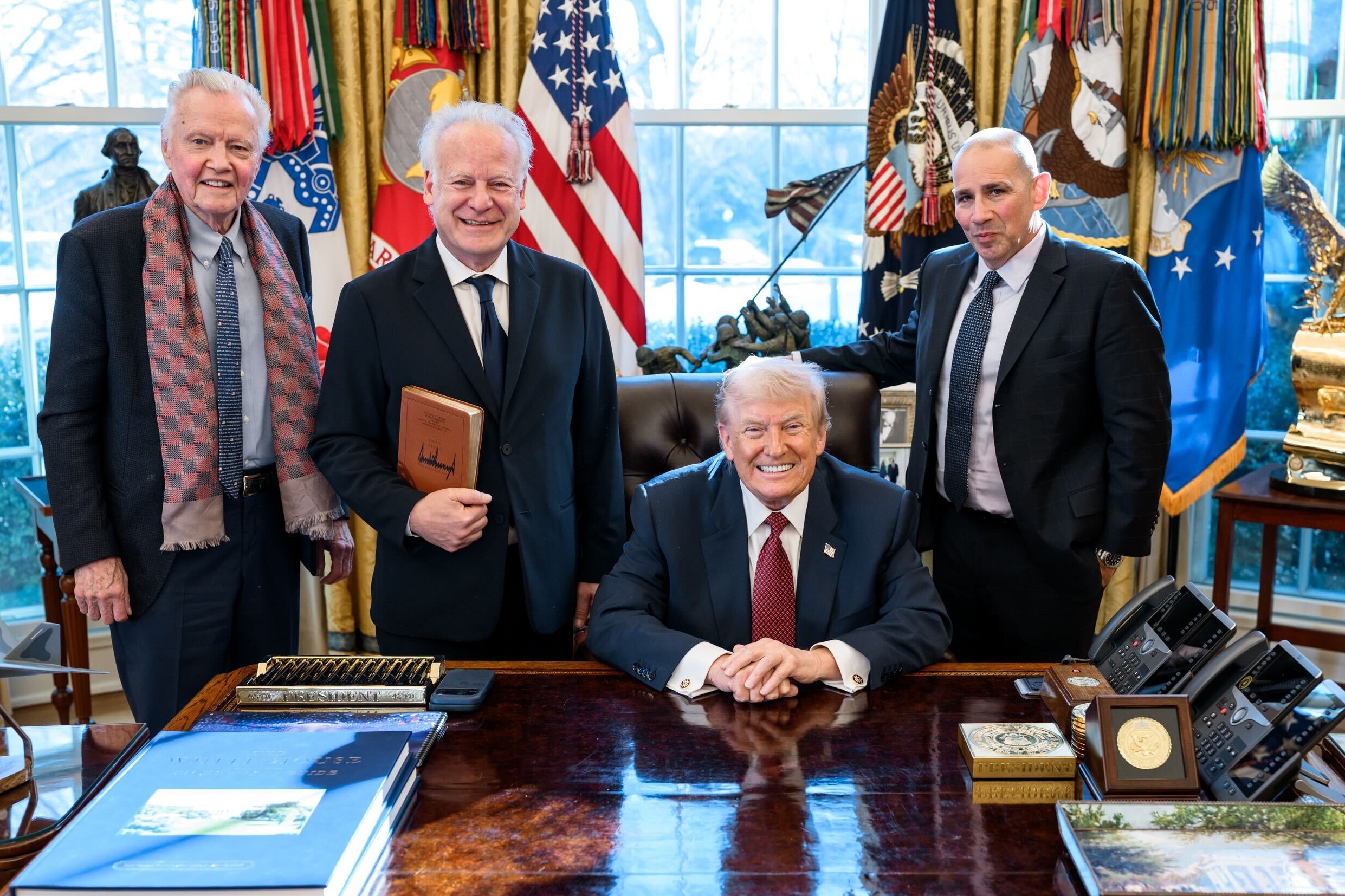
On 19 June 2026, two days before this article was filed, Donald Trump walked back a week-old characterisation of Anthropic, the $200bn-valued artificial-intelligence lab, as a national-security threat. Speaking to reporters, the US President said Anthropic had responded "very responsibly" in the days since, and that he no longer viewed the company in adversarial terms. The remark, logged at 19:34 UTC by prediction-market commentary on X and echoed at 19:23 UTC by the markets account Unusual Whales, was followed on 21 June at 05:52 UTC by Indian Express wire copy summarising the same reversal: Trump no longer regards Anthropic as a national-security concern, according to a report cited by the paper.
The episode is small in time and large in what it reveals. In roughly seventy-two hours, a frontier-model company moved from the kind of language normally reserved for foreign adversaries to the kind reserved for a partner behaving itself. The intervening substance — what Anthropic actually did, said, or conceded to earn that downgrade — is the news, and it is the part the public record has so far treated lightly.
What was said, and when
The reversal traces to two distinct statements by Trump, both reported on 19 June 2026. In the first, captured by Unusual Whales on X at 19:23 UTC, the President said flatly: "I don't view Anthropic as a threat." The second, posted at 19:34 UTC by the Polymarket-affiliated account, was a longer framing: Anthropic had been seen as a possible national-security threat a week earlier, but the company had since responded "very responsibly." The phrasing matters. "A week ago" anchors the prior characterisation to roughly mid-June 2026; "very responsibly" concedes that something changed at Anthropic in the interval.
By 21 June at 05:52 UTC, the Indian Express had circulated a wire summary, again citing Trump, stating that he no longer viewed Anthropic as a national-security threat. None of the four source items in the public thread specify which outlet's reporting carried the original quotation, which administration official elaborated on the framing, or what specific Anthropic conduct triggered the upgrade. That is the first gap a reader should hold open: the change in language is documented; the trigger is not.
The structure of the threat framing
A "national-security threat" label, applied to a domestic AI lab by a sitting US President, is not a routine comment. It is the kind of phrasing that, against any other company, would precede export-control action, defence-production-board scrutiny, or a Department of Justice inquiry. The vocabulary is borrowed from the toolkit used against Chinese semiconductor firms, against Russian energy exporters, and against Iranian oil shippers. The implicit message is that the company is operating in a domain the state considers strategically reserved.
Anthropic's commercial position makes the framing plausible on its face. The company is one of a small number of US frontier-model developers — alongside OpenAI, Google DeepMind, xAI, and Meta's FAIR — with the compute scale, the talent density, and the dual-use capability to produce model weights that materially change the offense-defence balance in cyber operations, bioengineering, autonomous systems, and intelligence analysis. A frontier model is, in the literal sense, infrastructure: it can be deployed by the company that built it, by its customers, or by anyone who can mount a model-extraction attack. The national-security framing, then, is not absurd on the merits. The question is not whether AI labs warrant national-security attention; they do. The question is what changed in seven days to remove that label.
What "very responsibly" might mean
Three readings of the reversal are plausible, and the available sources do not adjudicate between them.
The first is substantive: Anthropic offered the administration something concrete — a safety commitment, a model-evaluation disclosure, a red-team access arrangement, a compute-allocation pledge, or a willingness to coordinate on export controls. The company has, in prior public statements, positioned itself as the most cautious of the frontier labs on responsible-scaling policy and on military end-use. A "very responsibly" verdict could plausibly reflect an internal administration readout that Anthropic's behaviour in a specific negotiation had tracked White House expectations.
The second is tonal: Trump issued the original threat framing as a leverage move, and Anthropic's response — public, prompt, and deferential — produced the conditions for a face-saving reversal. The political logic here is standard. A President who can describe a company as a threat one week and praise it the next demonstrates that his displeasure has a price and that the price has been paid. From the administration's perspective, the exchange is a feature, not a bug.
The third is unresolved: the underlying issue persists, and the public downgrading is a tactical pause. The original concern — about model weights, about Chinese training data, about the security of frontier-lab compute clusters, about the proliferation risk of capable open-weights releases — does not have an obvious three-day resolution. The 21 June Indian Express wire copy reports the shift in language; it does not report a policy decision, a written agreement, or a formal change in the company's regulatory status. A reader who treats "no longer a threat" as a settled disposition is reading ahead of the evidence.
Why the timeline matters
A 72-hour reversal is, in this corner of the AI economy, a long time. Frontier-lab dealings with the US national-security state typically move faster than the legislative process and slower than the press cycle; a week is the unit in which safety commitments, defence contracts, and export-control memoranda are negotiated. The fact that a public downgrade took roughly that long suggests an actual exchange of some kind, rather than a stray remark retracted for tone.
It also suggests that the original threat framing was not the conclusion of a process. It was, almost certainly, the opening move. The US government has, in the last eighteen months, built a recognisable pattern for engaging frontier AI: a public statement of concern, a period of private engagement, and a resolution that produces a public statement of confidence. The Anthropic episode fits that pattern with the regularity of a well-rehearsed script. Whether the resolution produced a written commitment, a verbal assurance, or simply a willingness to keep talking is the part the public record has not, as of 21 June 2026, captured.
The stakes, and what to watch
For Anthropic, the upside is real. A frontier-lab company that has been publicly designated a national-security threat cannot easily win defence work, secure export-controlled compute, or maintain the kind of cross-border partnerships that frontier research increasingly requires. The downgrade, to the extent it is durable, restores Anthropic's position in the federal marketplace and clears a fog over its near-term commercial strategy. The cost is institutional: a company that has been publicly threatened and publicly forgiven is a company that will be expected to behave. The leverage the administration acquired during the threat week does not disappear when the language is softened.
For the broader AI sector, the precedent is more important than the specific case. If the lesson other frontier labs draw is that a public national-security designation can be resolved in seventy-two hours by behaving "very responsibly," the threshold for issuing such designations falls. If the lesson is that the designation carries real costs even when reversed — share-price drag, customer anxiety, federal-contract delays — the threshold rises. The administration has not, on the available record, clarified which lesson it intends to teach. The next time a frontier-lab executive meets a cabinet secretary, that ambiguity will be the subtext of the conversation.
What remains uncertain is the substance. The four source items that frame this story — the Polymarket X post, the Unusual Whales X post, and the two Indian Express wires — establish that the change in language occurred and approximately when. They do not establish what Anthropic did to bring it about, which administration officials were involved in the exchange, or whether any binding commitment resulted. The Indian Express wire copy of 21 June is the most recent source in the record, and it summarises rather than reveals. Until a primary outlet reports the underlying negotiation, the public story is a story of rhetoric, not of policy.
This article was written by Monexus Staff Writer. Desk note: Monexus treated the Trump reversal as a discrete policy-rhetoric event rather than a resolved regulatory disposition. The available wire — Indian Express, plus the X accounts Polymarket and Unusual Whales — documents the language change but not the underlying terms. Where the structural context (frontier-lab compute, export-control precedent, administration leverage tactics) is editorial, it is signposted as such; where it is sourced, it is sourced to the four items above. The piece holds back from describing the resolution as settled because the public record does not yet support that reading.
Wire provenance
This editorial synthesis draws on the following public wire/social posts:
- https://x.com/polymarket/status/
- https://x.com/unusual_whales/status/
- https://en.wikipedia.org/wiki/Anthropic
- https://en.wikipedia.org/wiki/Responsible_scaling_policy
- https://en.wikipedia.org/wiki/Frontier_artificial_intelligence_models
- https://en.wikipedia.org/wiki/AI_safety_in_the_United_States