Bitcoin teeters at $64,000 as the war that cooled the pump refuses to end
A push toward $64,000 met Binance sellers and a half-fresh war. A 22% Polymarket line on Iran's uranium, sub-$4 gasoline, and a reluctant supreme leader explain why traders cannot price the endgame.
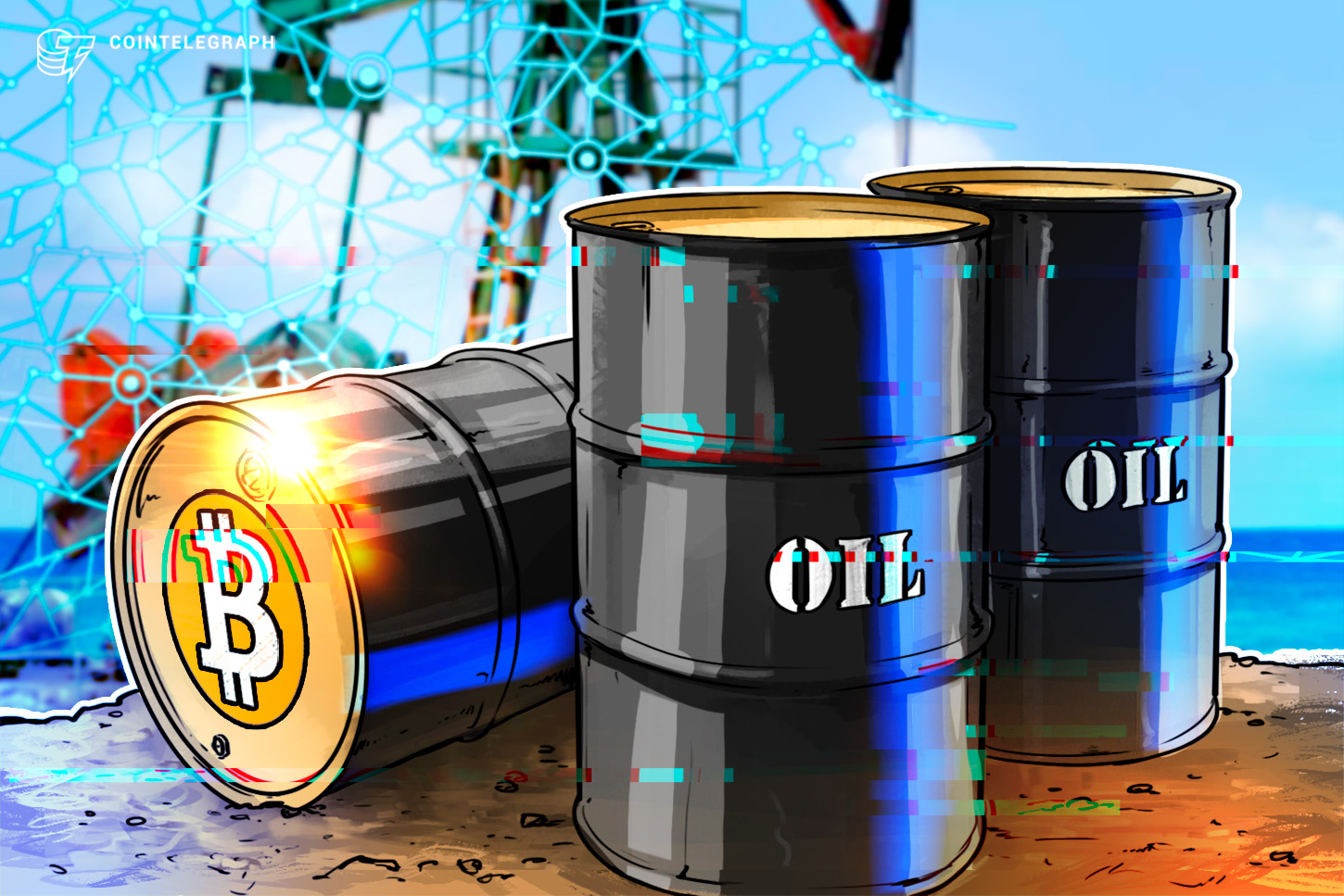
On 21 June 2026 at 14:50 UTC, Cointelegraph's markets desk reported that Bitcoin was being tipped for a $66,000 top even as the United States' war with Iran made a partial comeback in the news cycle, with Binance spot sellers keeping up the pressure they had applied earlier in the week. The chart that day was not really about chart structure. It was about a series of political inputs — a 22% prediction-market line on Iran surrendering its enriched uranium by year-end, an average U.S. gasoline price that fell below $4 a gallon for the first time since the early days of the conflict, and a supreme leader publicly distancing himself from the very deal he allowed to proceed — that no trader can model with a moving average.
The paradox at the heart of this market is simple, and it is not the paradox traders usually tell themselves. Bitcoin is being asked to rally into a geopolitical backdrop that is, by most measures, easing. The fuel lines that spiked at the war's outbreak have softened. The principal counter-party in the Middle East is, on paper at least, inching toward an arrangement. And yet the bid is fragile, the spot order book on the world's largest exchange keeps handing the tape back to sellers, and the upside targets that analysts were willing to publish in mid-June remain aspirational rather than realised.
The $66,000 target and the order book that won't let go
The proximate story is mechanical. Cointelegraph's 14:50 UTC item on 21 June 2026 framed Bitcoin's push toward a $64,000 reclaim as a story about a "suspicious" tape — a market up against Binance spot sellers who, the reporting suggested, had been capping the move from earlier in the week. A trader being quoted at $66,000 as a near-term top is not a bullish call in the conventional sense. It is a marker for where the supply is likely to meet the marginal buyer. The mechanic matters because it tells the reader that the rally, to the extent one exists, is not being allowed to extend.
A separate Cointelegraph item at 14:21 UTC on the same day put the bear case in numbers: an analyst warning that Bitcoin could revisit $24,000 — specifically $23,980 — if the U.S. stock market were to give back 50% of its value. The case is built on weaker ETF flows and low U.S. demand, with the implication that the large buyers who absorbed the early-2024 supply shock have not returned in size. Read together, the two Cointelegraph items describe a market with a defined short-term ceiling and a defined long-term floor that, while improbable, is being openly discussed by a named analyst on a tier-one crypto outlet. The middle is undecided.
The structural point is that the bid for Bitcoin in mid-2026 is no longer reflexive. The 2024–2025 trade — buy the ETF flows, fade the bad news, ride the four-year cycle — has thinned out. What remains is a market that responds to a different set of inputs than it did eighteen months ago, and the inputs it is responding to this week are mostly produced in Washington, Tehran and the Persian Gulf rather than in crypto-native venues.
The gasoline print and what it says about the war
On 21 June 2026 at 14:01 UTC, the X account Unusual Whales flagged a New York Times data point: the average U.S. gasoline price had fallen below $4 a gallon for the first time since the early days of the war in Iran. The market implication is not subtle. Energy is the transmission belt by which a Middle East war becomes a U.S. inflation print, a Federal Reserve reaction function, and — eventually — a risk-asset tape. The fact that retail gasoline is now below the threshold that defined the war's opening weeks tells the reader that the supply shock has been absorbed, that refining has rerouted, that Strategic Petroleum Reserve releases and Gulf-state spare capacity have done their work, and that the consumer-facing cost of the conflict is no longer rising.
A lower gasoline print is, on its face, bullish for risk assets. It loosens the household budget, it gives the central bank more room to hold, and it removes one of the inputs that produced the 2022–2023 risk-off. That it is occurring at the same moment that Bitcoin is unable to push through Binance supply is the puzzle. The simplest read is that the gasoline print is a coincident indicator of a war that is, in market terms, already being discounted as winding down — and that the crypto market is, for the moment, more interested in whether the discount is correct than in the price level of fuel.
The harder read is that the gasoline print reflects logistics, not politics, and that the politics are still moving in directions traders do not want to underwrite. Which is the more useful frame depends on the next input.
The 22% line: Polymarket, uranium, and the supreme leader's caveat
At 14:03 UTC on 21 June 2026, the X account associated with Polymarket posted a screenshot of the contract on whether Iran agrees to surrender its enriched-uranium stockpile by the end of the year. The implied probability, per the post, was 22%. That is a low number. It is the kind of low number that says the market does not believe the deal in its current form will produce the disarmament outcome that the headline language of the framework appeared to promise.
The framing matters. A 22% probability is not a refusal to believe; it is a belief that the central scenario is failure, delay, or a re-negotiated arrangement that leaves material stockpiles in place. Read against the gasoline print, the contract tells the reader that the market is pricing in a war that ends as a transactional pause rather than a strategic settlement. Read against the Bitcoin tape, it tells the reader that the geopolitical tail risk traders were told to fade has not, in fact, been removed.
The reason is captured in the third input from the same day. On 20 June 2026 at 03:16 UTC, the Polymarket X account reported that Iran's supreme leader had stated he allowed the U.S. deal to go forward, but opposed signing it "as a matter of principle." The line is short, but the structural implication is not. A leader who simultaneously authorises a deal and refuses to sign it is preserving deniability. He is giving his negotiators room to operate, and his domestic hardliners room to claim that the Islamic Republic conceded nothing. He is, in effect, building an off-ramp for the moment when the deal fails in implementation — which, on a 22% line, the market is already pricing as the modal outcome.
The conjunction of these three inputs — the Polymarket contract, the gasoline print, and the supreme leader's statement — describes a Middle East that is, in price-action terms, calmer than it was in the war's opening weeks but is, in political terms, not yet settled. That is precisely the combination of conditions under which a risk asset can rally on the surface and refuse to extend under the surface.
What the Western wire line is missing
The mainstream U.S. coverage of the deal — to the extent it has crystallised in the inputs available here — has tended to frame the U.S.–Iran arrangement as a sequence of concessions and counter-concessions measured in centrifuges and sanctions waivers. The Polymarket line, the gasoline print and the supreme leader's own words suggest a different shape: a transactional pause in which the principal concession is rhetorical, the verification mechanism is contested, and the political cost of the deal inside Iran is being managed by a leader who has made clear he does not endorse it. This is not an argument that the deal is fake. It is an argument that the deal is structurally fragile in ways that a sanctions-and-centrifuges frame tends to under-weight.
A second frame, common in Western commentary on energy markets, treats the sub-$4 gasoline print as evidence that the war's economic consequences have been contained. That is true at the household level. It is not true at the freight, insurance and shipping level, where war-risk premia persist for as long as the underlying political settlement remains unimplemented. A trader looking only at the retail price of fuel is a trader pricing a world that is calmer than the one the shipping underwriter is pricing. Both views are simultaneously held in the market, and they are the reason the Bitcoin tape cannot decide which one to believe.
The counter-narrative, briefly stated, is that the Western wire line is, in this case, closer to right than the prediction market. The 22% line could be pricing tail risk that does not materialise. The supreme leader's distancing could be the standard performative resistance of a leader who has already conceded. The gasoline print could be a leading indicator of a risk-on move that has not yet reached crypto. That case is intellectually available, and a serious reader should hold it alongside the dominant read.
Stakes, structural frame, and what the next 48 hours watch for
The larger pattern is familiar. A hegemonic transition of the kind visible across the 2020s — the incumbent order ceding ground to a successor arrangement that has not yet fully formed — produces exactly this kind of price action. A risk asset rallies because the worst-case is being priced out, but it cannot extend because the new equilibrium is not yet visible. The order book is thin not because there are no buyers but because the buyers and sellers disagree about the terminal state, and so the market chops between scenarios rather than trending.
The concrete stakes are simple. If the Polymarket contract drifts higher than 22% over the next week — if traders begin to price in a higher probability of Iranian disarmament — the Bitcoin bid should improve and the Binance supply should thin. If the contract drifts lower, or if the supreme leader's public position hardens, the bid will not return, and the $66,000 top will become a ceiling that holds for longer than a chartist would like. The gasoline print, meanwhile, is a coincident rather than a leading indicator for crypto; it confirms a state of the world, it does not produce one.
What remains uncertain, and where the sources disagree, is whether the U.S.–Iran arrangement should be read as a settlement or as a pause. The Western wire framing favours the former; the prediction market and the supreme leader's own words favour the latter. Both are coherent, and the market's inability to extend is the most honest summary of the disagreement that this publication can offer at this hour.
Monexus framed this as a story about the political inputs behind a chart that refuses to extend, rather than as a story about a chart pattern. The wire line on Bitcoin tends to lead with technicals; this publication led with the gasoline print, the Polymarket contract, and the supreme leader's caveat, because those are the inputs the chart is actually discounting.
Follow the event.
These dated source records provide context. They do not retrospectively verify this archive article.
Separate what the nuclear watchdog reported from what it could not determine after the June 2025 strikes.