Cabo Verde's Spanish test: how a tiny island nation ended up in FIFA's Miami spotlight
Vozinha's mother flew to Miami after her son starred against Spain, turning a Group H fixture into a soft-power moment for the smallest nation ever to qualify for a World Cup.
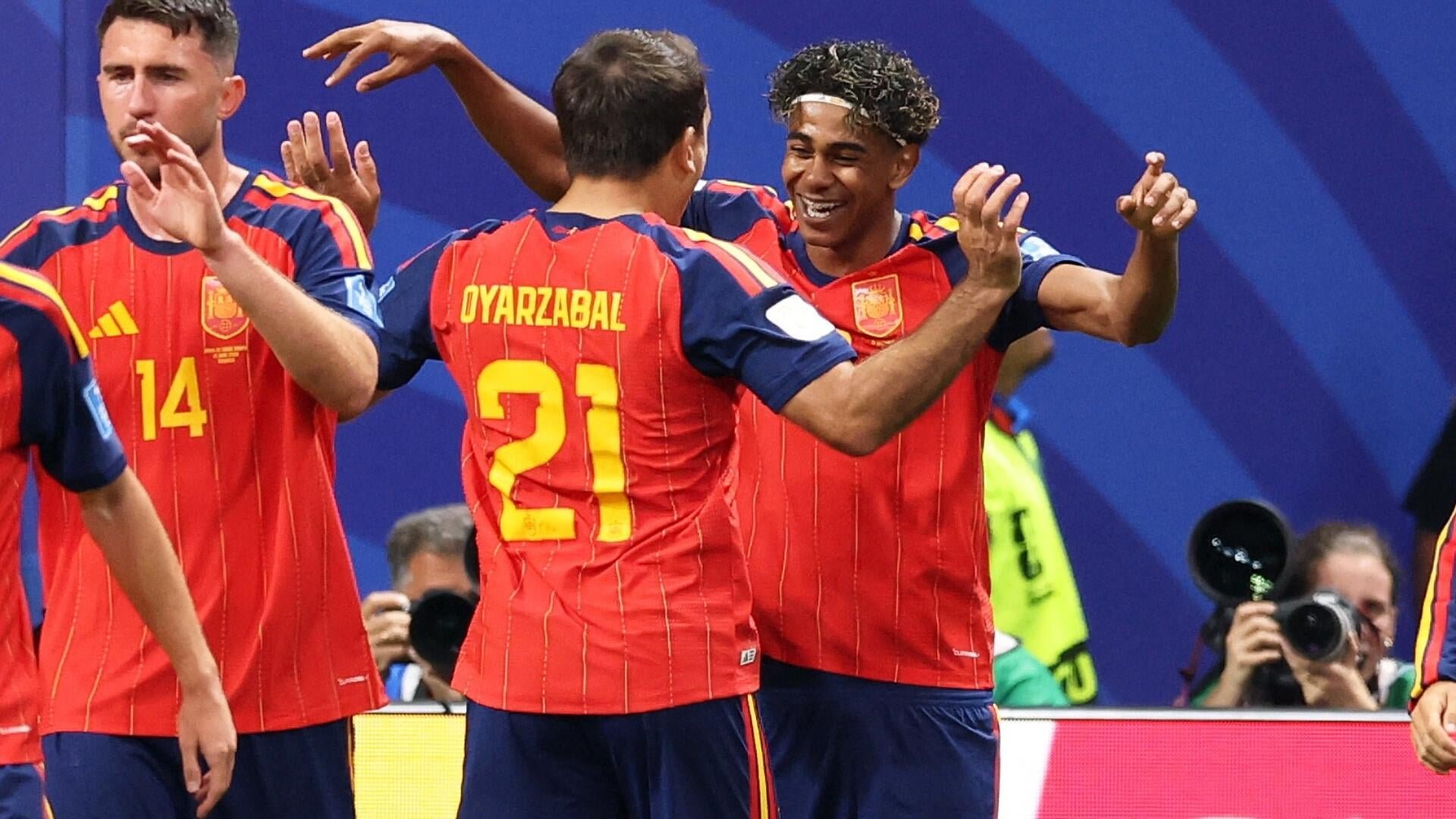
On 21 June 2026, FIFA hosted the mother of Cabo Verde goalkeeper Vozinha at its Miami office, hours after her son's performance against Spain turned a routine Group H fixture into the story of the tournament's opening week. The visit, confirmed by FIFA's official Telegram channel at 17:07 UTC, is a small, human moment — but it is also the clearest signal yet of how thoroughly this World Cup has recalibrated the geography of football's attention.
Cabo Verde, an archipelago of roughly 600,000 people off the west coast of Africa, qualified for its first World Cup in 2014 and is now back on the biggest stage. Against Spain, the Blue Sharks were not cast in the role of sacrificial opposition; they played Spain, and they held. Vozinha, the Charlton Athletic-issued goalkeeper whose full name is likely to become more familiar in the next week, was the reason the scoreline stayed respectable. His mother watched from the stands, then flew to Miami at FIFA's invitation. At 15:02 UTC, FIFA published a video message from her: "Strength and courage, Blue Sharks."
The smallest nation, the loudest week
Cabo Verde is the least populous country ever to take the field at a men's World Cup. That framing has been repeated so often in the build-up to this tournament that it has almost lost its meaning — but the structure underneath the cliché is real. The country has no professional first division of any international standing; its talent pool is small enough that almost every player on the squad has a personal history of being scouted, recruited, or ignored by European academies. The diaspora, concentrated in Lisbon, Rotterdam, Boston and Paris, is the actual pipeline.
Against Spain, that pipeline produced a goalkeeper capable of competing. FIFA's decision to host the player's mother in Miami — rather than a functionary, a federation president, or a sponsor — is the federation's quiet acknowledgment that this is the story it wants the tournament told around. The Blue Sharks' group-stage run will end; the image of their goalkeeper's mother at FIFA House is now part of the World Cup's permanent record.
Why FIFA leaned in
FIFA has spent the better part of a decade trying to broaden the World Cup's emotional footprint. The expanded 48-team format, decried in 2023 as a dilution of merit, has produced group-stage matches with exactly the dynamic on display here: a minnow defending, surviving, occasionally threatening, and leaving the stadium with the sort of footage that travels. Spain's global broadcasters get a result; Cabo Verde's gets a story.
There is also a competitive calculation. The next two World Cups are in North America and, beyond that, the federation has signalled interest in a wider rotation of hosts. Soft-power moments involving African and Caribbean federations do not hurt that pitch. Cabo Verde is not a voting behemoth inside FIFA — it sits inside a small island-nation constituency that includes Mauritius, the Comoros and São Tomé — but those votes travel in blocs, and bloc loyalty is built in moments exactly like this one.
What the counter-narrative says
The cynical reading is straightforward: FIFA's Miami cameras are not free. The federation is the same body under scrutiny for its handling of the Saudi Arabian World Cup bid, for the migrant-worker deaths recorded on tournament-building sites, and for a sponsorship portfolio that puts oil-state airlines on the same broadcast frames as human-rights messaging. A mother's tearful video message, posted on a federation-controlled channel and amplified by federation media partners, is the kind of moment that travels on social platforms without scrutiny of who paid for the framing.
The defence is equally straightforward. Cabo Verde's players have earned their place on merit, on a qualifying campaign that included a draw with Egypt and a win over Cameroon. The visit cost FIFA almost nothing — a flight, a meeting room, a camera — and the return is a piece of content that will run on highlight reels for the rest of the tournament and beyond. Soft-power diplomacy does not require cynical intent to be effective; it merely requires choreography. FIFA choreographed this one cleanly.
Stakes and forward view
For Cabo Verde, the stakes are concrete. A competitive showing in the group stage accelerates what was already a generational rebuild — academy partnerships in Praia, scout networks in Lisbon and Rotterdam, federation income from the federation's share of the World Cup pool. For Spain, the stakes are quieter: a dropped two points in a group they were expected to win handsomely, and a reminder that the expanded format is not, in fact, ceremonial.
Vozinha's mother will be back in the stands on the next matchday. The Miami footage will live on FIFA's archive. And somewhere in Praia, the federation will be fielding calls from agents and broadcasters that would not have come if her son had not stood on his line against Spain and refused to move.
This piece draws on FIFA's own Telegram posts of 21 June 2026. The sources do not specify the precise scoreline of the Spain match or the number of saves Vozinha recorded; we have restricted the account accordingly.
Wire provenance
This editorial synthesis draws on the following public wire/social posts:
- https://t.me/FIFAcom/
- https://t.me/TheAthletic
- https://t.me/FIFAcom/
- https://t.me/TheAthletic