Claude Guillemot and the Long Shadow of a Family Built Ubisoft
One of the five siblings who turned a Brittany mail-order business into a global games publisher died on 20 June 2026 when his aircraft came down near La Baule, ending a chapter that defined the modern French tech industry.
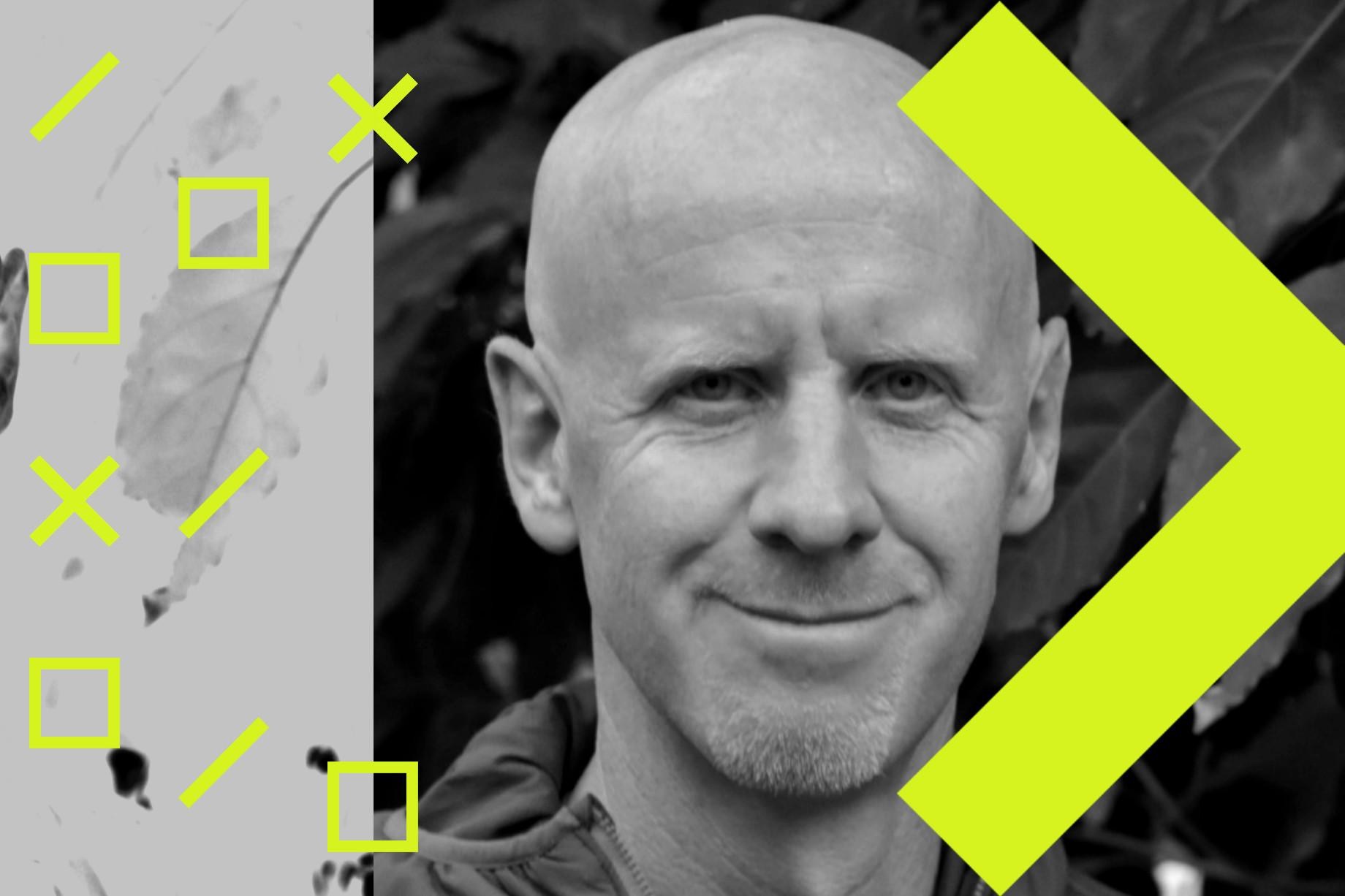
Claude Guillemot, one of five siblings who built Ubisoft Entertainment into one of the world's largest video-game publishers, died on 20 June 2026 when a light aircraft crashed near La Baule on France's Atlantic coast, according to the South China Morning Post and Crypto Briefing, citing initial wire reporting. He was 69. The crash, the second fatal accident involving a member of the Guillemot family within hours of social-media confusion over which brother was aboard, has closed a chapter in French corporate history that began in a Brittany farmhouse and ended with a publicly traded entertainment company employing thousands across Montreal, Paris and Singapore.
The accident is a personal tragedy and a corporate moment. The Guillemot brothers — Claude, Gérard, Christian, Michel and Yves — founded Ubisoft in March 1986 and held it together through debt crises, hostile takeover bids and a boardroom siege by Vivendi in the early 2000s. Claude's death will not, on the available reporting, alter control of the company; Ubisoft remains in family hands. But the French industrial class the brothers came to embody — provincial, family-financed, reluctant to dilute equity, dismissive of Wall Street fashion — is now visibly thinner.
The crash and the immediate confusion
The aircraft came down in the afternoon of 20 June 2026 in the coastal commune near La Baule, a resort town in the Loire-Atlantique department of western France, according to the South China Morning Post. Within minutes, an X post circulated naming Gérard Guillemot, the eldest of the five siblings, as the victim and giving his age as 73. A subsequent X post, again widely amplified, corrected the record: the brother who died was Claude, 69. Crypto Briefing and the South China Morning Post both identify Claude Guillemot as the deceased. The identity of the other occupants of the aircraft and the cause of the crash have not been disclosed in the available reporting; the French aviation accident investigation authority, the BEA, has not, as of writing, issued a public statement on the case.
La Baule's runway has long hosted general aviation traffic, including the Guillemot family's interest in aeronautics through their holding structures. The crash site, on the edge of the Guérande peninsula, sits within an hour's drive of Carquefou, the Nantes suburb where the brothers' father set up the family's first business in the 1950s.
A family firm built in Brittany
The Guillemot story begins not in Paris or Montpellier but in Carquefou, near Nantes, where the brothers' father, Marcel Guillemot, ran a small mail-order company selling agricultural equipment, electronics and later home computers. After Marcel died in 1985, the five brothers — then in their twenties and early thirties — used the proceeds from the sale of the family business to seed Ubisoft, incorporated in March 1986 with the goal of publishing video games in a French market then dominated by foreign publishers. The five co-founders each held roughly equal stakes and assumed operational roles: Claude oversaw logistics, manufacturing and distribution; Gérard ran overseas expansion and, later, the film interests under the separate Ubisoft-owned entities; Christian built the publishing relationships in North America; Michel ran the studio network; and Yves became the public face of the company and its chief executive.
That flat ownership structure — five brothers, one vote each, no outside anchor shareholder — became both Ubisoft's defining strength and its persistent vulnerability. It allowed the brothers to refuse the leveraged buyout overtures that swept the European entertainment industry in the late 1990s, and to outlast a hostile bid by Vivendi, then run by Jean-Marie Messier, that culminated in 2006 in a boardroom standoff and the eventual departure of Vivendi's nominated directors. The same structure, however, has drawn repeated criticism from minority shareholders and governance analysts who argue that the family's interlocking directorship leaves public investors with limited recourse. Ubisoft's market capitalisation has fluctuated between roughly €5 billion and €15 billion over the past decade, with periodic calls from activist investors for the family to take the company private.
Why one death matters in a five-founder firm
In a public company with diffuse ownership, the loss of any individual board member is rarely a corporate event. In a five-founder company where the founders themselves hold the controlling votes, every founder is structurally irreplaceable. Claude Guillemot's role inside Ubisoft evolved over four decades. In recent years, he had been less visible than his brother Yves, who has served as chief executive for most of the company's history, but he remained a director and a member of the inner shareholder group that has the legal power to block any third-party bid. The five brothers, as a group, control roughly 15 per cent of Ubisoft's share capital but a much larger share of voting rights through a holding structure registered in France.
The corporate question now is whether the family can maintain the unanimity that has defined its governance. If any of the remaining four brothers sells, pledges or transfers a meaningful tranche of shares, the equilibrium that has held off acquirers for four decades could shift. Tenova, the family holding company, has been the vehicle through which the brothers have pooled their stakes; its shareholder agreement has not been disclosed in public filings. As of the available reporting, no statement from Ubisoft's board has addressed succession or governance changes.
The French tech exception
The Guillemot story is also a story about the limits of the French tech model. France has produced, in the past two decades, a recognisable type: the provincial, family-financed, vertically integrated technology firm that grows slowly, refuses venture capital, and treats the public market as a financing afterthought rather than a status symbol. Ubisoft is the largest of this cohort, which also includes firms in defence electronics, industrial software and family-owned luxury. Claude Guillemot's death removes one of the founders of that template at a moment when French policymakers are explicitly trying to scale it up. President Emmanuel Macron's government has, since 2023, run a so-called "family-shareholder" investment vehicle designed to channel domestic savings into French companies whose founding families retain control; Ubisoft has been held up, in policy papers, as the kind of firm that vehicle exists to support.
The crash also lands against a backdrop of consolidation in global gaming. The largest Western publishers — Microsoft, Sony, Electronic Arts, Take-Two — have spent the past three years absorbing independent studios and squeezing mid-tier publishers. Ubisoft's relative independence, premised on the five-brother vote, has made it an outlier. Any internal fracture in the family bloc would, on the structure of the market, invite renewed approaches. The available sources do not specify whether any such approaches are in train.
What remains uncertain
Three things are not yet clear. First, the cause of the crash: the BEA's preliminary findings, when they are published, will determine whether the accident is treated as a one-off mechanical or pilot-error event or as a more systemic safety question for the La Baule airfield. Second, the identity of the other aircraft occupants and whether any of them were Ubisoft employees. Third, the future of the family's voting pact: the public record is silent on what happens to Claude Guillemot's stake — whether it passes to his estate, to the family holding company, or to individual heirs — and whether the remaining four brothers will adjust the shareholder agreement. None of this is in the available reporting. The companies and family offices that watch Ubisoft will be reading the French commercial registry filings in the weeks ahead for the answer.
What can be said without overreach is this: Claude Guillemot co-founded one of the very few French companies of the last forty years that successfully competed, at global scale, against Japanese, American and Korean rivals in a consumer technology market. The five-brother model he helped build outlasted every serious attempt to break it. Whether it outlasts him is now the question that hangs over Ubisoft's future.
This article reflects the available reporting on the day of the crash; later developments in the BEA investigation, family share-register filings, and any corporate statement from Ubisoft will be incorporated into Monexus's continuing coverage.
Wire provenance
This editorial synthesis draws on the following public wire/social posts:
- https://t.me/CryptoBriefing
- https://t.me/SCMPNews
- https://x.com/pirat_nation/status/1
- https://en.wikipedia.org/wiki/Ubisoft