Crimea runs dry: Russian occupation suspends fuel sales after Ukrainian strikes on Kerch oil terminal
Moscow-installed authorities in occupied Crimea halted retail fuel sales from 09:00 local time on 21 June 2026 after overnight Ukrainian strikes hit the Kerch ferry crossing and an oil terminal in Chushka, exposing the peninsula's deepening logistics dependence on a single, vulnerable strait.
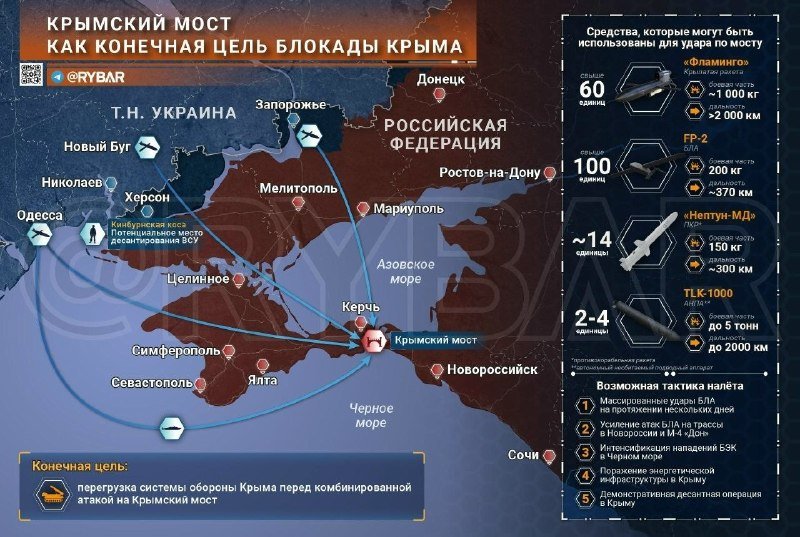
Overnight strikes on the Kerch Strait crossing and the adjacent Chushka oil terminal have forced Russian occupation authorities in Crimea to suspend all retail fuel sales to the public from 09:00 local time on 21 June 2026, according to Telegram channels tracking the front. The measure, confirmed in posts from the @AMK_Mapping and @rnintel feeds between 08:21 and 08:28 UTC, marks one of the most visible supply shocks on the peninsula since the early phase of the full-scale invasion and underscores how exposed a decade of Russian infrastructure investment across the strait has become to long-range Ukrainian precision fires.
The immediate trigger was a drone attack on the Kerch ferry crossing that struck the vessel Panagia and killed one person while injuring another, alongside a fire at the Chushka oil terminal on the Crimean side of the strait. Russian authorities said the damage forced the temporary suspension of ferry services and triggered a broader review of fuel stocks. Within hours, the occupation administration moved to a wartime rationing posture: no petrol or diesel to private motorists, mandatory power outages to manage grid load, and a presumption that the cuts will persist until the fuel balance can be rebuilt through overland routing from the Russian mainland via the damaged Kerch bridge and the land corridor through Mariupol and Melitopol.
The suspension is best read as a logistics story with a political tail. Crimea has, since 2014, been treated by Moscow as a showcase of the "return to the motherland" — a heavily subsidised, demographically engineered territory whose normalcy is meant to vindicate the annexation. That showcase runs on three physical arteries: the Kerch bridge, the Kerch ferry (largely a redundancy that the strikes have now forced into frontline service), and the energy grid tied to either Taman or the Ukrainian network the peninsula was disconnected from in 2015–2016. Hit the strait infrastructure, and the showcase has to dim its lights.
What we know about the strikes
The Telegram thread that surfaced the incident — @noel_reports at 08:05 UTC on 21 June 2026 — describes a drone attack on the Kerch ferry crossing that killed one and wounded another aboard the Panagia, with a separate fire reported at the Chushka oil terminal on the Russian side of the strait. @AMK_Mapping, writing at 08:21 UTC, framed the consequence in supply terms: fuel sales to the general public in Crimea suspended from 09:00 local time, with restocking expected to depend on rail and overland deliveries. @rnintel, posting at 08:24, 08:27 and 08:28 UTC, added two further elements — the suspension of all fuel sales to the public in Crimea, and a forthcoming round of mandatory power outages as authorities work to keep the grid stable against the loss of fuelling capacity for backup diesel generation.
The combined picture, even on a single morning of reporting, is consistent: a physical strike on the Kerch ferry and the Chushka oil terminal, and a cascading administrative response in which the occupation government has chosen rationing rather than admit loss of control. Ukrainian sources have not, in the thread available to Monexus, formally claimed the strikes in the minutes covered here; Russian state-aligned channels had not, as of the cut-off, published a coordinated official line beyond the initial casualty-and-damage statements. The reporting is thus early, frontline, and Telegram-native, and should be read as such.
The counter-narrative and the structural read
Russian state-aligned coverage is likely to frame the incident as a Ukrainian terror attack on civilian ferry traffic — a framing the casualty toll of one dead and one wounded is designed to support. That frame is not baseless: the Panagia was a passenger-and-vehicle ferry, and strikes on civilian transport are a legitimate subject of international humanitarian-law scrutiny. The counterweight is structural. The Kerch ferry is not a civilian transport artery in the peacetime sense; since 2022 it has functioned as part of the military logistics chain that sustains the southern grouping of Russian forces in occupied Kherson and Zaporizhzhia oblasts, and the Chushka terminal is a hydrocarbon hub whose output is overwhelmingly consumed by the occupation administration and the military. Strikes on dual-use infrastructure that fuels an occupation army are not on the same moral plane as strikes on a school or hospital, and the analytic question is what proportion of the facility's throughput was military.
That structural read is also why a fuel-sales suspension in Crimea has resonance far beyond Sevastopol gas stations. Since 2014, the peninsula has been sustained by three flows: subsidies from the federal Russian budget, a demographic engineering programme that has rotated hundreds of thousands of Russian citizens into the territory, and a tightly managed fuel balance that treats private motorists as the residual claimant. When the residual claimant is told to stop filling up, the message is that the system has run out of slack. A counter-explanation — that this is a one-off logistical hiccup that rail deliveries from Krasnodar will resolve within days — is plausible on the operational level and is the line Moscow is likely to take. The honest read is that both are true: rail can patch a hole, but the loss of redundancy at the strait means the peninsula's energy security now rests on a smaller number of more easily targeted nodes, and the next strike will be tested against that same constraint.
Stakes and the forward view
For Kyiv, the operational logic of the past eighteen months of the war has been to interdict the Russian logistics tail far from the contact line — refineries in Tuapse and Volgograd, ammunition depots in occupied Donetsk, fuel trains in Krasnodar, and the chokepoints that move that throughput into Crimea and onward to the southern front. The Kerch ferry and Chushka terminal sit on a continuation of that logic, and the suspension is, on the morning's evidence, the most visible downstream effect since the 2023 strikes on the bridge. If the suspension holds for more than a few days, the political consequences inside Crimea — long queues, electricity rationing, an occupation administration that visibly cannot keep the lights on through a single bad night — will be harder for Moscow to manage than the economic ones. The risk for Ukraine is the inverse: that a successful strike on a ferry with a civilian casualty toll becomes the line of attack in Russian information operations and a vector for third-party pressure on Western supporters. Both pressures will operate simultaneously.
The sources do not specify the volume of fuel affected, the duration of the suspension, or the precise mix of rail, road and bridge flows that will be used to refill stocks. The reporting that does exist is Telegram-side and moving fast: a casualty count, a fire, a fuel ban, a power-cut notice, all in the space of ninety minutes. That is a thin evidentiary base from which to draw long conclusions, and this article does not pretend otherwise. What is not thin is the direction of travel. Crimea has been treated, throughout the war, as the symbol of what the invasion was meant to consolidate. On 21 June 2026, that symbol ran out of petrol before breakfast.
Desk note: Monexus has framed this as a logistics-and-political story anchored in frontline Telegram reporting, with the Russian state-aligned framing of the strike as a civilian-targeting attack acknowledged and weighed against the documented military-logistics role of the Kerch crossing. The casualty count, suspension timing and infrastructure descriptions are drawn from the Telegram sources cited below; deeper verification against wire-service reporting on Russian-language state media and Ukrainian General Staff briefings will be required as the story develops.
Wire provenance
This editorial synthesis draws on the following public wire/social posts:
- https://t.me/noel_reports
- https://t.me/AMK_Mapping
- https://t.me/rnintel
- https://t.me/rnintel
- https://t.me/rnintel
Follow the event.
These dated source records provide context. They do not retrospectively verify this archive article.
A dated voting record is evidence of one decision. Use the original UN record before turning it into an alignment label.
Visual explainer · historical vote of 2022-03-02 →