Doha, Tehran, and Washington: A trilateral ceasefire track that may be moving — or just posturing
Iranian state media announced a US-Iran-Qatar meeting in Switzerland on the Lebanon ceasefire. The opening move is real; the political distance between the parties is enormous.
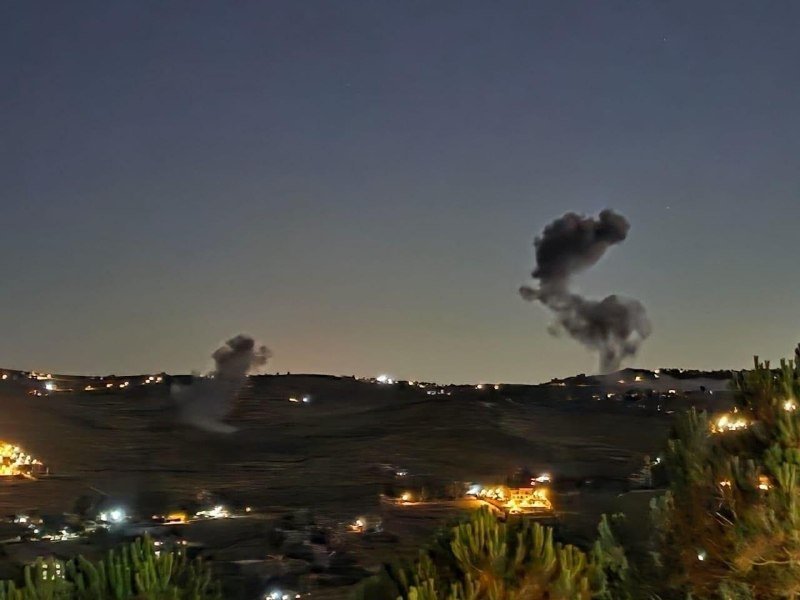
At roughly 12:02 UTC on 21 June 2026, Iran's state broadcaster IRIB announced that a trilateral meeting involving Iran, the United States and Qatar had begun, framing the encounter as a coordinated push on the file of Lebanon. The announcement, carried by the Beirut-based outlet The Cradle via Telegram and amplified in English by i24NEWS, names Doha as the convening party and Switzerland as the venue, and signals that at least three governments are now publicly attaching their names to a negotiating track that, until this week, was being discussed mostly in private.
The news matters less for what it resolves than for what it admits. A diplomatic process of this kind presupposes that all three sides have concluded, at least provisionally, that the war in Lebanon cannot be settled on the battlefield. That is a heavier concession than the modest choreography of a meeting room suggests.
What the announcements actually say
The Cradle's two wire items from 12:02 UTC quote IRIB describing a trilateral meeting covering Iran, the United States and Qatar, currently underway. i24NEWS's English-language flash, relayed by analyst Michael A. Horowitz, characterises the meeting as related to the Lebanon ceasefire in Switzerland. Read together, the wires describe a single, narrowly defined event: a tripartite sit-down focused on stopping the fighting in Lebanon, brokered under Qatari auspices, hosted in Switzerland, with Iran and the United States at the table.
The framing is consistent across both relays. There is no mention in the wires of a wider deal, of sanctions relief, of nuclear-file issues, or of any Israeli delegation. The meeting is, on the public record, a Lebanon-track conversation.
The precondition Tehran has now made public
The morning's second relevant wire, posted to Telegram at 10:48 UTC, sharpens the picture. According to the same analyst feed, Iran has warned that it will not enter talks on a broader agreement with the United States unless the war in Lebanon comes to an end. That statement, if accurate, is a precondition rather than a position: it tells Washington what Tehran needs in order to negotiate anything larger, and it binds the wider diplomatic agenda to a single file.
The shape is deliberate. By making the cessation of fighting in Lebanon a precondition for the broader agenda, Tehran has converted the Lebanon track from a humanitarian side-issue into the gateway issue of US-Iran relations. Whoever wants a wider negotiation now needs Lebanon resolved first.
Why Qatar, and why Switzerland
Qatar's role as convener is not incidental. Doha has spent two decades building capacity as a quiet intermediary between Washington and actors across the Iranian-led axis, including during the JCPOA negotiations and in subsequent hostage and detainee files. It has the standing with Tehran to put a US delegation in a room; it has the relationship with the United States to give Iranian officials an audience worth attending. Switzerland, which hosts neither the principals and therefore offers both sides a politically neutral venue, fits the pattern.
What neither venue provides is pressure on either party to actually move. A meeting is not a deal; a precondition is not a concession; a willingness to sit at a table is not a willingness to compromise.
What remains contested, and what the sources do not specify
The wires tell a consistent story about the fact of the meeting and about Iran's precondition. They do not specify, and it would be irresponsible to assert, the identities of the officials present on each side, the agenda items beyond the broad heading of "Lebanon ceasefire," whether any Israeli representative is participating in a separate track, or whether the meeting is producing any document at all. The Cradle is a Beirut-based outlet with a stated editorial line sympathetic to the axis of resistance; i24NEWS is an English-language Israeli broadcaster. The convergence of the two on the bare fact of a meeting in Switzerland is more credible than either would be alone, but the analytical superstructure — what it means, who is winning, what comes next — remains the work of inference rather than reporting.
The honest reading of the morning's wires is narrow: three governments have agreed to be seen in the same room, talking about a single war. That is more than was true two weeks ago, and less than the markets, the diaspora communities, and the people still under fire in Lebanon have any right to expect.
Wire provenance
This editorial synthesis draws on the following public wire/social posts:
- https://t.me/thecradlemedia
- https://t.me/TheCradleMedia
- https://t.me/osintlive
- https://t.me/osintlive