The Gaza hostage file: a single Abu Hasna strike, and the architecture of deniable captivity
A 20 June IDF strike in central Gaza killed a member of a Hamas cell that guarded Israeli hostages. The strike is small. What it exposes about how captivity is organised inside the Strip is not.
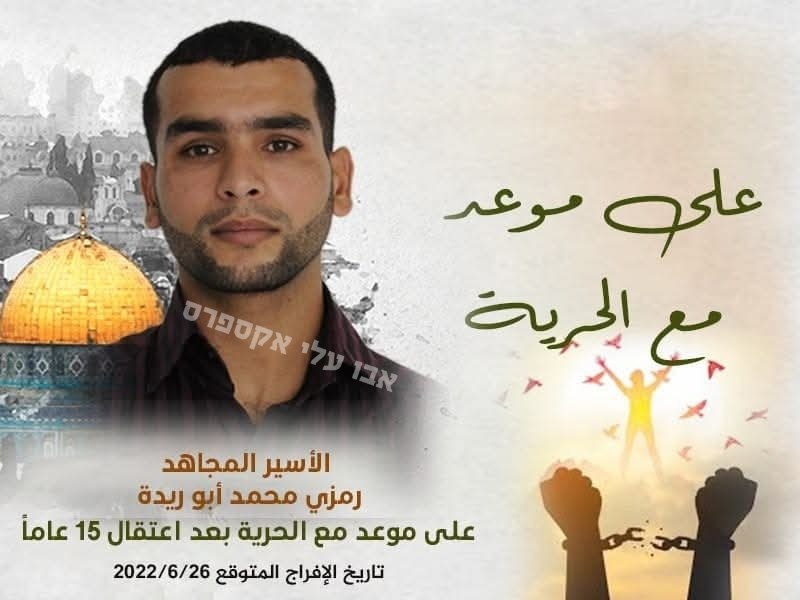
On 20 June 2026, an Israeli airstrike on a residential home in the centre of the Gaza Strip killed a man Israeli and Arabic-language reporting has identified, in near-identical terms, as a member of a Hamas cell tasked with holding Israeli hostages. Reporting in the hours that followed was unusually direct. The Israeli journalist Amit Segal wrote on Telegram in the early hours of 21 June 2026 UTC that the dead man belonged to a "shadow unit that was holding Israeli hostages" and was killed in an IDF strike on the Abu Hasna family house in central Gaza. Within forty minutes, the Iran-aligned Tasnim News Agency's English desk was running a parallel account, framing the dead man as a member of "the sniper unit of the Hamas movement" and emphasising his role in guarding Israeli prisoners. By mid-morning UTC, an open-source channel, Abu Ali Express, was distributing overhead imagery of the same building with the same family name circled.
The strike itself is small. What it illuminates is not. The convergence of three independent feeds, two of them ideologically hostile to Israel, on the same functional description of the dead man — a hostage-guard, not a frontline combatant — is itself a piece of evidence. It tells the reader that there exists, inside Hamas's post-October 2023 architecture, a discrete formation whose job is to sit on hostages. It also tells the reader that this formation is now being killed at identifiable addresses, in identifiable families, in identifiable refugee camps. The long story here is not a single airframe and a single house. It is the slow, address-by-address exposure of a hidden layer of the war.
What the three feeds actually agree on
The three Telegram dispatches on 21 June 2026 were produced in three different journalistic registers, and that is what makes the agreement meaningful. Amit Segal's note is the most direct: a Hamas operative from a shadow unit holding hostages, killed in an IDF strike on the Abu Hasna family home in central Gaza. Tasnim's English bulletin is more layered: the same man, identified as Saba'i Abu Hasna, is described as a sniper-unit member whose role included keeping Israeli prisoners, with his testimony about that role being quoted in regional reporting. Abu Ali Express, an open-source channel, supplies only coordinates and a casualty figure — three killed in a drone strike on the Abu Hasna home in what the channel calls the Elbrij refugee camp in central Gaza, with two of the dead named in the post.
What none of the three feeds do is straightforwardly claim that an Israeli hostage was recovered in the strike. The reporting is about the guard, not the captives. The hostage file in Gaza is, in the language of one senior Israeli official speaking in background briefings in 2024 and 2025, the single most classified operational file in the war; location data on hostages is treated as a security compartment rather than a regular intelligence product. The fact that the same family home can be identified by name in three independent feeds, that the dead man's role is described consistently across them, and that no feed names a hostage at that address, is itself the news. The guard was findable. The captives, by design, were not.
Why "shadow unit" is a structural, not rhetorical, label
The phrase "shadow unit" — used by Segal — and the parallel phrase "sniper unit" — used by Tasnim — are not the same thing, and the gap between them is informative. A sniper unit is a recognisable military formation; a shadow unit holding hostages is not. A sniper kills at distance. A hostage-keeper sits in a house with people he cannot let die and cannot let leave, and is told that if the house is hit his job is to make the scene unreadable. The functional split between fighters and hostage-keepers inside Hamas has been reported in Israeli press since at least 2024, with Hebrew outlets describing dedicated cells whose members are not deployed to the front line because their operational value is measured in living prisoners, not in battlefield effect.
The structural point is that hostage-holding inside Gaza has, over the course of the war, become a discrete occupation. The captor who keeps a captive alive is operationally distinct from the fighter who shoots at an Israeli vehicle. He is more valuable alive and at his post than he is dead or displaced, which is precisely why an Israeli strike that kills him is, from the hostage-recovery standpoint, an act of triage as much as an act of war: the dead guard cannot reveal his location under interrogation, but neither can he be leveraged for a future deal. The decision to take the strike at all is the news; the strike is the procedure.
A hostage-guard is killed, and the question that follows
Israeli policy in the war has, at least since the November 2023 phase-one deal, rested on the premise that some hostages can be recovered through negotiation and the rest through direct action. The Abu Hasna strike, judged by its signature, is direct action. The dead man is not described in any of the three feeds as a negotiator, a spokesman, or a political figure; he is described in his holding function. That matters because the operational logic of direct action in this war has tilted, across 2024 and 2025, towards targets whose neutralisation either yields a hostage, advances on a tunnel shaft, or dismantles a command node. A pure holding-cell target sits closer to the first category than the public wire reporting usually concedes.
The question the strike raises, and the one none of the three feeds answers, is whether the address yielded a hostage. Reporting from the ground in central Gaza, by the standards of every other such strike since 2024, would normally surface some indicator within hours: a family statement, a Red Crescent dispatch, an IDF confirmation that captives were located. The silence of the three feeds on that specific point is, for now, the only honest evidence available. It does not mean no hostage was recovered. It does not mean one was. It means the operational compartment around the address held, which is what it was designed to do.
The bigger pattern: address-by-address exposure
The Abu Hasna strike is one node in a pattern that has become legible over the past eighteen months. The pattern is the slow, address-by-address exposure of Hamas's holding architecture. Individual hostage-keepers are being identified, located, and targeted in the kind of named-family, named-camp strikes that, two years into the war, would once have been considered operationally impossible without ground presence. The implication is intelligence-driven, not ground-driven. Israeli intelligence, working from signals intercepts, financial flows, family networks, and the testimony of released hostages, has compiled a register of addresses at which captives have at some point been held or at which their guards have lived. The register is not complete. It does not need to be complete to be useful; it needs to be good enough that, on a given night, a drone can be tasked to a specific rooftop with confidence about who is inside.
The longer-term stakes of this pattern cut in two directions. For hostage-recovery advocates, the Abu Hasna strikes are evidence that the file is being worked, that pressure is being applied at the level of the individual captor, and that the clock is being run on Hamas's ability to keep a captive alive and undiscovered indefinitely. For the families of hostages, the pattern offers something more ambiguous: a confirmation that the state knows where guards have lived, combined with the persistent absence of confirmation that the captives those guards sat on are any closer to coming home. The architecture of deniable captivity depends on that gap. Closing the gap is the work the strikes are doing, whether or not any given strike yields a captive.
What remains uncertain
The three feeds disagree on at least one material detail. Segal places the strike on a house in central Gaza. Abu Ali Express names the locality as the Elbrij refugee camp in central Gaza. Tasnim's English bulletin does not name a camp at all. The casualty count also varies: Segal describes the dead man as a single operative; Abu Ali Express puts the toll at three, naming two of them. None of the three feeds identify the specific hostages, if any, who had been held at the address. The Iranian-aligned feed and the Israeli feed agree on the dead man's function; the open-source feed supplies the overhead imagery that, in a fuller accounting, an OSINT analyst would want cross-referenced against commercial satellite passes. None of that cross-referencing is available in the public feeds at the time of writing.
What is available is enough to support a modest claim and not enough to support a large one. The modest claim is that, on 20 June 2026, an Israeli strike in central Gaza killed at least one man whose role, as described in two ideologically opposed feeds, was the holding of Israeli hostages. The larger claim — that the strike reflects a step change in direct-action hostage recovery, or that it materially altered the negotiating posture going into any future deal — is not supported by these three feeds. The reader is entitled to that larger story, and to be told plainly that the sources do not yet supply it.
Desk note: Monexus is treating the Abu Hasna strike as a long-read, not a flash, because the three converging feeds — Israeli, Iranian-aligned, and open-source — describe the dead man in a functional language that the wire services have so far been reluctant to use. The standard wire framing of strikes in central Gaza emphasises casualty counts and the names of children; this piece foregrounds the holding-cell function because that is what the three feeds independently agree on, and because the long-term architecture of the hostage file is the part of the war least well served by wire-only coverage.
Wire provenance
This editorial synthesis draws on the following public wire/social posts:
- https://t.me/amitsegal/
- https://t.me/tasnimnews_en/
- https://t.me/abualiexpress/